Upcoming Earnings
Nvidia's Big Test, Retail Giants Open Their Registers, and China Tech Looks for a Comeback
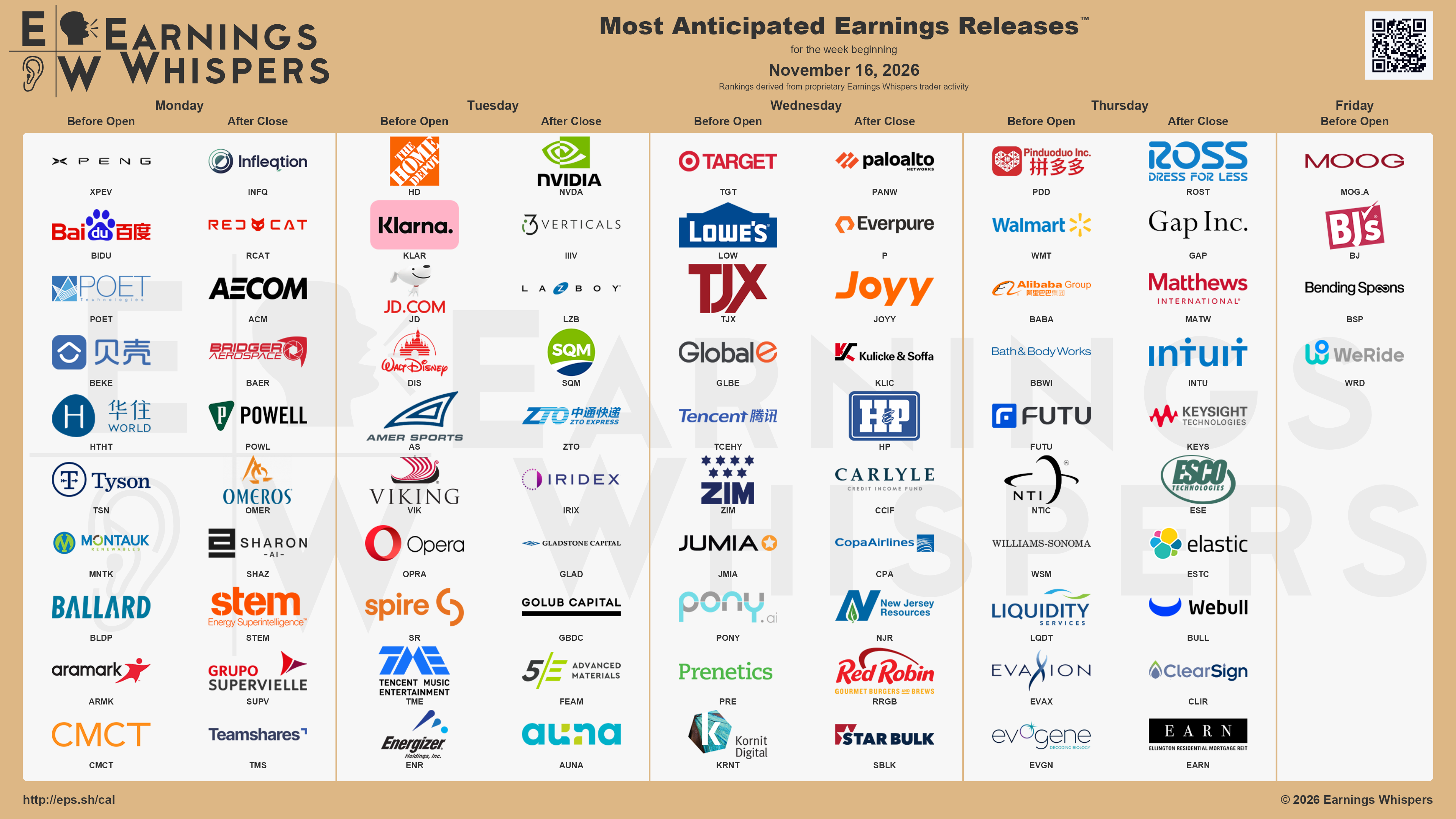
All eyes this week swing to Nvidia, the chip juggernaut that has practically become a one-stock referendum on the entire artificial intelligence boom. The mood heading into its report is surprisingly cautious given how far the stock has climbed, and traders are bracing for a sizable swing in either direction once the numbers hit. The company has been firing on all cylinders quarter after quarter, yet shares have quietly drifted lower since the last update, suggesting investors are nervous that even great results may not be enough to satisfy sky-high expectations. The same jitters hang over a handful of other tech names reporting this week, including Palo Alto Networks and Intuit, where the vibe is noticeably less upbeat. If Nvidia stumbles or merely meets the bar, expect the ripples to spread fast across every corner of the market that has ridden the AI wave.
The other headline act is American retail, as Walmart, Home Depot, Lowe's, Target, TJX and Ross Stores all throw open their books just as the critical holiday shopping season kicks into gear. Walmart and Lowe's walk in with the wind at their backs and genuine optimism about the consumer, while Target looks like the wildcard, carrying momentum into the print even as doubts linger about whether shoppers will keep spending. Overseas, a cluster of Chinese heavyweights such as Alibaba, PDD, JD.com and Baidu will test whether the long-awaited turnaround story finally has legs, though sentiment there remains a mixed bag of hope and hesitation. Toss in Disney's always-watched quarterly check-in and a few sleeper standouts like Williams-Sonoma and shipping play ZIM that are quietly drawing bullish buzz, and you have a week packed with enough fireworks to keep even casual market watchers glued to the ticker.
NVIDIA Earnings: Monster Growth Meets a Margin Speed Bump
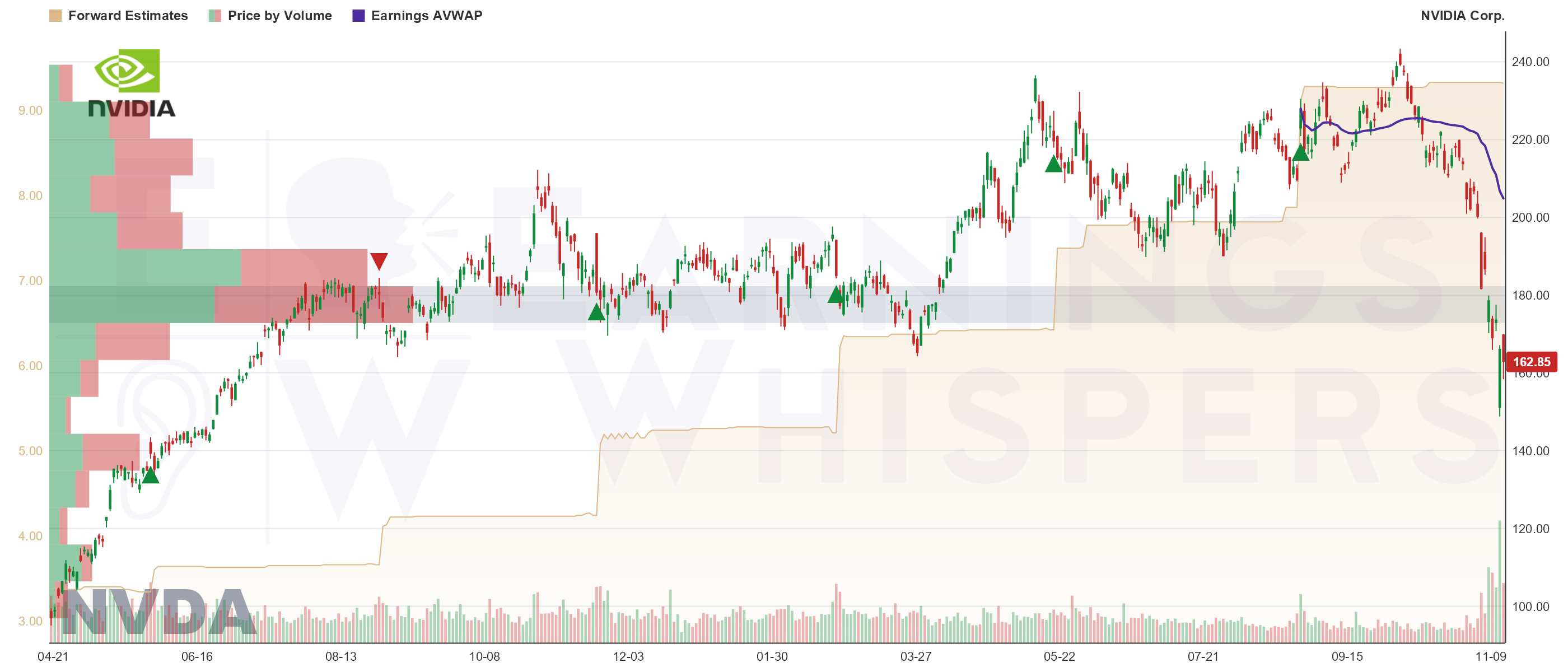
NVIDIA (NVDA) steps up to the plate Tuesday, November 17, 2026, at roughly 4:20 PM ET. Wall Street is looking for $2.49 per share on $108.99 billion in revenue, which is a jaw-dropping 91.2% jump from a year ago, while the Earnings Whisper number sits a touch higher at $2.60. The company itself guided for $2.32 to $2.47 per share on revenue between $105.84 billion and $110.16 billion. Here's the odd part: investors are feeling bearish heading in, yet 75.5% still expect a beat. Short interest has eased 2.2% since last quarter, but the stock has slid 26.9% from its post-earnings open and now sits 20.2% below its 200-day average of $204.13. Estimates have actually been revised higher, so the mood and the math don't quite match. Option traders are bracing for a 9.7% swing even though the stock has only moved about 3.9% on average lately, and on November 5 someone scooped up 150,633 of the $80.00 puts expiring December 18, a bet worth raising an eyebrow at.
The real story is a tug-of-war. Demand is roaring louder than ever, with management last quarter laying out a fresh roughly 70% growth target for next year and noting that if they could build enough chips, demand would support double that. Data center sales, the new AWS deal for two million more GPUs, Vera Rubin shipping at full tilt, and a parade of giant partnerships all point in one direction: up. The catch is margins. For the first time in a while, management trimmed its outlook, with gross margins expected to dip to a low of 71% to 72% thanks to soaring memory prices. Toss in some chatter about so-called circular financing, where NVIDIA's own balance sheet props up a chunk of next year's demand, and you've got a company growing like a weed while nursing one tender spot. Watch the margin commentary closely, because that's the number that will either calm the bears or feed them.
XPeng Revs Up Deliveries, But the Profit Light Is Still Flickering
XPeng (XPEV) is set to report earnings on Monday, November 16, 2026, at around 6:30 AM ET, and the mood is upbeat, with 63.4% of investors betting on a beat. Management guided for revenue between $3.23 billion and $3.48 billion. Yet the stock tells a cooler story, drifting 20.8% lower from where it opened after last quarter and now sitting a chilly 33.1% below its 200-day moving average of $14.01. Earnings estimates have been trimmed since the last report, so expectations have come down. Options traders are bracing for a 9.5% swing, a touch bigger than the 7.4% average move of recent quarters, and somebody made a splashy bet on November 4, scooping up 5,174 of the $12.00 calls expiring December 18.
Here is the real tug of war. Last quarter XPeng delivered 103,295 cars, up a whopping 65% from the prior quarter, with overseas sales topping 20,000 units for the first time. The company also made a big splash on the robot front, raising about $900 million for its humanoid unit at a $6.2 billion valuation, a record for China. The catch is that all this growth came at a cost. Car profit margins slipped to 12.1%, the company swung back to a loss after finally turning a profit at the end of last year, and its cash pile is shrinking. So the key question for Monday is simple: can XPeng keep the delivery engine roaring while finally stopping the money from leaking out the back?
PDD Heads Into Earnings With Growth Stuck in the Slow Lane
PDD (PDD) is set to report earnings before the bell on Thursday, November 19, 2026, at roughly 6:30 AM ET. Wall Street is looking for $2.78 per share on $17.30 billion in revenue, which would mark 13.7% year-over-year growth, while the Earnings Whisper number sits a touch higher at $2.87. Here is the funny part: investors are feeling gloomy heading in, yet a full 100.0% of them still expect the company to beat. The stock has slid 13.2% from where it opened after last quarter's report and now trades 12.1% below its 200 day moving average of $89.88. Estimates have actually been nudged higher since the last release, so the mood and the math are not quite shaking hands. Options traders are bracing for an 8.2% swing, a bit bigger than the 6.4% average move of late, and on Monday, November 2, someone scooped up 25,176 of the $95.00 calls expiring January 15, 2027, a clear bet that the glass is half full.
Here is what to actually watch. Last quarter was a step down, with overall revenue growth cooling to just 8% and the advertising business nearly stalling out at 3 to 4%. Profit fell about 12% and margins thinned. Two fresh clouds rolled in: a new EU tariff on cheap cross-border packages that management warned would take a real bite out of international orders, and the big first-party brand push that is now running slower than promised. The bright spots are the transaction fee business still growing double digits and a cash pile swelling past 456 billion yuan. Management's tone has shifted from victory laps to marathon talk, so the key question Thursday is whether that EU hit and ad slowdown deepen or stabilize.
Walmart's Side Hustles Are Quietly Becoming the Main Event
Walmart (WMT) steps up to the plate before the bell on Thursday, November 19, 2026, at around 7:00 AM ET. Wall Street is looking for $0.64 per share on $186.52 billion in revenue, which would be 3.9% growth from a year ago, but the whisper number is a touch higher at $0.67. Management had guided to $0.62 to $0.64 per share on $183.13 billion to $184.47 billion. Investors are feeling good, with 54.5% betting on a beat. The stock has climbed 20.4% since its last earnings open and now sits 7.7% above its 200-day average of $118.93. Still, overall estimates have been trimmed a bit since last quarter. Options traders are bracing for a 6.4% swing, a little bigger than the 4.9% average move lately, and on Monday someone scooped up 10,613 of the $111.00 puts expiring December 11, which is worth keeping an eye on.
Here is the real story heading into the print: Walmart's boring old stores are doing fine, but the money machine is now the high-margin stuff bolted on top. Last quarter they raised full-year guidance across the board, with advertising up 38%, marketplace up 52%, and membership fees hitting an all-time high. The flip side is the US comp cooled to 2.6%, though that is almost entirely a pharmacy and drug-pricing quirk rather than shoppers walking away, and gas prices above $4 have been pinching lower-income customers. Watch Q3 operating income guidance, which they warned would look soft at 2-4% as they pour tariff refunds into 11,000 rollbacks to grab grocery share. If the ad and membership engines keep humming, the thin pharmacy drag is noise.
Infleqtion's Quantum Leap Meets a Cash-Burning Reality
Infleqtion (INFQ) steps up to report earnings on Monday, November 16, 2026, at roughly 4:05 PM ET. Wall Street is bracing for a loss of $0.05 per share on revenue of $10.75 million, though our Earnings Whisper number is a touch better at a loss of $0.04. Investors are walking in nervous, yet a telling 73.3% still expect a beat. The short sellers have piled on, with short interest up 6.0% since last quarter, and the stock has slid 29.0% from where it opened after the last report, now sitting a painful 30.0% under its 200-day average of $12.11. Estimates have been trimmed across the board. Options traders are betting on a wild 15.0% swing, well above the 6.2% average move of recent quarters, and on November 5th someone scooped up 4,254 of the $9.00 calls expiring November 27th, a bold wager that the bottom is in.
Here is the real story. Last quarter the CEO swapped his one-word summary from 'momentum' to 'acceleration,' and he had the receipts to back it up. Revenue hit a record $12.6 million, more than doubling from a year ago, and management raised full-year guidance for the second straight time to about $43 million. The catalysts are stacking up fast, including a Commerce Department letter of intent for up to $100 million, a June presidential executive order with funded quantum deadlines, a DOE mission win, and Eaton as a new customer. The catch? That $100 million is still just a letter, not a signed check, and losses are getting wider on purpose as the company spends ahead of its revenue. Management is openly guiding to even more cash burn into 2027. With a fat $582 million cash pile and no debt, they can afford the bet. The question Monday is whether the acceleration story is loud enough to drown out the burn.
Alibaba's AI Cloud Is Catching Fire, But the Spending Bill Is Steep
Alibaba (BABA) steps up to the earnings plate before the sun rises on Thursday, November 19, 2026, at roughly 5:30 AM ET. Wall Street is looking for $1.63 per share on $40.41 billion in revenue, which would mark a healthy 16.1% jump in sales from a year ago, though the quieter Earnings Whisper number sits a touch lower at $1.56. Investors are feeling upbeat, with half the crowd betting on a beat, yet the stock tells a more cautious story. Shares have slid 23.6% since the last report and now sit 23.3% below their 200-day average of $123.05, and analysts have been trimming their estimates since last time out. Options traders are bracing for an 8.1% swing, a bit bigger than the 6.6% average move lately. On November 12, some big players loaded up on 16,973 of the $115 calls and 14,569 of the $140 puts expiring January 15, 2027, so the smart money is clearly hedging its bets in both directions.
Here is the real story heading into the print. Alibaba's cloud business has quietly turned into a rocket, with external revenue growth climbing four quarters straight to a 22 quarter high of 45%, and profit margins jumping to 12%. Their AI products are now pulling in over $7 billion in annual recurring revenue, and their homegrown chips are winning over hundreds of new customers. The catch is the price tag. The company is spending enormous sums building out AI data centers, which pushed free cash flow deep into the red and knocked net income down a jaw-dropping 75%. Meanwhile, the bread and butter China shopping business is feeling the pinch from a soft economy. So the big question for Thursday is simple: are investors willing to stomach the eye-watering spending today for the AI payoff management keeps promising for tomorrow?
Home Depot: Demand Is Waking Up, But the Fog Hasn't Lifted
Home Depot (HD) is confirmed to report earnings on Tuesday, November 17, 2026, at roughly 6:00 AM ET, and the crowd is walking in nervously even though almost everyone (90.9%) still expects a win. Wall Street is looking for $3.86 per share on $42.72 billion in revenue, which would be 3.3% growth from a year ago, while the Earnings Whisper number sits a touch higher at $3.89. The stock has quietly climbed 3.5% from where it opened after the last report and now trades 4.7% above its 200-day moving average of $332.89, even as analysts have been trimming their estimates since then. Options traders are betting on a 5.2% swing, which is a big ask considering the stock has only moved about 2.1% on average lately. One wrinkle worth noting: on November 12, someone scooped up 4,001 of the $420 calls expiring in September 2027, a sizable long-term bet that HD has room to run.
Here is the real story heading in. Last quarter demand finally showed signs of life, with comparable sales accelerating to +1.7% and 13 of 16 departments growing, a clear step up from the near-flat crawl of recent quarters. Big-ticket projects, online sales, and the SRS pro business all turned higher, and new goodies like nationwide express delivery are landing. But here is the catch that keeps this from being a slam dunk: management reaffirmed guidance instead of raising it, a one-time $685 million tariff refund flattered margins and fades from here, new fuel and materials costs are creeping in, housing turnover is stuck at 40-year lows, and CEO Ted Decker is still on medical leave. In short, the engine is finally revving, but there is enough haze around margins and leadership to keep investors tapping the brakes until they hear the back-half plan.
Palo Alto Heads Into Earnings Firing On All Cylinders
Palo Alto Networks (PANW) steps up to the plate after the bell on Wednesday, November 18, 2026, at about 4:05 PM ET. Wall Street is looking for $0.97 per share on $3.31 billion in revenue, which would be a hefty 33.8% jump in sales from a year ago, while the Earnings Whisper number is a touch higher at $1.00. Management had guided for $0.96 to $0.98 per share on $3.30 to $3.31 billion. Here is the funny part: investors are feeling gloomy heading in, yet a full 80% of them still expect the company to beat. Short sellers have backed off, cutting their bets by 8% since last quarter, even as the stock has slid 6.9% since its last earnings day. It still sits a comfy 16.4% above its 200-day average of $276.73, and estimates have been nudged higher across the board. Options traders are bracing for an 11.3% swing, which is bigger than the usual 6.5% move, and on November 6 someone scooped up 4,067 of the $250 puts expiring in December 2028.
Last quarter was a blowout that set the tone. Annual recurring revenue from next-gen products rocketed past $9.1 billion, up 63%, with nearly a billion dollars added in a single quarter. Future booked business crossed $20 billion for the first time ever, and bookings have now sped up two quarters in a row. The CyberArk and Chronosphere deals are paying off faster than planned, newer products like XIM and Prisma AIRS are flying off the shelves, and CEO Nikesh Arora sounded downright giddy, declaring the old fear about software eating cybersecurity officially dead and replaced by an AI gold rush. The one thing to watch: growth rates cool off next year as those big acquisitions get lapped and a chunky one-time customer win fades, plus rising memory costs nibble at margins. But that is mostly math, not a demand problem, so the real story is a company closing out a banner year with its chest puffed out.
Target Finds Its Bullseye Again
Target (TGT) is confirmed to report earnings on Wednesday, November 18, 2026, at roughly 6:30 AM ET. Wall Street is looking for $2.04 per share on revenue of $26.38 billion, which would be 4.4% growth from a year ago, but the Earnings Whisper number is a loftier $2.17. Simply put, the crowd is feeling good, with a full 100% expecting a beat. The stock has climbed 9.2% from where it opened after last quarter's report and now sits 18.2% above its 200-day moving average of $136.55. Estimates have been marching higher since the last release; option traders are bracing for a 9.0% swing even though the stock has typically moved about 4.9% lately, and on Monday someone scooped up a notable 60,063 of the $80.00 calls expiring January 15, 2027.
Here is the real story: Target's turnaround is finally sticking. Last quarter comparable sales rose 3.8% on actual foot traffic, not gimmicks, and management raised full-year sales guidance to about 5% while lifting the earnings outlook to $9.90 to $10.90. The fun stuff is working too, with snacks, Lego, plush toys, and even $10 headphones flying off the shelves, plus splashy collabs and a shiny new Beauty Studio rolling out. The catch? That jaw-dropping prior quarter was puffed up by a one-time $1.65 tariff refund, so don't let the headline fool you, and the home and apparel aisles are still limping along with a recovery that won't really land until 2027. Watch the comps and the traffic numbers closely, because that is where the proof lives.
Baidu's Cloud Rockets While the Old Engine Sputters
Baidu (BIDU) is set to report earnings before the sun comes up on Monday, November 16, 2026, at roughly 5:00 AM ET. Wall Street is looking for $0.85 per share on revenue of $4.61 billion, which would be a modest 5.3% bump in revenue from a year ago, though our Earnings Whisper number sits a touch higher at $0.91. Investors are walking in grumpy, with only 30% betting on a beat, and the stock shows it, having slid 17.2% from where it opened after last quarter's report and now sitting a painful 29.5% below its 200-day average of $110.83. Analysts have been trimming their estimates since the last go-round, so expectations are heading down. Option traders are bracing for a 7.8% swing, bigger than the 5.0% average move of late, and on Thursday, October 29, 2026, someone scooped up a chunky 6,574 contracts of the $140.00 puts expiring January 15, 2027, a clear bet that more pain could be coming.
Here is the story in plain English: Baidu is really two companies right now. The AI cloud and chip side is on fire, with GPU cloud revenue up a jaw-dropping 283% from a year ago and management hinting it could speed up even more. That is the good news. The bad news is the old-school business is tired. Total revenue actually dipped last quarter, advertising is expected to stay weak as the company deliberately holds back on squeezing money from AI search, and profits took a real hit. Even the robotaxi arm, ApolloGo, hit a wall at home, dropping from 3.2 million driverless rides to just 1 million after regulators told them to pump the brakes in some cities, though those cities started coming back online by August. So the big question for Monday is simple: does the sizzling cloud growth matter more to investors than the shrinking top line and softer margins? Buckle up.
SimilarWeb Heads Into Earnings Riding a Hot Streak
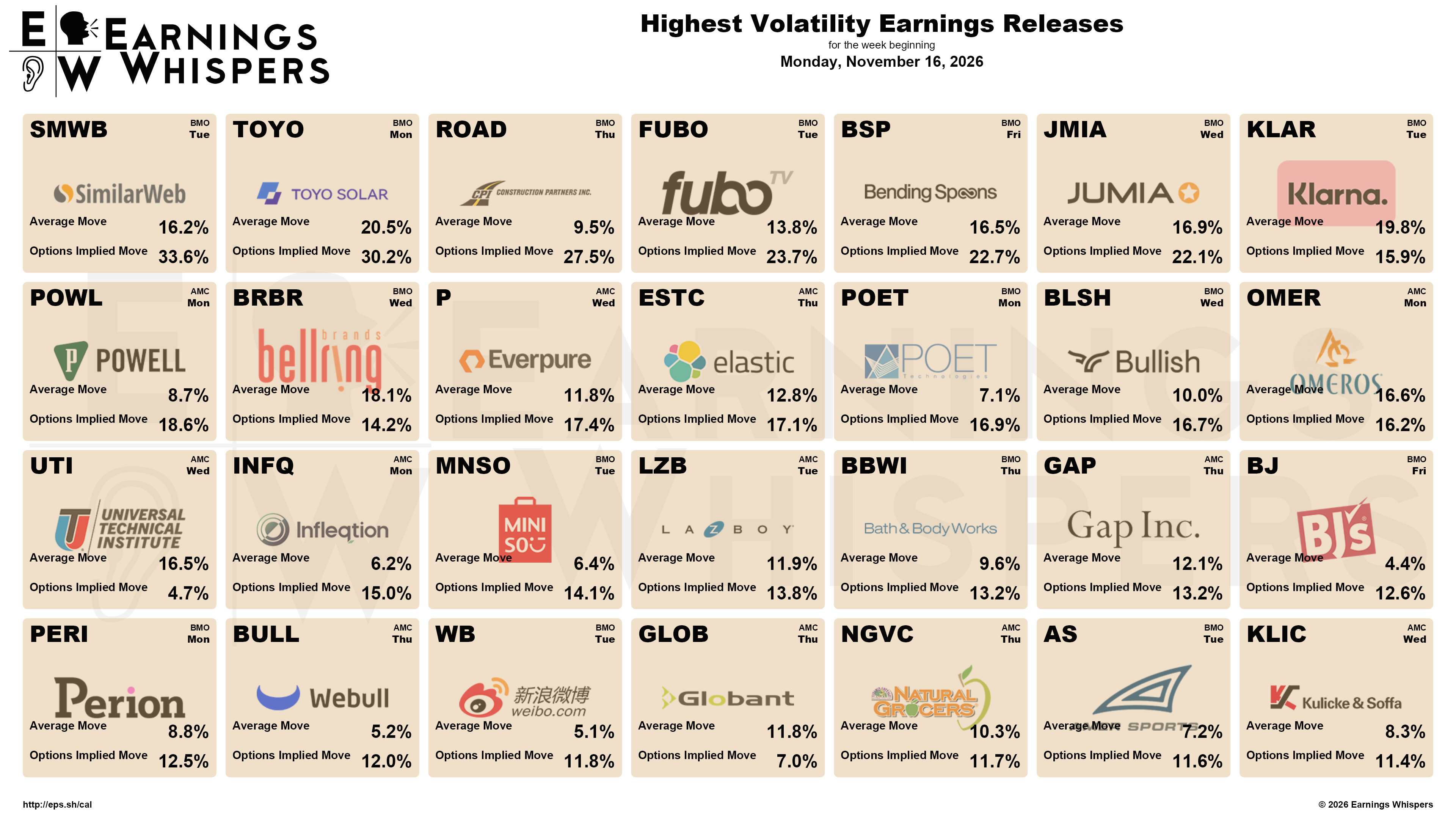
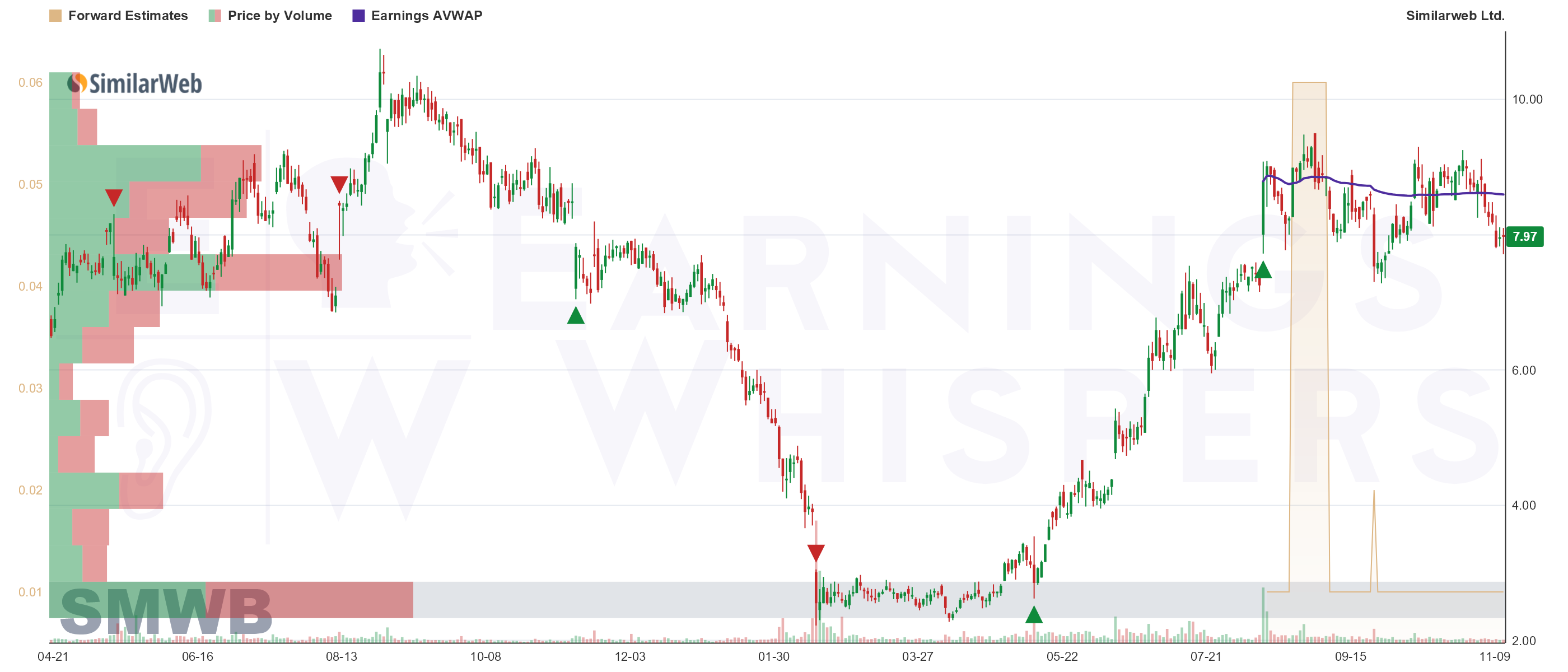
Similarweb (SMWB) is set to report earnings before the bell on Tuesday, November 17, 2026, at around 7:00 AM ET. Wall Street is looking for $0.08 per share on revenue of $81.50 million, which would be 13.5% growth from a year ago, and the Earnings Whisper number also sits at $0.08 per share. That lines up neatly with the company's own guidance of $80.50 million to $82.50 million. Here is the funny part: investors are walking in grumpy and bearish, yet they expect results right in line with the numbers. Short sellers seem to be losing their nerve, with short interest down 21.1% since last quarter, even as the stock has barely budged, drifting 0.4% lower from its post-earnings open while still sitting a cool 41.7% above its 200-day moving average of $5.63. Analysts have been nudging their estimates higher, and option traders are bracing for a wild 33.6% swing, though the stock has only averaged a 16.2% move in recent quarters.
Here is what you really need to know: last quarter was a turning point, and management is not shy about saying so. They raised full-year guidance for the second time this year, posted their first-ever positive GAAP operating profit, and landed more than $60 million in big multi-year enterprise data deals, with a fourth signed in July. They also bagged a third customer worth over $10 million a year in recurring revenue. Even better, two of the three giant deals were not about training AI models, which opens up a much bigger pool of future business. The things to keep one eye on are the CEO search that has dragged on since early this year and is not expected to wrap until mid-2027, plus the lumpy nature of these huge contracts. But the momentum here is hard to ignore, and the crowd betting against it may be in for a surprise.
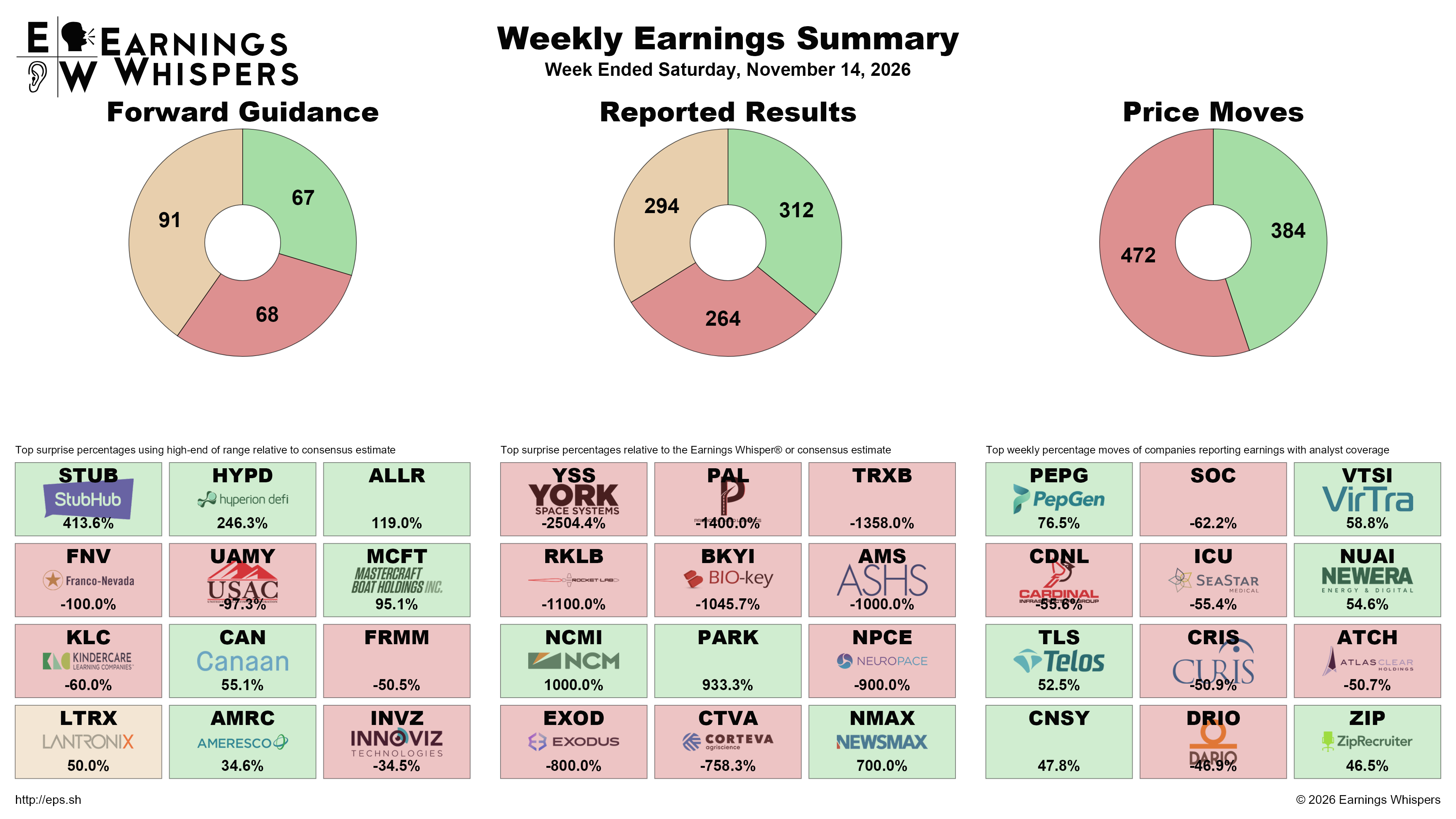
AI's Power Hunger Lights Up Earnings as Tech Spending Spreads to Nuclear, Pipes and Gas
If there was one thread running through last week's earnings parade, it was this: the artificial intelligence boom is no longer just a story about chips and software. It is reaching deep into the old economy, and the companies feeding the data center buildout are cashing in. Cisco stole the show with its strongest growth in more than 15 years, hiking its full-year AI revenue target to a stunning $9 billion from $7.5 billion as hyperscalers snapped up its networking gear, even as the pace of new orders cooled from its recent frenzy. Applied Materials matched the mood, calling for chip equipment spending to jump more than 30% in 2027 and posting record results, with advanced packaging sales now expected to nearly double. The power side of the trade was just as electric: Constellation Energy signed landmark deals with Google and Amazon to supply nuclear power, raised its profit outlook for the second straight time, and watched its stock pop 12%. Venture Global, meanwhile, soared nearly 14% as it delivered its first gas from a major new Louisiana facility ahead of schedule and unveiled a bold plan to build its own power 'islands' to feed AI data centers, nearly doubling its profit forecast since the start of the year.
The ripple effects reached corners you might not expect. Ferguson, the plumbing and building-products distributor, saw its industrial business surge 55% as it quietly rides the construction wave behind all those server farms, though a cooling housing market cast a shadow over next year. NRG Energy leaned into the theme too, nearing a deal to power a huge Texas data center while selling off $4 billion in older plants to fund bigger buybacks. Not everyone was riding the same high, though. Brookfield showed its earnings engine finally kicking into gear with carried interest payouts climbing and a record-breaking infrastructure fund in the works, even as its insurance arm deliberately eased off selling annuities rather than chase risky rates. Occidental Petroleum impressed less with growth than with discipline, hitting a $10 billion debt-reduction milestone early and teasing the possibility of becoming cash-rich by 2027. The two wobblier names were Sea Ltd., where a record quarter was overshadowed by slowing online shopping growth and rising loan defaults, and Nu Holdings, the Latin American digital bank that posted record profits and cheaper operating costs but saw its loan growth decelerate and late payments creep up. The takeaway for ordinary investors: the market is handsomely rewarding anyone who can supply the picks, shovels and electricity for the AI gold rush, while treating consumer-facing growth stories with a far more skeptical eye.
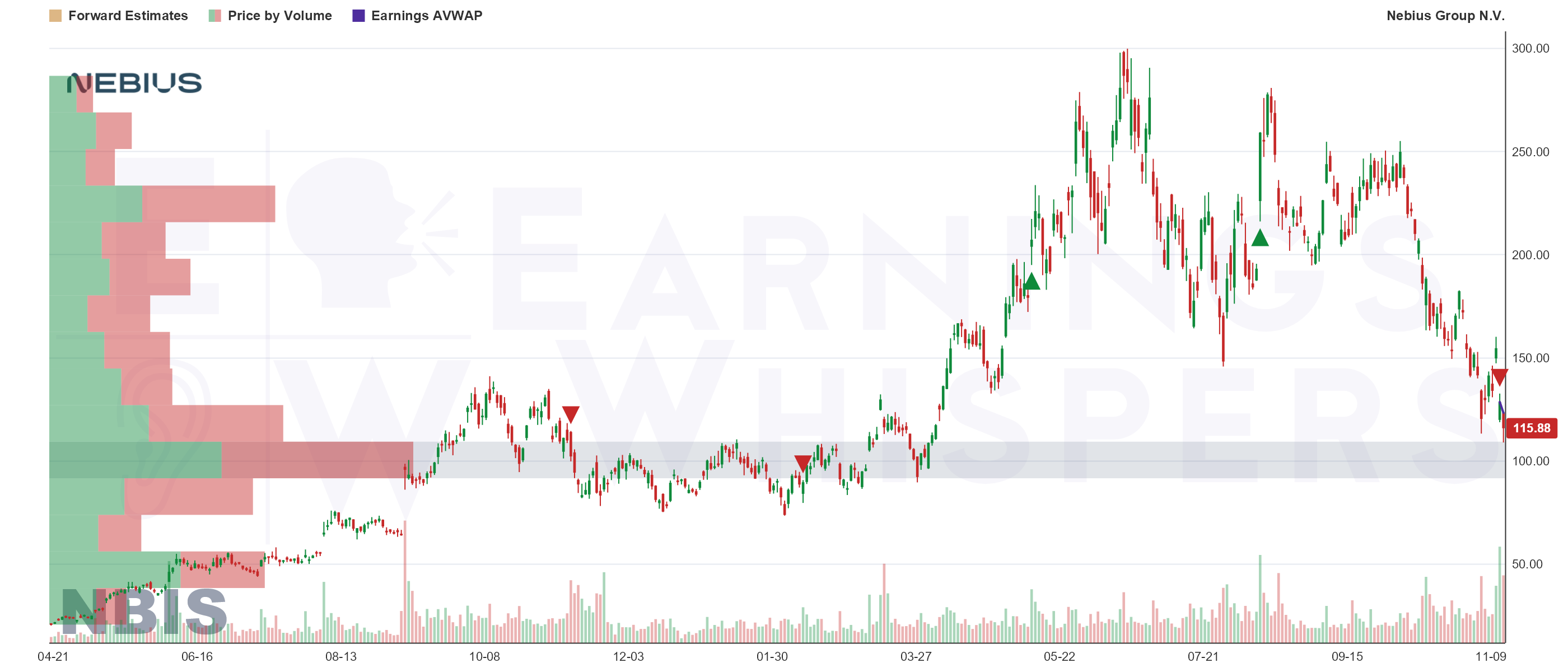
Nebius Crushes Estimates, But Trims 2026 on Timing Hiccups
Nebius Group N.V. Cl A (NBIS), the AI cloud company building the full-stack platform for developers and companies to take charge of their AI future, posted a loss of $0.13 per share on revenue of $980.80 million for the third quarter ended September 2026. That blew past the consensus loss of $0.61 per share and the Earnings Whisper of $0.49, beating by a whopping 73.47 percent, while revenue exploded 571.32 percent from a year ago. In its shareholder letter, Nebius now expects 2026 revenue at the low end of its prior $3.00 billion to $3.40 billion range, just under the $3.38 billion analysts wanted. The company also rolled out a jaw-dropping first look at 2027, calling for revenue of $12.00 billion to $13.00 billion, right in line with the $12.21 billion consensus.
Here is the real story. This is the first time in four quarters Nebius has nudged its 2026 target lower, and the culprit is timing, not demand. A few data center sites, including one in Vineland, New Jersey, got pushed back after a power partner pulled temporary generation, bumping some capacity into next year. The good news drowns out the bad. Customers are now paying more per megawatt and prepaying for more than 100 percent of new capacity costs, meaning clients are funding the buildout before Nebius spends a dime. Big names like Databricks, Snowflake, Datadog and Palantir all signed on, with Palantir naming Nebius its preferred AI cloud. The catch for cautious investors is that capex is ballooning toward $40 billion to $45 billion in 2027, cash dipped, and the company is leaning on new debt and share issuance to fuel the growth. Translation: the engine is roaring, but the fuel bill is getting expensive.
CoreWeave Misses on Profit, But Growth Engine Roars On
CoreWeave posted a wider-than-expected loss of $1.27 per share for its September quarter, worse than the $1.17 Wall Street penciled in and well off the $1.00 whisper number. But here's the twist that has investors forgiving the miss: revenue rocketed 168% to $3.66 billion, sailing past estimates, and the company bumped its full-year outlook up to $13.0 to $13.3 billion. CEO Michael Intrator called it a "breakout quarter," and the numbers back him up, with revenue jumping more than $1 billion from the prior quarter and profit margins hitting double digits a full quarter ahead of schedule. The real kicker is funding flexibility: CoreWeave expects roughly $9 billion in customer prepayments and deposits to roll in over the next three months alone, giving it plenty of fuel to keep building the AI infrastructure everyone is scrambling for.
So why the loss? CoreWeave is spending like a kid in a candy store, with capital spending now guided to $37 to $39 billion and interest costs climbing fast, hitting $846 million this quarter and headed toward $1.1 billion next. That pushed the net loss to $709 million. But the demand picture is stunning, with qualified orders running ten times the capacity CoreWeave can supply through 2027, a backlog ballooning to about $133 billion, and pricing power so strong the company raised prices twice in one quarter. Management is playing it smart on money, swearing off expensive unsecured debt and leaning on customer cash instead. The bottom line: the growth story is firing on all cylinders, and the only real worry now is financing costs and regulation, not whether anyone wants what CoreWeave is selling.
Rocket Lab's Rockets Fly, But Neutron Keeps Us Waiting
Rocket Lab (RKLB) posted a loss of $0.12 per share on revenue of $267.83 million for the third quarter ended September 2026. Wall Street was looking for a much smaller loss of just $0.02 per share on $256.51 million in sales, and the whisper crowd expected a loss of only a penny. So yes, the earnings miss looks ugly on paper, blowing past expectations by a jaw-dropping 1,100 percent. But before you hit the eject button, look at the revenue line, which rocketed 72.71 percent higher than a year ago. Much of that red ink came from one-time costs tied to the Iridium deal, not a broken business. Looking ahead, the company expects fourth-quarter revenue between $270.0 million and $290.0 million, comfortably above the $267.5 million the Street had penciled in.
Here is the real story. Founder and CEO Sir Peter Beck called it a defining quarter, and the numbers back him up. Backlog exploded 52 percent in just three months to a record $3.57 billion, with nearly a billion dollars of fresh launch contracts signed in the quarter alone. Demand is so strong that Rocket Lab is actually turning away cheaper business and hiking prices, pushing its new Neutron rocket base price up to $70 million from around $52 million. The catch, and it is a real one, is that Neutron's first flight has slipped from this year into 2027 after engineers found flaws in a key part, which also pushes back the day this company finally makes money. Bottom line: demand and pricing have never looked better, but the clock on Neutron is ticking and investors want to see it fly.
Nu Breaks Records, Goes Global, Nicks the Quarter on a One-Off Charge
NU Holdings Ltd Cl A (NU) reported earnings of $0.22 per share on revenue of $5.82 billion for the third quarter ended September 2026. The consensus earnings estimate was $0.22 per share on revenue of $5.70 billion, while the Earnings Whisper number was $0.24 per share. So the company matched the official estimate but came in 8.33% shy of the whisper, even as revenue grew a juicy 39.49% from a year ago. For a company that now serves more than 48 million customers (and counting far higher on its broader base) across Brazil, Mexico and Colombia, this was a record quarter dressed up with a small blemish. Nu is one of the world's largest digital banking platforms, and it is clearly not content to stay in Latin America anymore.
Here is the real story. Nu posted a record $1.1 billion in net income on $6.3 billion in gross revenue, and it even cut its full-year efficiency guidance to 19 to 19.5% (lower is better here). It launched NuUS in September and NuGlobal in October, planting a flag in all 50 U.S. states and 37 countries without blowing its cost budget. The one thing holding back a louder cheer is credit. A one-time charge tied to a failed payment partner shaved about $53 million off the bottom line, loan growth is cooling, and late-stage missed payments ticked up to 7.3%. Management sounds more confident than ever, with a first-ever Investor Day set for December 8. Bottom line: things are getting better, just keep one eye on those rising delinquencies while Brazil tightens the screws on consumer debt.
Cisco's AI Engine Roars, Even as Order Growth Cools
Cisco (CSCO) just posted its best growth in over 15 years, earning $1.40 per share on revenue of $18.52 billion for the fiscal first quarter ended October 2026. That topped the $1.33 consensus and the $1.38 whisper number, beating by 1.45% as revenue jumped a huge 24.42% from a year ago. Better yet, management sweetened the pot: they now see second quarter earnings of $1.34 to $1.36 per share on $18.0 to $18.2 billion in revenue, well ahead of the $1.24 Street estimate. For the full fiscal 2027 year, Cisco raised its outlook to $5.47 to $5.53 per share on $74.8 to $75.8 billion, up sharply from its prior $5.05 to $5.11 on $72.2 to $73.4 billion, and comfortably above the $5.13 consensus. Not bad for a company that still quietly runs much of the internet's plumbing.
The real story here is AI. Cisco hiked its hyperscale AI revenue target for the year to a cool $9 billion, up from $7.5 billion just last quarter and about $6 billion two quarters ago. They landed three new design wins, including their first big optics win at a hyperscaler, and their new G300 chip is already shipping into customer labs. The one wrinkle to watch: order growth slowed to 21% from 35%, and gross margins got squeezed by pricier memory and hardware. But with guidance raised across the board and zero cuts, the gas pedal is clearly still down. We'd buy the dips.
The other headline act is American retail, as Walmart, Home Depot, Lowe's, Target, TJX and Ross Stores all throw open their books just as the critical holiday shopping season kicks into gear. Walmart and Lowe's walk in with the wind at their backs and genuine optimism about the consumer, while Target looks like the wildcard, carrying momentum into the print even as doubts linger about whether shoppers will keep spending. Overseas, a cluster of Chinese heavyweights such as Alibaba, PDD, JD.com and Baidu will test whether the long-awaited turnaround story finally has legs, though sentiment there remains a mixed bag of hope and hesitation. Toss in Disney's always-watched quarterly check-in and a few sleeper standouts like Williams-Sonoma and shipping play ZIM that are quietly drawing bullish buzz, and you have a week packed with enough fireworks to keep even casual market watchers glued to the ticker.
NVIDIA Earnings: Monster Growth Meets a Margin Speed Bump
NVIDIA (NVDA) steps up to the plate Tuesday, November 17, 2026, at roughly 4:20 PM ET. Wall Street is looking for $2.49 per share on $108.99 billion in revenue, which is a jaw-dropping 91.2% jump from a year ago, while the Earnings Whisper number sits a touch higher at $2.60. The company itself guided for $2.32 to $2.47 per share on revenue between $105.84 billion and $110.16 billion. Here's the odd part: investors are feeling bearish heading in, yet 75.5% still expect a beat. Short interest has eased 2.2% since last quarter, but the stock has slid 26.9% from its post-earnings open and now sits 20.2% below its 200-day average of $204.13. Estimates have actually been revised higher, so the mood and the math don't quite match. Option traders are bracing for a 9.7% swing even though the stock has only moved about 3.9% on average lately, and on November 5 someone scooped up 150,633 of the $80.00 puts expiring December 18, a bet worth raising an eyebrow at.
The real story is a tug-of-war. Demand is roaring louder than ever, with management last quarter laying out a fresh roughly 70% growth target for next year and noting that if they could build enough chips, demand would support double that. Data center sales, the new AWS deal for two million more GPUs, Vera Rubin shipping at full tilt, and a parade of giant partnerships all point in one direction: up. The catch is margins. For the first time in a while, management trimmed its outlook, with gross margins expected to dip to a low of 71% to 72% thanks to soaring memory prices. Toss in some chatter about so-called circular financing, where NVIDIA's own balance sheet props up a chunk of next year's demand, and you've got a company growing like a weed while nursing one tender spot. Watch the margin commentary closely, because that's the number that will either calm the bears or feed them.
XPeng Revs Up Deliveries, But the Profit Light Is Still Flickering
XPeng (XPEV) is set to report earnings on Monday, November 16, 2026, at around 6:30 AM ET, and the mood is upbeat, with 63.4% of investors betting on a beat. Management guided for revenue between $3.23 billion and $3.48 billion. Yet the stock tells a cooler story, drifting 20.8% lower from where it opened after last quarter and now sitting a chilly 33.1% below its 200-day moving average of $14.01. Earnings estimates have been trimmed since the last report, so expectations have come down. Options traders are bracing for a 9.5% swing, a touch bigger than the 7.4% average move of recent quarters, and somebody made a splashy bet on November 4, scooping up 5,174 of the $12.00 calls expiring December 18.
Here is the real tug of war. Last quarter XPeng delivered 103,295 cars, up a whopping 65% from the prior quarter, with overseas sales topping 20,000 units for the first time. The company also made a big splash on the robot front, raising about $900 million for its humanoid unit at a $6.2 billion valuation, a record for China. The catch is that all this growth came at a cost. Car profit margins slipped to 12.1%, the company swung back to a loss after finally turning a profit at the end of last year, and its cash pile is shrinking. So the key question for Monday is simple: can XPeng keep the delivery engine roaring while finally stopping the money from leaking out the back?
PDD Heads Into Earnings With Growth Stuck in the Slow Lane
PDD (PDD) is set to report earnings before the bell on Thursday, November 19, 2026, at roughly 6:30 AM ET. Wall Street is looking for $2.78 per share on $17.30 billion in revenue, which would mark 13.7% year-over-year growth, while the Earnings Whisper number sits a touch higher at $2.87. Here is the funny part: investors are feeling gloomy heading in, yet a full 100.0% of them still expect the company to beat. The stock has slid 13.2% from where it opened after last quarter's report and now trades 12.1% below its 200 day moving average of $89.88. Estimates have actually been nudged higher since the last release, so the mood and the math are not quite shaking hands. Options traders are bracing for an 8.2% swing, a bit bigger than the 6.4% average move of late, and on Monday, November 2, someone scooped up 25,176 of the $95.00 calls expiring January 15, 2027, a clear bet that the glass is half full.
Here is what to actually watch. Last quarter was a step down, with overall revenue growth cooling to just 8% and the advertising business nearly stalling out at 3 to 4%. Profit fell about 12% and margins thinned. Two fresh clouds rolled in: a new EU tariff on cheap cross-border packages that management warned would take a real bite out of international orders, and the big first-party brand push that is now running slower than promised. The bright spots are the transaction fee business still growing double digits and a cash pile swelling past 456 billion yuan. Management's tone has shifted from victory laps to marathon talk, so the key question Thursday is whether that EU hit and ad slowdown deepen or stabilize.
Walmart's Side Hustles Are Quietly Becoming the Main Event
Walmart (WMT) steps up to the plate before the bell on Thursday, November 19, 2026, at around 7:00 AM ET. Wall Street is looking for $0.64 per share on $186.52 billion in revenue, which would be 3.9% growth from a year ago, but the whisper number is a touch higher at $0.67. Management had guided to $0.62 to $0.64 per share on $183.13 billion to $184.47 billion. Investors are feeling good, with 54.5% betting on a beat. The stock has climbed 20.4% since its last earnings open and now sits 7.7% above its 200-day average of $118.93. Still, overall estimates have been trimmed a bit since last quarter. Options traders are bracing for a 6.4% swing, a little bigger than the 4.9% average move lately, and on Monday someone scooped up 10,613 of the $111.00 puts expiring December 11, which is worth keeping an eye on.
Here is the real story heading into the print: Walmart's boring old stores are doing fine, but the money machine is now the high-margin stuff bolted on top. Last quarter they raised full-year guidance across the board, with advertising up 38%, marketplace up 52%, and membership fees hitting an all-time high. The flip side is the US comp cooled to 2.6%, though that is almost entirely a pharmacy and drug-pricing quirk rather than shoppers walking away, and gas prices above $4 have been pinching lower-income customers. Watch Q3 operating income guidance, which they warned would look soft at 2-4% as they pour tariff refunds into 11,000 rollbacks to grab grocery share. If the ad and membership engines keep humming, the thin pharmacy drag is noise.
Infleqtion's Quantum Leap Meets a Cash-Burning Reality
Infleqtion (INFQ) steps up to report earnings on Monday, November 16, 2026, at roughly 4:05 PM ET. Wall Street is bracing for a loss of $0.05 per share on revenue of $10.75 million, though our Earnings Whisper number is a touch better at a loss of $0.04. Investors are walking in nervous, yet a telling 73.3% still expect a beat. The short sellers have piled on, with short interest up 6.0% since last quarter, and the stock has slid 29.0% from where it opened after the last report, now sitting a painful 30.0% under its 200-day average of $12.11. Estimates have been trimmed across the board. Options traders are betting on a wild 15.0% swing, well above the 6.2% average move of recent quarters, and on November 5th someone scooped up 4,254 of the $9.00 calls expiring November 27th, a bold wager that the bottom is in.
Here is the real story. Last quarter the CEO swapped his one-word summary from 'momentum' to 'acceleration,' and he had the receipts to back it up. Revenue hit a record $12.6 million, more than doubling from a year ago, and management raised full-year guidance for the second straight time to about $43 million. The catalysts are stacking up fast, including a Commerce Department letter of intent for up to $100 million, a June presidential executive order with funded quantum deadlines, a DOE mission win, and Eaton as a new customer. The catch? That $100 million is still just a letter, not a signed check, and losses are getting wider on purpose as the company spends ahead of its revenue. Management is openly guiding to even more cash burn into 2027. With a fat $582 million cash pile and no debt, they can afford the bet. The question Monday is whether the acceleration story is loud enough to drown out the burn.
Alibaba's AI Cloud Is Catching Fire, But the Spending Bill Is Steep
Alibaba (BABA) steps up to the earnings plate before the sun rises on Thursday, November 19, 2026, at roughly 5:30 AM ET. Wall Street is looking for $1.63 per share on $40.41 billion in revenue, which would mark a healthy 16.1% jump in sales from a year ago, though the quieter Earnings Whisper number sits a touch lower at $1.56. Investors are feeling upbeat, with half the crowd betting on a beat, yet the stock tells a more cautious story. Shares have slid 23.6% since the last report and now sit 23.3% below their 200-day average of $123.05, and analysts have been trimming their estimates since last time out. Options traders are bracing for an 8.1% swing, a bit bigger than the 6.6% average move lately. On November 12, some big players loaded up on 16,973 of the $115 calls and 14,569 of the $140 puts expiring January 15, 2027, so the smart money is clearly hedging its bets in both directions.
Here is the real story heading into the print. Alibaba's cloud business has quietly turned into a rocket, with external revenue growth climbing four quarters straight to a 22 quarter high of 45%, and profit margins jumping to 12%. Their AI products are now pulling in over $7 billion in annual recurring revenue, and their homegrown chips are winning over hundreds of new customers. The catch is the price tag. The company is spending enormous sums building out AI data centers, which pushed free cash flow deep into the red and knocked net income down a jaw-dropping 75%. Meanwhile, the bread and butter China shopping business is feeling the pinch from a soft economy. So the big question for Thursday is simple: are investors willing to stomach the eye-watering spending today for the AI payoff management keeps promising for tomorrow?
Home Depot: Demand Is Waking Up, But the Fog Hasn't Lifted
Home Depot (HD) is confirmed to report earnings on Tuesday, November 17, 2026, at roughly 6:00 AM ET, and the crowd is walking in nervously even though almost everyone (90.9%) still expects a win. Wall Street is looking for $3.86 per share on $42.72 billion in revenue, which would be 3.3% growth from a year ago, while the Earnings Whisper number sits a touch higher at $3.89. The stock has quietly climbed 3.5% from where it opened after the last report and now trades 4.7% above its 200-day moving average of $332.89, even as analysts have been trimming their estimates since then. Options traders are betting on a 5.2% swing, which is a big ask considering the stock has only moved about 2.1% on average lately. One wrinkle worth noting: on November 12, someone scooped up 4,001 of the $420 calls expiring in September 2027, a sizable long-term bet that HD has room to run.
Here is the real story heading in. Last quarter demand finally showed signs of life, with comparable sales accelerating to +1.7% and 13 of 16 departments growing, a clear step up from the near-flat crawl of recent quarters. Big-ticket projects, online sales, and the SRS pro business all turned higher, and new goodies like nationwide express delivery are landing. But here is the catch that keeps this from being a slam dunk: management reaffirmed guidance instead of raising it, a one-time $685 million tariff refund flattered margins and fades from here, new fuel and materials costs are creeping in, housing turnover is stuck at 40-year lows, and CEO Ted Decker is still on medical leave. In short, the engine is finally revving, but there is enough haze around margins and leadership to keep investors tapping the brakes until they hear the back-half plan.
Palo Alto Heads Into Earnings Firing On All Cylinders
Palo Alto Networks (PANW) steps up to the plate after the bell on Wednesday, November 18, 2026, at about 4:05 PM ET. Wall Street is looking for $0.97 per share on $3.31 billion in revenue, which would be a hefty 33.8% jump in sales from a year ago, while the Earnings Whisper number is a touch higher at $1.00. Management had guided for $0.96 to $0.98 per share on $3.30 to $3.31 billion. Here is the funny part: investors are feeling gloomy heading in, yet a full 80% of them still expect the company to beat. Short sellers have backed off, cutting their bets by 8% since last quarter, even as the stock has slid 6.9% since its last earnings day. It still sits a comfy 16.4% above its 200-day average of $276.73, and estimates have been nudged higher across the board. Options traders are bracing for an 11.3% swing, which is bigger than the usual 6.5% move, and on November 6 someone scooped up 4,067 of the $250 puts expiring in December 2028.
Last quarter was a blowout that set the tone. Annual recurring revenue from next-gen products rocketed past $9.1 billion, up 63%, with nearly a billion dollars added in a single quarter. Future booked business crossed $20 billion for the first time ever, and bookings have now sped up two quarters in a row. The CyberArk and Chronosphere deals are paying off faster than planned, newer products like XIM and Prisma AIRS are flying off the shelves, and CEO Nikesh Arora sounded downright giddy, declaring the old fear about software eating cybersecurity officially dead and replaced by an AI gold rush. The one thing to watch: growth rates cool off next year as those big acquisitions get lapped and a chunky one-time customer win fades, plus rising memory costs nibble at margins. But that is mostly math, not a demand problem, so the real story is a company closing out a banner year with its chest puffed out.
Target Finds Its Bullseye Again
Target (TGT) is confirmed to report earnings on Wednesday, November 18, 2026, at roughly 6:30 AM ET. Wall Street is looking for $2.04 per share on revenue of $26.38 billion, which would be 4.4% growth from a year ago, but the Earnings Whisper number is a loftier $2.17. Simply put, the crowd is feeling good, with a full 100% expecting a beat. The stock has climbed 9.2% from where it opened after last quarter's report and now sits 18.2% above its 200-day moving average of $136.55. Estimates have been marching higher since the last release; option traders are bracing for a 9.0% swing even though the stock has typically moved about 4.9% lately, and on Monday someone scooped up a notable 60,063 of the $80.00 calls expiring January 15, 2027.
Here is the real story: Target's turnaround is finally sticking. Last quarter comparable sales rose 3.8% on actual foot traffic, not gimmicks, and management raised full-year sales guidance to about 5% while lifting the earnings outlook to $9.90 to $10.90. The fun stuff is working too, with snacks, Lego, plush toys, and even $10 headphones flying off the shelves, plus splashy collabs and a shiny new Beauty Studio rolling out. The catch? That jaw-dropping prior quarter was puffed up by a one-time $1.65 tariff refund, so don't let the headline fool you, and the home and apparel aisles are still limping along with a recovery that won't really land until 2027. Watch the comps and the traffic numbers closely, because that is where the proof lives.
Baidu's Cloud Rockets While the Old Engine Sputters
Baidu (BIDU) is set to report earnings before the sun comes up on Monday, November 16, 2026, at roughly 5:00 AM ET. Wall Street is looking for $0.85 per share on revenue of $4.61 billion, which would be a modest 5.3% bump in revenue from a year ago, though our Earnings Whisper number sits a touch higher at $0.91. Investors are walking in grumpy, with only 30% betting on a beat, and the stock shows it, having slid 17.2% from where it opened after last quarter's report and now sitting a painful 29.5% below its 200-day average of $110.83. Analysts have been trimming their estimates since the last go-round, so expectations are heading down. Option traders are bracing for a 7.8% swing, bigger than the 5.0% average move of late, and on Thursday, October 29, 2026, someone scooped up a chunky 6,574 contracts of the $140.00 puts expiring January 15, 2027, a clear bet that more pain could be coming.
Here is the story in plain English: Baidu is really two companies right now. The AI cloud and chip side is on fire, with GPU cloud revenue up a jaw-dropping 283% from a year ago and management hinting it could speed up even more. That is the good news. The bad news is the old-school business is tired. Total revenue actually dipped last quarter, advertising is expected to stay weak as the company deliberately holds back on squeezing money from AI search, and profits took a real hit. Even the robotaxi arm, ApolloGo, hit a wall at home, dropping from 3.2 million driverless rides to just 1 million after regulators told them to pump the brakes in some cities, though those cities started coming back online by August. So the big question for Monday is simple: does the sizzling cloud growth matter more to investors than the shrinking top line and softer margins? Buckle up.
SimilarWeb Heads Into Earnings Riding a Hot Streak
Similarweb (SMWB) is set to report earnings before the bell on Tuesday, November 17, 2026, at around 7:00 AM ET. Wall Street is looking for $0.08 per share on revenue of $81.50 million, which would be 13.5% growth from a year ago, and the Earnings Whisper number also sits at $0.08 per share. That lines up neatly with the company's own guidance of $80.50 million to $82.50 million. Here is the funny part: investors are walking in grumpy and bearish, yet they expect results right in line with the numbers. Short sellers seem to be losing their nerve, with short interest down 21.1% since last quarter, even as the stock has barely budged, drifting 0.4% lower from its post-earnings open while still sitting a cool 41.7% above its 200-day moving average of $5.63. Analysts have been nudging their estimates higher, and option traders are bracing for a wild 33.6% swing, though the stock has only averaged a 16.2% move in recent quarters.
Here is what you really need to know: last quarter was a turning point, and management is not shy about saying so. They raised full-year guidance for the second time this year, posted their first-ever positive GAAP operating profit, and landed more than $60 million in big multi-year enterprise data deals, with a fourth signed in July. They also bagged a third customer worth over $10 million a year in recurring revenue. Even better, two of the three giant deals were not about training AI models, which opens up a much bigger pool of future business. The things to keep one eye on are the CEO search that has dragged on since early this year and is not expected to wrap until mid-2027, plus the lumpy nature of these huge contracts. But the momentum here is hard to ignore, and the crowd betting against it may be in for a surprise.
AI's Power Hunger Lights Up Earnings as Tech Spending Spreads to Nuclear, Pipes and Gas
If there was one thread running through last week's earnings parade, it was this: the artificial intelligence boom is no longer just a story about chips and software. It is reaching deep into the old economy, and the companies feeding the data center buildout are cashing in. Cisco stole the show with its strongest growth in more than 15 years, hiking its full-year AI revenue target to a stunning $9 billion from $7.5 billion as hyperscalers snapped up its networking gear, even as the pace of new orders cooled from its recent frenzy. Applied Materials matched the mood, calling for chip equipment spending to jump more than 30% in 2027 and posting record results, with advanced packaging sales now expected to nearly double. The power side of the trade was just as electric: Constellation Energy signed landmark deals with Google and Amazon to supply nuclear power, raised its profit outlook for the second straight time, and watched its stock pop 12%. Venture Global, meanwhile, soared nearly 14% as it delivered its first gas from a major new Louisiana facility ahead of schedule and unveiled a bold plan to build its own power 'islands' to feed AI data centers, nearly doubling its profit forecast since the start of the year.
The ripple effects reached corners you might not expect. Ferguson, the plumbing and building-products distributor, saw its industrial business surge 55% as it quietly rides the construction wave behind all those server farms, though a cooling housing market cast a shadow over next year. NRG Energy leaned into the theme too, nearing a deal to power a huge Texas data center while selling off $4 billion in older plants to fund bigger buybacks. Not everyone was riding the same high, though. Brookfield showed its earnings engine finally kicking into gear with carried interest payouts climbing and a record-breaking infrastructure fund in the works, even as its insurance arm deliberately eased off selling annuities rather than chase risky rates. Occidental Petroleum impressed less with growth than with discipline, hitting a $10 billion debt-reduction milestone early and teasing the possibility of becoming cash-rich by 2027. The two wobblier names were Sea Ltd., where a record quarter was overshadowed by slowing online shopping growth and rising loan defaults, and Nu Holdings, the Latin American digital bank that posted record profits and cheaper operating costs but saw its loan growth decelerate and late payments creep up. The takeaway for ordinary investors: the market is handsomely rewarding anyone who can supply the picks, shovels and electricity for the AI gold rush, while treating consumer-facing growth stories with a far more skeptical eye.
Nebius Crushes Estimates, But Trims 2026 on Timing Hiccups
Nebius Group N.V. Cl A (NBIS), the AI cloud company building the full-stack platform for developers and companies to take charge of their AI future, posted a loss of $0.13 per share on revenue of $980.80 million for the third quarter ended September 2026. That blew past the consensus loss of $0.61 per share and the Earnings Whisper of $0.49, beating by a whopping 73.47 percent, while revenue exploded 571.32 percent from a year ago. In its shareholder letter, Nebius now expects 2026 revenue at the low end of its prior $3.00 billion to $3.40 billion range, just under the $3.38 billion analysts wanted. The company also rolled out a jaw-dropping first look at 2027, calling for revenue of $12.00 billion to $13.00 billion, right in line with the $12.21 billion consensus.
Here is the real story. This is the first time in four quarters Nebius has nudged its 2026 target lower, and the culprit is timing, not demand. A few data center sites, including one in Vineland, New Jersey, got pushed back after a power partner pulled temporary generation, bumping some capacity into next year. The good news drowns out the bad. Customers are now paying more per megawatt and prepaying for more than 100 percent of new capacity costs, meaning clients are funding the buildout before Nebius spends a dime. Big names like Databricks, Snowflake, Datadog and Palantir all signed on, with Palantir naming Nebius its preferred AI cloud. The catch for cautious investors is that capex is ballooning toward $40 billion to $45 billion in 2027, cash dipped, and the company is leaning on new debt and share issuance to fuel the growth. Translation: the engine is roaring, but the fuel bill is getting expensive.
CoreWeave Misses on Profit, But Growth Engine Roars On
CoreWeave posted a wider-than-expected loss of $1.27 per share for its September quarter, worse than the $1.17 Wall Street penciled in and well off the $1.00 whisper number. But here's the twist that has investors forgiving the miss: revenue rocketed 168% to $3.66 billion, sailing past estimates, and the company bumped its full-year outlook up to $13.0 to $13.3 billion. CEO Michael Intrator called it a "breakout quarter," and the numbers back him up, with revenue jumping more than $1 billion from the prior quarter and profit margins hitting double digits a full quarter ahead of schedule. The real kicker is funding flexibility: CoreWeave expects roughly $9 billion in customer prepayments and deposits to roll in over the next three months alone, giving it plenty of fuel to keep building the AI infrastructure everyone is scrambling for.
So why the loss? CoreWeave is spending like a kid in a candy store, with capital spending now guided to $37 to $39 billion and interest costs climbing fast, hitting $846 million this quarter and headed toward $1.1 billion next. That pushed the net loss to $709 million. But the demand picture is stunning, with qualified orders running ten times the capacity CoreWeave can supply through 2027, a backlog ballooning to about $133 billion, and pricing power so strong the company raised prices twice in one quarter. Management is playing it smart on money, swearing off expensive unsecured debt and leaning on customer cash instead. The bottom line: the growth story is firing on all cylinders, and the only real worry now is financing costs and regulation, not whether anyone wants what CoreWeave is selling.
Rocket Lab's Rockets Fly, But Neutron Keeps Us Waiting
Rocket Lab (RKLB) posted a loss of $0.12 per share on revenue of $267.83 million for the third quarter ended September 2026. Wall Street was looking for a much smaller loss of just $0.02 per share on $256.51 million in sales, and the whisper crowd expected a loss of only a penny. So yes, the earnings miss looks ugly on paper, blowing past expectations by a jaw-dropping 1,100 percent. But before you hit the eject button, look at the revenue line, which rocketed 72.71 percent higher than a year ago. Much of that red ink came from one-time costs tied to the Iridium deal, not a broken business. Looking ahead, the company expects fourth-quarter revenue between $270.0 million and $290.0 million, comfortably above the $267.5 million the Street had penciled in.
Here is the real story. Founder and CEO Sir Peter Beck called it a defining quarter, and the numbers back him up. Backlog exploded 52 percent in just three months to a record $3.57 billion, with nearly a billion dollars of fresh launch contracts signed in the quarter alone. Demand is so strong that Rocket Lab is actually turning away cheaper business and hiking prices, pushing its new Neutron rocket base price up to $70 million from around $52 million. The catch, and it is a real one, is that Neutron's first flight has slipped from this year into 2027 after engineers found flaws in a key part, which also pushes back the day this company finally makes money. Bottom line: demand and pricing have never looked better, but the clock on Neutron is ticking and investors want to see it fly.
Nu Breaks Records, Goes Global, Nicks the Quarter on a One-Off Charge
NU Holdings Ltd Cl A (NU) reported earnings of $0.22 per share on revenue of $5.82 billion for the third quarter ended September 2026. The consensus earnings estimate was $0.22 per share on revenue of $5.70 billion, while the Earnings Whisper number was $0.24 per share. So the company matched the official estimate but came in 8.33% shy of the whisper, even as revenue grew a juicy 39.49% from a year ago. For a company that now serves more than 48 million customers (and counting far higher on its broader base) across Brazil, Mexico and Colombia, this was a record quarter dressed up with a small blemish. Nu is one of the world's largest digital banking platforms, and it is clearly not content to stay in Latin America anymore.
Here is the real story. Nu posted a record $1.1 billion in net income on $6.3 billion in gross revenue, and it even cut its full-year efficiency guidance to 19 to 19.5% (lower is better here). It launched NuUS in September and NuGlobal in October, planting a flag in all 50 U.S. states and 37 countries without blowing its cost budget. The one thing holding back a louder cheer is credit. A one-time charge tied to a failed payment partner shaved about $53 million off the bottom line, loan growth is cooling, and late-stage missed payments ticked up to 7.3%. Management sounds more confident than ever, with a first-ever Investor Day set for December 8. Bottom line: things are getting better, just keep one eye on those rising delinquencies while Brazil tightens the screws on consumer debt.
Cisco's AI Engine Roars, Even as Order Growth Cools
Cisco (CSCO) just posted its best growth in over 15 years, earning $1.40 per share on revenue of $18.52 billion for the fiscal first quarter ended October 2026. That topped the $1.33 consensus and the $1.38 whisper number, beating by 1.45% as revenue jumped a huge 24.42% from a year ago. Better yet, management sweetened the pot: they now see second quarter earnings of $1.34 to $1.36 per share on $18.0 to $18.2 billion in revenue, well ahead of the $1.24 Street estimate. For the full fiscal 2027 year, Cisco raised its outlook to $5.47 to $5.53 per share on $74.8 to $75.8 billion, up sharply from its prior $5.05 to $5.11 on $72.2 to $73.4 billion, and comfortably above the $5.13 consensus. Not bad for a company that still quietly runs much of the internet's plumbing.
The real story here is AI. Cisco hiked its hyperscale AI revenue target for the year to a cool $9 billion, up from $7.5 billion just last quarter and about $6 billion two quarters ago. They landed three new design wins, including their first big optics win at a hyperscaler, and their new G300 chip is already shipping into customer labs. The one wrinkle to watch: order growth slowed to 21% from 35%, and gross margins got squeezed by pricier memory and hardware. But with guidance raised across the board and zero cuts, the gas pedal is clearly still down. We'd buy the dips.