Upcoming Earnings
The Most Anticipated Earnings Releases for the Week of August 8, 2026

Chips, Rockets and Rare Earths: The Earnings Week Where Nerves Meet Numbers
This week is shaping up to be a battle between the confident and the cautious, and technology is where most of the fireworks will fly. Chip and networking heavyweights like Applied Materials, Cisco and Cardinal Health are strolling into their reports with the swagger of a team on a winning streak, riding real momentum from strong quarters and upbeat expectations. On the flip side, some of the market's favorite lottery tickets are giving off nervous energy. Names like CoreWeave, Nebius and Supermicro have investors bracing for turbulence, with the AI infrastructure crowd in particular looking wobbly beneath the hype. Rocket Lab, AST SpaceMobile and the rest of the space brigade remain the ultimate popcorn stocks, capable of doubling your excitement or halving your account before lunch. Watch Supermicro closely, because the mood there feels sour even as the numbers are supposed to look fine, and that kind of disconnect is exactly where surprises live.
Away from the tech drama, there is quieter money to be made and lost. Consumer and retail names such as Tapestry, Brinker International and CAVA are catching a friendlier vibe, suggesting shoppers may still be swiping their cards more than the doomsayers expect, though Brinker's run may be getting a little tired. Healthcare offers a split screen, with Cardinal Health and Ascendis Pharma looking sturdy while smaller biotech and diagnostics players could swing hard in either direction. Keep an eye on the metals and materials corner too, where Barrick Mining and the rare earth crowd are quietly interesting as global supply worries simmer. And do not sleep on the wildcards like GoPro and a handful of tiny caps that have been drifting lower for a while now, because stocks that limp into earnings sometimes stage the loudest comebacks, or the ugliest faceplants. Buckle up, because this is the kind of week that separates the steady hands from the thrill seekers.
Nebius Heads Into Earnings Firing on All Cylinders, But Traders Are Betting Against It
Nebius Group (NBIS) is set to report earnings on Wednesday, August 12, 2026 at roughly 7:05 AM ET. Wall Street is looking for a loss of $0.53 per share on revenue of $545.12 million, while the Earnings Whisper number is a slightly friendlier loss of $0.52 per share. Here is the odd part: investors are feeling bearish going in, yet 82.8% still expect the company to beat. Short sellers have piled on, with short interest jumping 41.6% since last quarter, and the stock has slipped 7.8% from where it opened after the last report, though it still sits a healthy 31.3% above its 200 day moving average of $143.20. Overall earnings estimates have been trimmed since the last release, and on Thursday, August 06, 2026 someone made a big bet, scooping up 15,924 of the $120.00 puts expiring Friday, August 21, 2026.
So why the skepticism when the last call was practically a fireworks show? Last quarter, revenue rocketed 684% year over year to $399 million, core AI margins nearly doubled to 45%, and the cash pile ballooned to $9.3 billion. The company also blew up its Meta deal from about $3 billion to a jaw-dropping $27 billion over five years, landed a $2 billion NVIDIA investment, and raised its CapEx plan to $20-25 billion. The catch, and likely what the bears are chewing on, is twofold: management warned Q2 margins would dip below that 45% peak on timing before bouncing back, and they still need to raise a mountain of cash to fund all that spending. In short, the demand story looks great, but the funding math and a known margin blip give the doubters just enough to lean on.

Rocket Lab Rides High, But Neutron Is the Real Fireworks
Rocket Lab USA (RKLB) is set to report earnings on Monday, August 10, 2026 at roughly 4:05 PM ET. Wall Street is looking for a loss of $0.03 per share on revenue of $231.57 million, which would be a hefty 60.3% jump from a year ago, and the Earnings Whisper number matches at a loss of $0.03 per share. That revenue figure sits comfortably inside management's own guidance of $225 to $240 million. Investors are feeling good going in, with 41.4% betting on a beat, though the story is not all sunshine. Short interest has ballooned 45.5% since last quarter while the stock has drifted 3.7% lower from where it opened after the last report, leaving it just 6.3% above its 200 day moving average of $77.93. Overall estimates have actually been trimmed since last quarter. And on Friday, August 7, someone made a bold move, scooping up 8,497 of the $90 calls expiring August 14, so at least a few folks are betting on a quick pop.
Last quarter was a barnburner. Rocket Lab cracked $200 million in revenue for the first time, backlog exploded to roughly $2.2 billion (up 108% from a year ago), and they signed more launch contracts in one quarter than in all of 2025, including the biggest deal in company history. Margins came in at a record 38.2% and cash losses shrank, so the whole tone was borderline giddy. The catch heading into Monday is twofold: gross margins are guided to step down a bit as lower-margin defense work rolls in, and the acquisitions of Monarc and Motive will nibble at profits until they get folded in. But the number everyone actually cares about is Neutron, the big reusable rocket still targeting its first flight in Q4 2026. Until that thing leaves the pad, the biggest prize is still just a promise, so listen closely for any word on whether it stays on schedule.
SMCI: Fatter Margins, Fatter Debt, and a Legal Cloud
Supermicro (SMCI) is confirmed to report earnings on Tuesday, August 11, 2026 at approximately 4:05 PM ET. Wall Street is looking for $0.69 per share on revenue of $11.00 billion, which would be a whopping 91.1% jump in sales from a year ago, while the Earnings Whisper number sits a touch higher at $0.70 per share. Management's own guidance was $0.65 to $0.79 per share on revenue of $11.00 billion to $12.50 billion. Investors are feeling grumpy heading into this one, yet 74.4% still expect a beat, so there is a split personality here. The pessimists have been busy too, with short interest climbing 11.9% since last quarter, and the stock has slid to 3.6% below its 200 day moving average of $32.30. That said, someone likes the upside: on Friday, August 07, 2026 there was a big splash of 14,906 call contracts bought at the $31.00 strike expiring August 14, betting on a pop.
Here is the real story. Last quarter was a classic good news, bad news sandwich. The good: gross margins snapped back to 10.1% from a painful 6.4%, the enterprise business nearly doubled to 28% of sales, and the DCBBS software push is finally scaling with a record backlog and AI GPUs making up over 80% of revenue. The bad: revenue of $10.2 billion badly whiffed the company's own $12.3 billion target, they trimmed the full year outlook, and they guided Q4 margins right back down to around 8.3%. Worse, cash burned like a bonfire, with free cash flow at negative $6.7 billion and net debt ballooning to $7.5 billion from under $800 million. Hanging over all of it is a DOJ indictment of former employees over alleged product diversion to China. Management insists the company itself is not a target and will not restate, but it is a fresh headache investors will want cleared up. Watch whether the margin bounce sticks and whether the cash bleed slows, because that combo will decide the day.
ASTS: Rockets, Riches, and a Reality Check
AST SpaceMobile (ASTS) is set to report earnings on Monday, August 10, 2026, at around 4:30 PM ET. Wall Street is bracing for a loss of $0.28 per share on revenue of $34.13 million, which sounds tiny until you realize that is a jaw-dropping 2,852.4% jump from a year ago. The whisper number is a bit gloomier at a loss of $0.35 per share. Investors are walking in nervous, though nearly 65% still think the company can beat. Short sellers have piled on, up 9.9% since last quarter, and the stock has slipped 2.0% since its last report to sit 12.3% below its 200-day average of $81.98. Analysts have been quietly trimming their estimates, and on August 4th someone made a big bearish bet, scooping up 7,119 put contracts at the $65 strike expiring in October.
Here is the real story: this company wants to beam cell service straight to your phone from space, and it is making progress. It landed FCC approval to go commercial in the U.S. with Verizon, AT&T, and FirstNet, added new partners like TELUS and a pan-African carrier, and locked in over $1.2 billion in future revenue commitments. But there is a fly in the ointment. One of its satellites, Bluebird 7, was lost when a Blue Origin rocket had a mishap, and that investigation has no end date in sight. That is a problem because ASTS needs to launch a satellite almost every month through year-end to hit its target of 45 in orbit. Spending is also climbing fast. The good news is the balance sheet is a fortress at roughly $3.5 billion in cash, so watch for whether management sounds confident about staying on schedule or starts hedging its bets.
CoreWeave: Backlog Booming, But Watch the Bottom Line
CoreWeave (CRWV) steps into the earnings ring on Tuesday, August 11, 2026 at about 4:05 PM ET, and Wall Street is bracing for a loss of $1.48 per share on revenue of $2.54 billion. That top line would be up a jaw-dropping 109.4% from a year ago. The whisper number is a bit friendlier at a loss of $0.99 per share, and the company itself guided to revenue between $2.45 billion and $2.60 billion. Investors are leaning bearish heading in, though a slim majority, 53.3%, still expect a beat. Short interest has barely budged, down 0.5% since last quarter, while the stock has slid 23.5% from its post-earnings open to sit 3.4% below its 200 day moving average of $93.81. Analysts have quietly nudged estimates higher. And someone made a bold bet on Monday, August 3, snapping up 63,362 of the $110 calls expiring September 18, so at least one big player is betting on a bounce.
Here is the real story: demand is on fire, but profits are still catching up. Last quarter the backlog rocketed to roughly $100 billion, up 50% in a single quarter, fueled by a $21 billion Meta deal, Anthropic coming aboard, and Wall Street names like Jane Street piling in. The company even landed the first ever investment grade rated debt backed by AI computing power, which lowers its borrowing costs. The catch is that this was the deliberate low point for margins, with operating income at just 1%, the net loss widening to $740 million, and interest expense climbing fast. Rising component costs are also nudging spending higher. Watch the exit ARR and 2027 outlook here, because that is where the upside is hiding. If management keeps sounding confident, the growth story stays very much intact.
Lumentum Heads Into Earnings Sold Out and Firing on All Cylinders
Lumentum (LITE) is confirmed to report earnings on Tuesday, August 11, 2026 at approximately 4:05 PM ET. Wall Street is looking for $2.97 per share on revenue of $988.56 million, which would more than double last year's haul with 105.7% revenue growth, and the Earnings Whisper number sits a touch higher at $3.05 per share. That lines up neatly with management's own guidance of $2.85 to $3.05 per share on revenue of $960 million to $1.01 billion. Investors are practically doing cartwheels going in, with 91.7% expecting a beat. Short interest has slipped 1.5% since last quarter, and while the stock has drifted 10.6% lower from its post-earnings open, it is still riding 44.6% above its 200 day moving average of $615.78. Earnings estimates have been revised higher across the board, and on Wednesday, July 22, 2026 someone stepped up and bought 2,106 of the $870 calls expiring Friday, August 21, 2026, which is not exactly a shy bet.
Here is the real story: last quarter Lumentum was on fire, and its problem is a good one to have. Revenue has climbed every single quarter and margins have shot up like a rocket, with gross margin jumping from 37.8% a year ago to 47.9% last quarter. NVIDIA plunked roughly $2 billion into the company, they scooped up a fifth chip fab in Greensboro, and their optical switch business went from a $400 million backlog to a multi-year, multi-billion-dollar deal. The one thing to watch is supply, not demand. They simply cannot make enough pump lasers and EML chips to fill orders, so they are picking which customers get served first. The transceiver unit still drags on profits, and the NVIDIA cash bumped up the share count, which nibbles a bit at per-share earnings. Bottom line, they are sold out with real pricing power, and the guide points to yet another record.
AMAT: The Chip Machine Maker Just Found Another Gear
Applied Materials (AMAT) steps up to the earnings plate on Thursday, August 13, 2026 at about 4:00 PM ET. Wall Street is looking for $3.36 per share on $9.00 billion in revenue, which would be a hearty 23.3% jump from a year ago, but the whisper number is way up at $4.50. Management itself guided for $3.16 to $3.56 per share on $8.45 billion to $9.45 billion. Investors are practically doing cartwheels, with 82.6% betting on a beat. Short sellers have nudged their bets up 5.1% since last quarter, yet the stock has ignored them, climbing 25.8% since its last report and sitting a whopping 41.7% above its 200-day average of $380.40. Estimates keep marching higher, and on July 30 someone plunked down 2,693 of the $750.00 calls expiring August 21, a clear vote for more upside.
Here is the short version of why the mood is so giddy. Last quarter AMAT posted record sales and its fattest profit margins in over 25 years, then cranked up its outlook, lifting expected 2026 chip-equipment growth from over 20% to over 30%. Customers are now handing over two-year rolling order forecasts, so visibility stretches all the way into 2027 and 2028, and AMAT is tracking more than 100 new factory projects. Advanced packaging demand is set to grow more than 50%, TSMC joined its research hub as a founding partner, and it is buying Nex to beef up next-generation chip packaging. The only real clouds are the ongoing export-restriction headache tied to Huawei and the fact that AMAT's biggest problem is a good one, its own supply chain struggling to keep up with red-hot demand.
HIMS Bets Big on Weight Loss: Growth Now, Profits Later
Hims & Hers Health (HIMS) is confirmed to report earnings on Monday, August 10, 2026 at approximately 4:05 PM ET. Wall Street is looking for a loss of $0.07 per share on revenue of $690.21 million, which would be a healthy 26.7% jump from a year ago, though the Earnings Whisper number is a touch better at a loss of $0.04. Management had guided to revenue of $680 to $700 million, so the crowd is squarely in the middle. Investors are walking in nervous, with only 40% betting on a beat, yet the smart money seems to disagree. Short interest has slipped 2.8% since last quarter, the stock has climbed 25.3% since its last report to sit 5.9% above its 200 day average of $29.84, and estimates have been drifting higher. Someone even scooped up 4,242 of the $31.50 calls expiring August 14, so a few folks are clearly betting on fireworks.
Here is the real story: HIMS is in the middle of a big, deliberate pivot. Back in March it swung its weight-loss business toward brand-name GLP-1 drugs from Novo Nordisk and Lilly, and the early demand is eye-popping, over 125,000 Wegovy shipments in the first six weeks and a run rate north of 100,000 new weight-loss subscribers a month. That is why management raised its full-year revenue outlook to $2.8 to $3.0 billion. The catch is that this land grab is expensive. Last quarter they trimmed the profit outlook, took about $33 million in one-time cleanup charges, watched margins shrink, and pushed the return to bottom-line profitability all the way out to 2027. So the question Monday is simple: is the demand still roaring loud enough to make investors forgive the thinner profits? Watch the subscriber numbers and the margin commentary, because that is where this show will be won or lost.
ONDS Heads Into Earnings Firing on All Cylinders (But Burning Cash to Do It)
Ondas (ONDS) is set to report earnings on Thursday, August 13, 2026, before the market opens. Wall Street is looking for a loss of 7 cents per share on revenue of $66.68 million, which would be a staggering 963% jump from a year ago, while our own Whisper number pegs the loss a touch narrower at 6 cents. The crowd is feeling good, with 85% expecting a beat, and analysts have been nudging their estimates higher since last quarter. Not everyone is convinced though, as short interest has jumped nearly 40% and the stock has slipped 16.5% since its last report to sit just below its 200 day average of $9.31. One eye-opening tell: on August 6, someone scooped up 7,891 of the $4 calls expiring in January 2028, a big bet that better days are coming.
Here is the real story. This drone and defense-tech company has been on a tear, with last quarter's revenue exploding roughly tenfold to $50.1 million and management raising its full-year target yet again to at least $390 million. Gross margins climbed to 49%, profitability milestones got pulled forward, and a war chest of $1.48 billion in cash gives them plenty of firepower for deals and new programs like the Palantir partnership and combat-tested IronWave platform. The catch is the cash is going out the door fast, with operating burn hitting $51.3 million last quarter and expected to climb higher after recent acquisitions. Add in wild swings from non-cash warrant accounting and lingering worries that they are simply buying revenue, and you get a stock with huge upside and real questions to answer. Watch the burn rate and margins closely, because that is where this one gets settled.
Plug Power: Margins Healing, But the Big Money Is Stuck in Line
Plug Power (PLUG) is confirmed to report earnings on Monday, August 10, 2026 at approximately 4:00 PM ET. Wall Street is bracing for a loss of $0.08 per share on revenue of $167.74 million, a 3.6% dip from a year ago, though the whisper number is a touch friendlier at a $0.06 loss. Investors are walking in grumpy, yet more than half still expect a beat, so hope springs eternal. Short sellers have backed off a bit, trimming their bets by 3.9% since last quarter, but that has not stopped the stock from sliding 42.2% since the last report and sitting 13.6% under its 200 day moving average of $2.52. Analysts have quietly trimmed their estimates too. And on July 29, someone made a splashy move, scooping up 31,101 of the $2.00 put contracts expiring December 18, 2026, which is a fancy way of saying somebody is betting on more pain ahead.
Here is the real story: Plug's turnaround is actually working where it counts, just slowly. Last quarter revenue grew 22% and gross margins jumped a huge 42 points, meaning they are losing far less money on every sale than they used to. Cash burn came in better than planned, and big customers like Amazon and Walmart are gearing up to refresh roughly 20,000 forklift units starting late this year. The catch is the calendar and the paperwork. Management now expects growth of just 13 to 15% this year, down from the roughly 30% pace investors got used to, and most of the action is loaded into the back half, so this quarter will look sleepy. Worse, the giant electrolyzer projects that would move the needle are still tangled in permits and government red tape, with one Australian deal literally waiting on a port approval. Bottom line: the health is improving, but the blockbuster deals are stuck in traffic, and this quarter is more about patience than fireworks.

Leslie's: A Turnaround Taking Shape, But the Debt Clock Is Ticking
Leslie's (LESL) is set to report earnings on Wednesday, August 12, 2026 at roughly 4:15 PM ET, and the bears have been circling. Short interest has jumped a hefty 61.9% since the last report, the stock has slid 36.4% from where it opened after that release, and it now sits a painful 58.0% below its 200 day average of $2.79. Analysts have trimmed their estimates and expect nothing more than in-line results. Yet not everyone is running for the exits. On Friday, July 17, 2026 someone stepped up and bought 2,079 of the $5.00 calls expiring August 21, a bold bet that this beaten-down pool supply name still has a splash left in it.
Here is the thing worth watching. Last quarter was the first real sign the turnaround is working. Same-store sales flipped from deeply negative to positive 6.6%, gross margins hit their best second quarter since 2023, and customer counts grew 8% after the company bled 160,000 customers last year. The new 'Price Drop' campaign and nationwide Uber same-day delivery are pulling people back in. The catch is the balance sheet, which still carries about $753 million in long-term debt plus a $99 million revolver, and management is still hunting for financing help. So the growth story is real, but with peak pool season execution and a pile of debt hanging overhead, this earnings call is less about the sales rebound and more about whether they can convince everyone the money problem gets solved.

Big Health, Big Oil and Big Iron All Turn On the Same Switch: Momentum
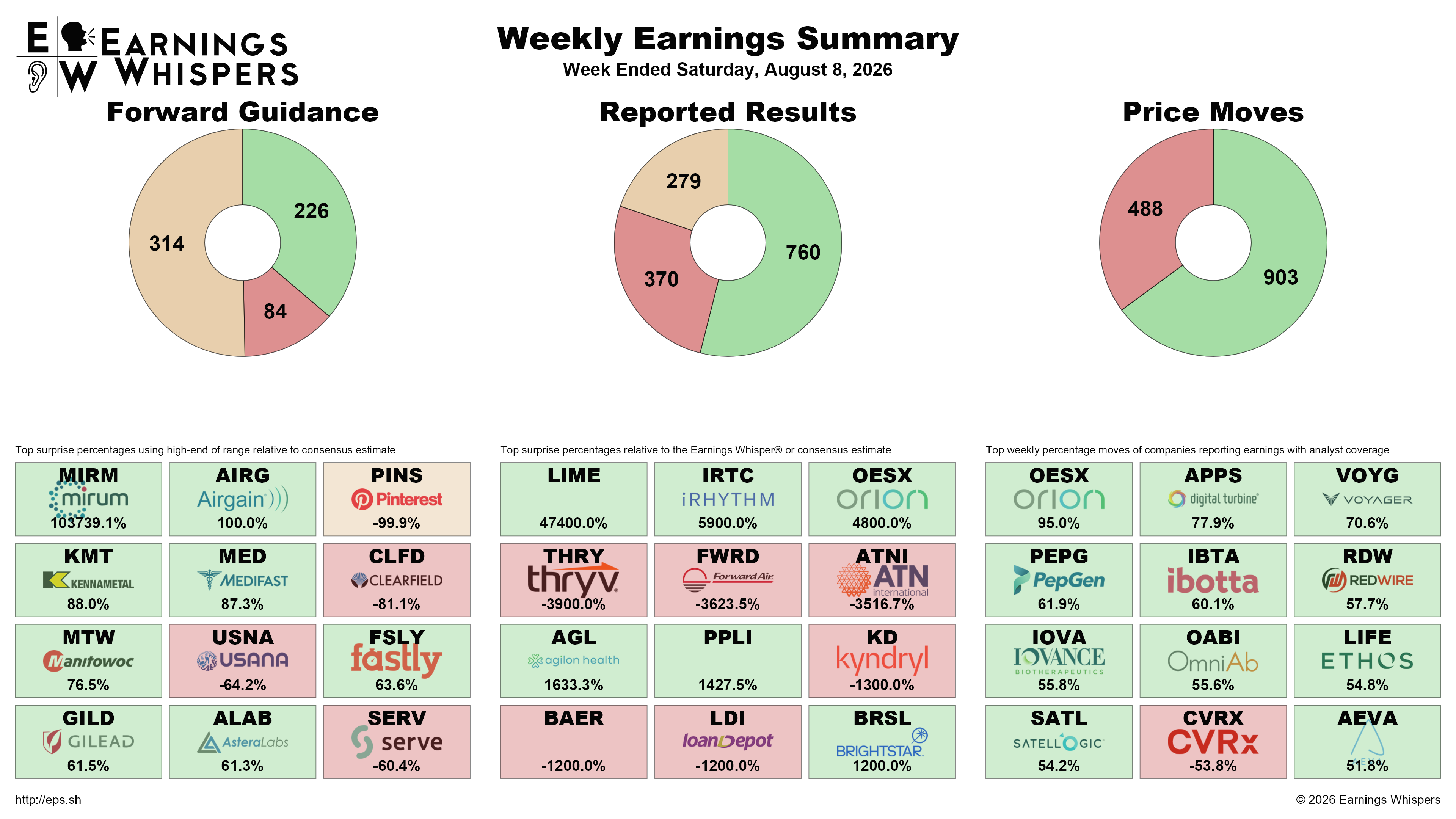
If there was one word echoing through last week's earnings calls from America's biggest companies, it was acceleration. Across wildly different industries, executives raced to raise their forecasts, often for the second or third time this year. The healthcare and drug crowd led the charge. CVS blew past expectations with $2.58 in earnings and hiked its full-year outlook for the second straight quarter, riding a recovery at its Aetna insurance arm and a splashy new deal with Eli Lilly to sell weight-loss drugs straight through its app and stores. Lilly itself was the star of the show, crushing estimates and lifting guidance yet again as its obesity franchise posted eye-popping growth abroad, with sales up 93% in China. Even distributor McKesson and food-service giant Sysco joined the party with early guidance bumps, though Sysco's rare dip in profit margins and a paused stock buyback served as a reminder that not everything was flawless.
The other engine of the week was energy and industry, where a tight global oil market handed refiners a windfall. Marathon Petroleum and Phillips 66 both posted staggering profit jumps, with Marathon earning $17.73 a share and Phillips seeing quarterly earnings rocket from $200 million to $3.8 billion as refineries ran full-out and cheap Venezuelan crude flowed in. Both were quick to warn, however, that these fat profits reflect an unusually tight moment that is already cooling. The clearest winners on durability were the industrial names: Caterpillar notched its first-ever quarter above $20 billion in sales, raised its outlook for the third time, and reported a record $72 billion order backlog fueled by data-center power demand, while grain trader ADM staged a dramatic turnaround thanks to friendlier biofuel policy. Even Disney got in on the action, as new CEO Josh D'Amaro pointed to a rebound in theme-park attendance and a fresh TikTok tie-up, proving that when the tide of confidence rises, it lifts everyone from oil rigs to Mickey Mouse.
Palantir Blows the Doors Off, Bets Big on 'Sovereign AI'
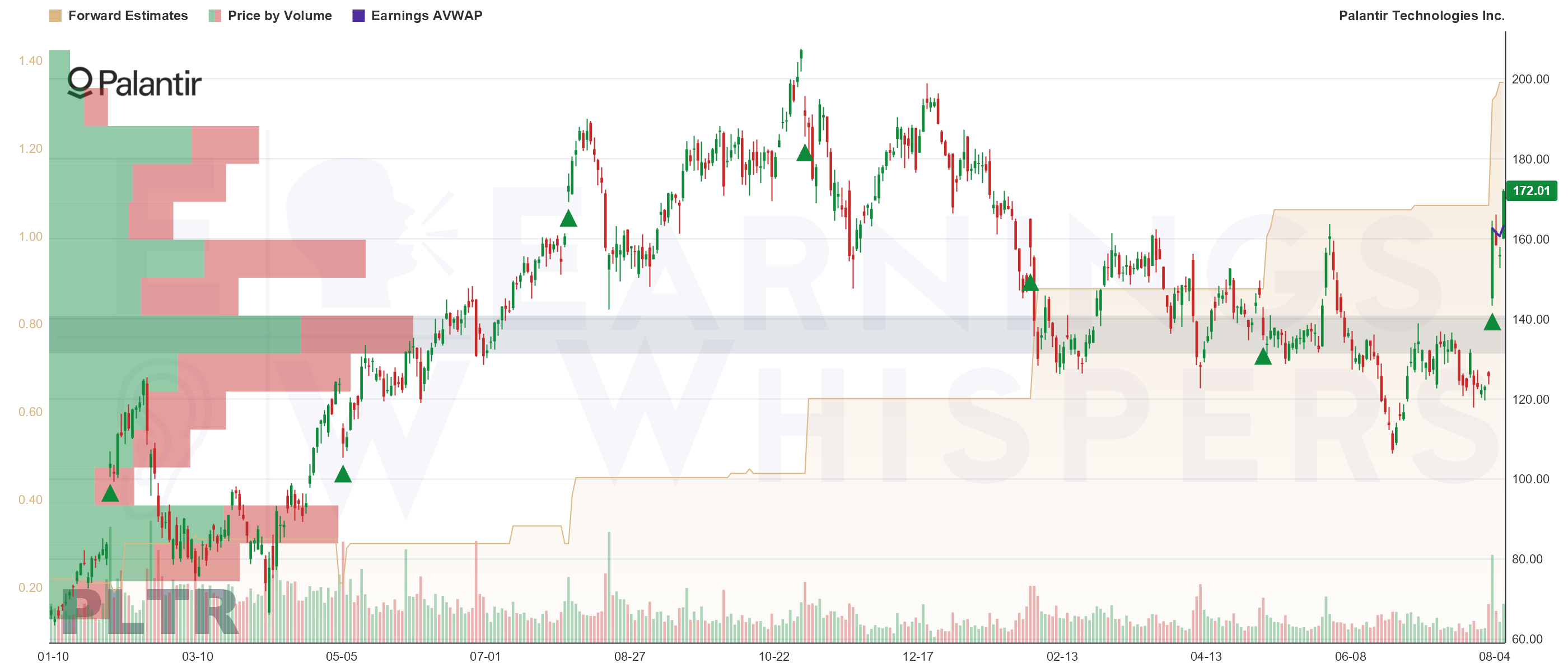
Palantir (PLTR) just posted a quarter that even its cheerleaders would call loud. Earnings landed at $0.41 per share on revenue of $1.94 billion for the quarter ending June 2026, sailing past the $0.35 consensus and the $0.38 whisper number, a 7.89% beat. Revenue jumped a jaw-dropping 92.83% from a year ago. Then management piled on, guiding third-quarter revenue to roughly $2.16 billion and hoisting full-year 2026 revenue to $8.150 billion to $8.158 billion, way up from the prior $7.65 billion to $7.66 billion call and miles ahead of the Street's $7.69 billion. CEO Alex Karp, never one for understatement, called the quarter "otherworldly," touting 149% growth in US commercial revenue and a Rule of 40 score that hit an absurd 155%. In plain English, Palantir builds software that helps big, secretive organizations wrangle their most sensitive data, and right now everybody wants in.
The real story is the new sales pitch: "sovereign AI." Karp's point is that companies don't want their secret sauce becoming training data for someone else's model, so Palantir lets customers keep their own AI weights locked inside their own walls, helped along by a fresh NVIDIA partnership. That message is working, US commercial bookings smashed records, dormant customers came back to life, and this was the biggest full-year guidance raise the company has ever made. The only smudges on an otherwise spotless report: gross margin dipped slightly to 86% because Palantir agreed to eat cloud-hosting costs for a government client, a bigger expense ramp is coming next quarter from hiring, and Europe's commercial business is still snoozing at just 26% growth. Small quibbles against a quarter this hot.
SanDisk Flips the Script: From Chip Maker to Cash Machine
SanDisk (SNDK) just posted a blowout fiscal fourth quarter, earning $39.25 per share on revenue of $8.97 billion for the period ending June 2026. Wall Street was looking for $33.28 per share on $8.30 billion, and even the whisper crowd only wanted $36.15, so this was a beat by nearly 9 percent while revenue rocketed a jaw-dropping 372 percent from a year ago. Management is not slowing down either, guiding first quarter earnings to $44 to $46 per share on revenue of $10.30 billion to $10.80 billion, comfortably ahead of the $44.21 and $10.56 billion the Street had penciled in. CEO David Goeckeler summed up the mood, saying the company closed fiscal 2026 with a leading technology portfolio, turned the datacenter into a real growth engine, and got closer to its customers, all of which he expects to pump out growing and durable free cash flow.
Here is what actually matters. The story is the datacenter. Those big multi-year supply deals, what the company calls NBMs, exploded from 5 signed contracts to 8 customers, and the locked-in future revenue now sits at $59.8 billion, or a stunning $91.1 billion counting two deals inked right after the quarter closed. Gross margins jumped to almost 85 percent, and the board fattened the buyback with a fresh $14 billion. The only wrinkle worth mentioning is the sleepy consumer side, where phone and PC sales are soft and consumer revenue fell 32 percent, but that is small potatoes next to the enterprise gold rush. In plain English, SanDisk stopped being a boring memory company and turned into a cash machine riding the AI wave, and they are telling you this is still early innings.
AMD's Data Center Rocket Ships Past a Tiny Earnings Miss
Advanced Micro Devices (AMD) posted earnings of $1.66 per share on revenue of $11.54 billion for the second quarter ended June 2026. That topped the $1.62 consensus on the bottom line and beat the $11.31 billion revenue estimate, though it came up just shy of the $1.69 whisper number, a rounding-error miss of 1.78%. What actually matters is the top line, which grew a jaw-dropping 50% from a year ago. Looking ahead, AMD guided third quarter revenue to a range of $12.70 billion to $13.30 billion, comfortably above the $12.62 billion Wall Street had penciled in. "We delivered an excellent quarter, with record revenue and profitability as Data Center revenue more than doubled year-over-year," said CEO Dr. Lisa Su, who added that AI is fueling booming demand across every market AMD plays in.
Here is the real story: the data center business is on fire and now makes up 58% of the company, up from 42% a year ago, with revenue up 107%. AMD landed a fresh gigawatt-scale AI deal with Anthropic and expanded its Microsoft Azure partnership, joining existing whales OpenAI and Meta. Management raised its targets across the board and now says it will blow past its long-term goal of $20 in earnings per share. The one soft patch is gaming, which fell 31% as the console cycle ages, plus some caution on PCs from rising memory costs. But that is a sideshow. The AI compute wave is carrying this company, and AMD is riding it hard.
e.l.f. Beauty Crushes It, But the Star Isn't the One You Think
e.l.f. Beauty (ELF) just posted a blowout quarter, earning $1.75 per share on revenue of $479.37 million for the fiscal first quarter ended June 2026. Wall Street was looking for a measly $0.75 per share on $425.66 million, so ELF didn't just clear the bar, it pole-vaulted over it by roughly 116% while growing sales nearly 36% from a year ago. That marks the 30th straight quarter of growth, which is over seven years of never missing a beat. Management, led by CEO Tarang Amin, was so pumped they cranked up their full-year outlook, now expecting fiscal 2027 earnings of $3.50 to $3.55 per share on revenue of $1.938 billion to $1.968 billion, well ahead of prior guidance and the Street's expectations. Fittingly for a company that says it stands with every eye, lip, face and paw, the whole portfolio is strutting its stuff.
Here's the twist worth knowing. The engine right now is Rode, the newer brand that raked in about $160 million this quarter and is heading to Sephora across 19 countries in Europe this fall, plus Brazil, Canada and Mexico. Meanwhile the flagship e.l.f. brand is actually the soft spot, with sales excluding Rode down high single digits and unit volumes still slipping, meaning growth is coming from higher prices and mix rather than people buying more stuff. One more thing to file away: a chunky $50 million tariff refund padded the margins this quarter, but management is plowing all of it back into pricing and marketing, so it's a freebie now that could turn into a headache next year when it doesn't repeat. Bottom line, the momentum is real and the confidence is back, just keep one eye on whether the core brand can find its footing.
Lilly Misses on EPS but Raises the Bar Again
Eli Lilly (LLY) posted second quarter earnings of $8.38 per share on revenue of $22.97 billion for the period ended June 2026. Wall Street was looking for $6.01 per share on $20.26 billion, so revenue blew past expectations and jumped nearly 48% from a year ago. The catch: the Earnings Whisper number was a lofty $9.10, so despite crushing the official estimate, the stock technically "missed" the number the pros were quietly betting on, by about 8%. In plain English, Lilly did great, just not quite as great as the most optimistic bulls hoped.
Here is the real story: this is the second quarter in a row Lilly has hiked its outlook. Full-year revenue guidance climbed to $85 to $87 billion (up $2.5 billion at the midpoint), and the company lifted its profit margin target by two full points. The engine is obesity and diabetes drugs, with US obesity prescriptions up 78% and international sales exploding (China up 93%, rest of world up 136%). Add in a new Medicare program covering 35% more Americans at $50 a month, three winning late-stage trials for its next blockbuster Retatrutide, and international approvals for Foundeo, and the growth machine keeps humming. The only clouds worth watching are softer US pricing and a slower-than-hoped launch of Foundeo in the States, but those are known bumps, not surprises. Bottom line, the wins clearly outweigh the worries.
This week is shaping up to be a battle between the confident and the cautious, and technology is where most of the fireworks will fly. Chip and networking heavyweights like Applied Materials, Cisco and Cardinal Health are strolling into their reports with the swagger of a team on a winning streak, riding real momentum from strong quarters and upbeat expectations. On the flip side, some of the market's favorite lottery tickets are giving off nervous energy. Names like CoreWeave, Nebius and Supermicro have investors bracing for turbulence, with the AI infrastructure crowd in particular looking wobbly beneath the hype. Rocket Lab, AST SpaceMobile and the rest of the space brigade remain the ultimate popcorn stocks, capable of doubling your excitement or halving your account before lunch. Watch Supermicro closely, because the mood there feels sour even as the numbers are supposed to look fine, and that kind of disconnect is exactly where surprises live.
Away from the tech drama, there is quieter money to be made and lost. Consumer and retail names such as Tapestry, Brinker International and CAVA are catching a friendlier vibe, suggesting shoppers may still be swiping their cards more than the doomsayers expect, though Brinker's run may be getting a little tired. Healthcare offers a split screen, with Cardinal Health and Ascendis Pharma looking sturdy while smaller biotech and diagnostics players could swing hard in either direction. Keep an eye on the metals and materials corner too, where Barrick Mining and the rare earth crowd are quietly interesting as global supply worries simmer. And do not sleep on the wildcards like GoPro and a handful of tiny caps that have been drifting lower for a while now, because stocks that limp into earnings sometimes stage the loudest comebacks, or the ugliest faceplants. Buckle up, because this is the kind of week that separates the steady hands from the thrill seekers.
Nebius Heads Into Earnings Firing on All Cylinders, But Traders Are Betting Against It
Nebius Group (NBIS) is set to report earnings on Wednesday, August 12, 2026 at roughly 7:05 AM ET. Wall Street is looking for a loss of $0.53 per share on revenue of $545.12 million, while the Earnings Whisper number is a slightly friendlier loss of $0.52 per share. Here is the odd part: investors are feeling bearish going in, yet 82.8% still expect the company to beat. Short sellers have piled on, with short interest jumping 41.6% since last quarter, and the stock has slipped 7.8% from where it opened after the last report, though it still sits a healthy 31.3% above its 200 day moving average of $143.20. Overall earnings estimates have been trimmed since the last release, and on Thursday, August 06, 2026 someone made a big bet, scooping up 15,924 of the $120.00 puts expiring Friday, August 21, 2026.
So why the skepticism when the last call was practically a fireworks show? Last quarter, revenue rocketed 684% year over year to $399 million, core AI margins nearly doubled to 45%, and the cash pile ballooned to $9.3 billion. The company also blew up its Meta deal from about $3 billion to a jaw-dropping $27 billion over five years, landed a $2 billion NVIDIA investment, and raised its CapEx plan to $20-25 billion. The catch, and likely what the bears are chewing on, is twofold: management warned Q2 margins would dip below that 45% peak on timing before bouncing back, and they still need to raise a mountain of cash to fund all that spending. In short, the demand story looks great, but the funding math and a known margin blip give the doubters just enough to lean on.
Rocket Lab Rides High, But Neutron Is the Real Fireworks
Rocket Lab USA (RKLB) is set to report earnings on Monday, August 10, 2026 at roughly 4:05 PM ET. Wall Street is looking for a loss of $0.03 per share on revenue of $231.57 million, which would be a hefty 60.3% jump from a year ago, and the Earnings Whisper number matches at a loss of $0.03 per share. That revenue figure sits comfortably inside management's own guidance of $225 to $240 million. Investors are feeling good going in, with 41.4% betting on a beat, though the story is not all sunshine. Short interest has ballooned 45.5% since last quarter while the stock has drifted 3.7% lower from where it opened after the last report, leaving it just 6.3% above its 200 day moving average of $77.93. Overall estimates have actually been trimmed since last quarter. And on Friday, August 7, someone made a bold move, scooping up 8,497 of the $90 calls expiring August 14, so at least a few folks are betting on a quick pop.
Last quarter was a barnburner. Rocket Lab cracked $200 million in revenue for the first time, backlog exploded to roughly $2.2 billion (up 108% from a year ago), and they signed more launch contracts in one quarter than in all of 2025, including the biggest deal in company history. Margins came in at a record 38.2% and cash losses shrank, so the whole tone was borderline giddy. The catch heading into Monday is twofold: gross margins are guided to step down a bit as lower-margin defense work rolls in, and the acquisitions of Monarc and Motive will nibble at profits until they get folded in. But the number everyone actually cares about is Neutron, the big reusable rocket still targeting its first flight in Q4 2026. Until that thing leaves the pad, the biggest prize is still just a promise, so listen closely for any word on whether it stays on schedule.
SMCI: Fatter Margins, Fatter Debt, and a Legal Cloud
Supermicro (SMCI) is confirmed to report earnings on Tuesday, August 11, 2026 at approximately 4:05 PM ET. Wall Street is looking for $0.69 per share on revenue of $11.00 billion, which would be a whopping 91.1% jump in sales from a year ago, while the Earnings Whisper number sits a touch higher at $0.70 per share. Management's own guidance was $0.65 to $0.79 per share on revenue of $11.00 billion to $12.50 billion. Investors are feeling grumpy heading into this one, yet 74.4% still expect a beat, so there is a split personality here. The pessimists have been busy too, with short interest climbing 11.9% since last quarter, and the stock has slid to 3.6% below its 200 day moving average of $32.30. That said, someone likes the upside: on Friday, August 07, 2026 there was a big splash of 14,906 call contracts bought at the $31.00 strike expiring August 14, betting on a pop.
Here is the real story. Last quarter was a classic good news, bad news sandwich. The good: gross margins snapped back to 10.1% from a painful 6.4%, the enterprise business nearly doubled to 28% of sales, and the DCBBS software push is finally scaling with a record backlog and AI GPUs making up over 80% of revenue. The bad: revenue of $10.2 billion badly whiffed the company's own $12.3 billion target, they trimmed the full year outlook, and they guided Q4 margins right back down to around 8.3%. Worse, cash burned like a bonfire, with free cash flow at negative $6.7 billion and net debt ballooning to $7.5 billion from under $800 million. Hanging over all of it is a DOJ indictment of former employees over alleged product diversion to China. Management insists the company itself is not a target and will not restate, but it is a fresh headache investors will want cleared up. Watch whether the margin bounce sticks and whether the cash bleed slows, because that combo will decide the day.
ASTS: Rockets, Riches, and a Reality Check
AST SpaceMobile (ASTS) is set to report earnings on Monday, August 10, 2026, at around 4:30 PM ET. Wall Street is bracing for a loss of $0.28 per share on revenue of $34.13 million, which sounds tiny until you realize that is a jaw-dropping 2,852.4% jump from a year ago. The whisper number is a bit gloomier at a loss of $0.35 per share. Investors are walking in nervous, though nearly 65% still think the company can beat. Short sellers have piled on, up 9.9% since last quarter, and the stock has slipped 2.0% since its last report to sit 12.3% below its 200-day average of $81.98. Analysts have been quietly trimming their estimates, and on August 4th someone made a big bearish bet, scooping up 7,119 put contracts at the $65 strike expiring in October.
Here is the real story: this company wants to beam cell service straight to your phone from space, and it is making progress. It landed FCC approval to go commercial in the U.S. with Verizon, AT&T, and FirstNet, added new partners like TELUS and a pan-African carrier, and locked in over $1.2 billion in future revenue commitments. But there is a fly in the ointment. One of its satellites, Bluebird 7, was lost when a Blue Origin rocket had a mishap, and that investigation has no end date in sight. That is a problem because ASTS needs to launch a satellite almost every month through year-end to hit its target of 45 in orbit. Spending is also climbing fast. The good news is the balance sheet is a fortress at roughly $3.5 billion in cash, so watch for whether management sounds confident about staying on schedule or starts hedging its bets.
CoreWeave: Backlog Booming, But Watch the Bottom Line
CoreWeave (CRWV) steps into the earnings ring on Tuesday, August 11, 2026 at about 4:05 PM ET, and Wall Street is bracing for a loss of $1.48 per share on revenue of $2.54 billion. That top line would be up a jaw-dropping 109.4% from a year ago. The whisper number is a bit friendlier at a loss of $0.99 per share, and the company itself guided to revenue between $2.45 billion and $2.60 billion. Investors are leaning bearish heading in, though a slim majority, 53.3%, still expect a beat. Short interest has barely budged, down 0.5% since last quarter, while the stock has slid 23.5% from its post-earnings open to sit 3.4% below its 200 day moving average of $93.81. Analysts have quietly nudged estimates higher. And someone made a bold bet on Monday, August 3, snapping up 63,362 of the $110 calls expiring September 18, so at least one big player is betting on a bounce.
Here is the real story: demand is on fire, but profits are still catching up. Last quarter the backlog rocketed to roughly $100 billion, up 50% in a single quarter, fueled by a $21 billion Meta deal, Anthropic coming aboard, and Wall Street names like Jane Street piling in. The company even landed the first ever investment grade rated debt backed by AI computing power, which lowers its borrowing costs. The catch is that this was the deliberate low point for margins, with operating income at just 1%, the net loss widening to $740 million, and interest expense climbing fast. Rising component costs are also nudging spending higher. Watch the exit ARR and 2027 outlook here, because that is where the upside is hiding. If management keeps sounding confident, the growth story stays very much intact.
Lumentum Heads Into Earnings Sold Out and Firing on All Cylinders
Lumentum (LITE) is confirmed to report earnings on Tuesday, August 11, 2026 at approximately 4:05 PM ET. Wall Street is looking for $2.97 per share on revenue of $988.56 million, which would more than double last year's haul with 105.7% revenue growth, and the Earnings Whisper number sits a touch higher at $3.05 per share. That lines up neatly with management's own guidance of $2.85 to $3.05 per share on revenue of $960 million to $1.01 billion. Investors are practically doing cartwheels going in, with 91.7% expecting a beat. Short interest has slipped 1.5% since last quarter, and while the stock has drifted 10.6% lower from its post-earnings open, it is still riding 44.6% above its 200 day moving average of $615.78. Earnings estimates have been revised higher across the board, and on Wednesday, July 22, 2026 someone stepped up and bought 2,106 of the $870 calls expiring Friday, August 21, 2026, which is not exactly a shy bet.
Here is the real story: last quarter Lumentum was on fire, and its problem is a good one to have. Revenue has climbed every single quarter and margins have shot up like a rocket, with gross margin jumping from 37.8% a year ago to 47.9% last quarter. NVIDIA plunked roughly $2 billion into the company, they scooped up a fifth chip fab in Greensboro, and their optical switch business went from a $400 million backlog to a multi-year, multi-billion-dollar deal. The one thing to watch is supply, not demand. They simply cannot make enough pump lasers and EML chips to fill orders, so they are picking which customers get served first. The transceiver unit still drags on profits, and the NVIDIA cash bumped up the share count, which nibbles a bit at per-share earnings. Bottom line, they are sold out with real pricing power, and the guide points to yet another record.
AMAT: The Chip Machine Maker Just Found Another Gear
Applied Materials (AMAT) steps up to the earnings plate on Thursday, August 13, 2026 at about 4:00 PM ET. Wall Street is looking for $3.36 per share on $9.00 billion in revenue, which would be a hearty 23.3% jump from a year ago, but the whisper number is way up at $4.50. Management itself guided for $3.16 to $3.56 per share on $8.45 billion to $9.45 billion. Investors are practically doing cartwheels, with 82.6% betting on a beat. Short sellers have nudged their bets up 5.1% since last quarter, yet the stock has ignored them, climbing 25.8% since its last report and sitting a whopping 41.7% above its 200-day average of $380.40. Estimates keep marching higher, and on July 30 someone plunked down 2,693 of the $750.00 calls expiring August 21, a clear vote for more upside.
Here is the short version of why the mood is so giddy. Last quarter AMAT posted record sales and its fattest profit margins in over 25 years, then cranked up its outlook, lifting expected 2026 chip-equipment growth from over 20% to over 30%. Customers are now handing over two-year rolling order forecasts, so visibility stretches all the way into 2027 and 2028, and AMAT is tracking more than 100 new factory projects. Advanced packaging demand is set to grow more than 50%, TSMC joined its research hub as a founding partner, and it is buying Nex to beef up next-generation chip packaging. The only real clouds are the ongoing export-restriction headache tied to Huawei and the fact that AMAT's biggest problem is a good one, its own supply chain struggling to keep up with red-hot demand.
HIMS Bets Big on Weight Loss: Growth Now, Profits Later
Hims & Hers Health (HIMS) is confirmed to report earnings on Monday, August 10, 2026 at approximately 4:05 PM ET. Wall Street is looking for a loss of $0.07 per share on revenue of $690.21 million, which would be a healthy 26.7% jump from a year ago, though the Earnings Whisper number is a touch better at a loss of $0.04. Management had guided to revenue of $680 to $700 million, so the crowd is squarely in the middle. Investors are walking in nervous, with only 40% betting on a beat, yet the smart money seems to disagree. Short interest has slipped 2.8% since last quarter, the stock has climbed 25.3% since its last report to sit 5.9% above its 200 day average of $29.84, and estimates have been drifting higher. Someone even scooped up 4,242 of the $31.50 calls expiring August 14, so a few folks are clearly betting on fireworks.
Here is the real story: HIMS is in the middle of a big, deliberate pivot. Back in March it swung its weight-loss business toward brand-name GLP-1 drugs from Novo Nordisk and Lilly, and the early demand is eye-popping, over 125,000 Wegovy shipments in the first six weeks and a run rate north of 100,000 new weight-loss subscribers a month. That is why management raised its full-year revenue outlook to $2.8 to $3.0 billion. The catch is that this land grab is expensive. Last quarter they trimmed the profit outlook, took about $33 million in one-time cleanup charges, watched margins shrink, and pushed the return to bottom-line profitability all the way out to 2027. So the question Monday is simple: is the demand still roaring loud enough to make investors forgive the thinner profits? Watch the subscriber numbers and the margin commentary, because that is where this show will be won or lost.
ONDS Heads Into Earnings Firing on All Cylinders (But Burning Cash to Do It)
Ondas (ONDS) is set to report earnings on Thursday, August 13, 2026, before the market opens. Wall Street is looking for a loss of 7 cents per share on revenue of $66.68 million, which would be a staggering 963% jump from a year ago, while our own Whisper number pegs the loss a touch narrower at 6 cents. The crowd is feeling good, with 85% expecting a beat, and analysts have been nudging their estimates higher since last quarter. Not everyone is convinced though, as short interest has jumped nearly 40% and the stock has slipped 16.5% since its last report to sit just below its 200 day average of $9.31. One eye-opening tell: on August 6, someone scooped up 7,891 of the $4 calls expiring in January 2028, a big bet that better days are coming.
Here is the real story. This drone and defense-tech company has been on a tear, with last quarter's revenue exploding roughly tenfold to $50.1 million and management raising its full-year target yet again to at least $390 million. Gross margins climbed to 49%, profitability milestones got pulled forward, and a war chest of $1.48 billion in cash gives them plenty of firepower for deals and new programs like the Palantir partnership and combat-tested IronWave platform. The catch is the cash is going out the door fast, with operating burn hitting $51.3 million last quarter and expected to climb higher after recent acquisitions. Add in wild swings from non-cash warrant accounting and lingering worries that they are simply buying revenue, and you get a stock with huge upside and real questions to answer. Watch the burn rate and margins closely, because that is where this one gets settled.
Plug Power: Margins Healing, But the Big Money Is Stuck in Line
Plug Power (PLUG) is confirmed to report earnings on Monday, August 10, 2026 at approximately 4:00 PM ET. Wall Street is bracing for a loss of $0.08 per share on revenue of $167.74 million, a 3.6% dip from a year ago, though the whisper number is a touch friendlier at a $0.06 loss. Investors are walking in grumpy, yet more than half still expect a beat, so hope springs eternal. Short sellers have backed off a bit, trimming their bets by 3.9% since last quarter, but that has not stopped the stock from sliding 42.2% since the last report and sitting 13.6% under its 200 day moving average of $2.52. Analysts have quietly trimmed their estimates too. And on July 29, someone made a splashy move, scooping up 31,101 of the $2.00 put contracts expiring December 18, 2026, which is a fancy way of saying somebody is betting on more pain ahead.
Here is the real story: Plug's turnaround is actually working where it counts, just slowly. Last quarter revenue grew 22% and gross margins jumped a huge 42 points, meaning they are losing far less money on every sale than they used to. Cash burn came in better than planned, and big customers like Amazon and Walmart are gearing up to refresh roughly 20,000 forklift units starting late this year. The catch is the calendar and the paperwork. Management now expects growth of just 13 to 15% this year, down from the roughly 30% pace investors got used to, and most of the action is loaded into the back half, so this quarter will look sleepy. Worse, the giant electrolyzer projects that would move the needle are still tangled in permits and government red tape, with one Australian deal literally waiting on a port approval. Bottom line: the health is improving, but the blockbuster deals are stuck in traffic, and this quarter is more about patience than fireworks.
Leslie's: A Turnaround Taking Shape, But the Debt Clock Is Ticking
Leslie's (LESL) is set to report earnings on Wednesday, August 12, 2026 at roughly 4:15 PM ET, and the bears have been circling. Short interest has jumped a hefty 61.9% since the last report, the stock has slid 36.4% from where it opened after that release, and it now sits a painful 58.0% below its 200 day average of $2.79. Analysts have trimmed their estimates and expect nothing more than in-line results. Yet not everyone is running for the exits. On Friday, July 17, 2026 someone stepped up and bought 2,079 of the $5.00 calls expiring August 21, a bold bet that this beaten-down pool supply name still has a splash left in it.
Here is the thing worth watching. Last quarter was the first real sign the turnaround is working. Same-store sales flipped from deeply negative to positive 6.6%, gross margins hit their best second quarter since 2023, and customer counts grew 8% after the company bled 160,000 customers last year. The new 'Price Drop' campaign and nationwide Uber same-day delivery are pulling people back in. The catch is the balance sheet, which still carries about $753 million in long-term debt plus a $99 million revolver, and management is still hunting for financing help. So the growth story is real, but with peak pool season execution and a pile of debt hanging overhead, this earnings call is less about the sales rebound and more about whether they can convince everyone the money problem gets solved.
Big Health, Big Oil and Big Iron All Turn On the Same Switch: Momentum
If there was one word echoing through last week's earnings calls from America's biggest companies, it was acceleration. Across wildly different industries, executives raced to raise their forecasts, often for the second or third time this year. The healthcare and drug crowd led the charge. CVS blew past expectations with $2.58 in earnings and hiked its full-year outlook for the second straight quarter, riding a recovery at its Aetna insurance arm and a splashy new deal with Eli Lilly to sell weight-loss drugs straight through its app and stores. Lilly itself was the star of the show, crushing estimates and lifting guidance yet again as its obesity franchise posted eye-popping growth abroad, with sales up 93% in China. Even distributor McKesson and food-service giant Sysco joined the party with early guidance bumps, though Sysco's rare dip in profit margins and a paused stock buyback served as a reminder that not everything was flawless.
The other engine of the week was energy and industry, where a tight global oil market handed refiners a windfall. Marathon Petroleum and Phillips 66 both posted staggering profit jumps, with Marathon earning $17.73 a share and Phillips seeing quarterly earnings rocket from $200 million to $3.8 billion as refineries ran full-out and cheap Venezuelan crude flowed in. Both were quick to warn, however, that these fat profits reflect an unusually tight moment that is already cooling. The clearest winners on durability were the industrial names: Caterpillar notched its first-ever quarter above $20 billion in sales, raised its outlook for the third time, and reported a record $72 billion order backlog fueled by data-center power demand, while grain trader ADM staged a dramatic turnaround thanks to friendlier biofuel policy. Even Disney got in on the action, as new CEO Josh D'Amaro pointed to a rebound in theme-park attendance and a fresh TikTok tie-up, proving that when the tide of confidence rises, it lifts everyone from oil rigs to Mickey Mouse.
Palantir Blows the Doors Off, Bets Big on 'Sovereign AI'
Palantir (PLTR) just posted a quarter that even its cheerleaders would call loud. Earnings landed at $0.41 per share on revenue of $1.94 billion for the quarter ending June 2026, sailing past the $0.35 consensus and the $0.38 whisper number, a 7.89% beat. Revenue jumped a jaw-dropping 92.83% from a year ago. Then management piled on, guiding third-quarter revenue to roughly $2.16 billion and hoisting full-year 2026 revenue to $8.150 billion to $8.158 billion, way up from the prior $7.65 billion to $7.66 billion call and miles ahead of the Street's $7.69 billion. CEO Alex Karp, never one for understatement, called the quarter "otherworldly," touting 149% growth in US commercial revenue and a Rule of 40 score that hit an absurd 155%. In plain English, Palantir builds software that helps big, secretive organizations wrangle their most sensitive data, and right now everybody wants in.
The real story is the new sales pitch: "sovereign AI." Karp's point is that companies don't want their secret sauce becoming training data for someone else's model, so Palantir lets customers keep their own AI weights locked inside their own walls, helped along by a fresh NVIDIA partnership. That message is working, US commercial bookings smashed records, dormant customers came back to life, and this was the biggest full-year guidance raise the company has ever made. The only smudges on an otherwise spotless report: gross margin dipped slightly to 86% because Palantir agreed to eat cloud-hosting costs for a government client, a bigger expense ramp is coming next quarter from hiring, and Europe's commercial business is still snoozing at just 26% growth. Small quibbles against a quarter this hot.
SanDisk Flips the Script: From Chip Maker to Cash Machine
SanDisk (SNDK) just posted a blowout fiscal fourth quarter, earning $39.25 per share on revenue of $8.97 billion for the period ending June 2026. Wall Street was looking for $33.28 per share on $8.30 billion, and even the whisper crowd only wanted $36.15, so this was a beat by nearly 9 percent while revenue rocketed a jaw-dropping 372 percent from a year ago. Management is not slowing down either, guiding first quarter earnings to $44 to $46 per share on revenue of $10.30 billion to $10.80 billion, comfortably ahead of the $44.21 and $10.56 billion the Street had penciled in. CEO David Goeckeler summed up the mood, saying the company closed fiscal 2026 with a leading technology portfolio, turned the datacenter into a real growth engine, and got closer to its customers, all of which he expects to pump out growing and durable free cash flow.
Here is what actually matters. The story is the datacenter. Those big multi-year supply deals, what the company calls NBMs, exploded from 5 signed contracts to 8 customers, and the locked-in future revenue now sits at $59.8 billion, or a stunning $91.1 billion counting two deals inked right after the quarter closed. Gross margins jumped to almost 85 percent, and the board fattened the buyback with a fresh $14 billion. The only wrinkle worth mentioning is the sleepy consumer side, where phone and PC sales are soft and consumer revenue fell 32 percent, but that is small potatoes next to the enterprise gold rush. In plain English, SanDisk stopped being a boring memory company and turned into a cash machine riding the AI wave, and they are telling you this is still early innings.
AMD's Data Center Rocket Ships Past a Tiny Earnings Miss
Advanced Micro Devices (AMD) posted earnings of $1.66 per share on revenue of $11.54 billion for the second quarter ended June 2026. That topped the $1.62 consensus on the bottom line and beat the $11.31 billion revenue estimate, though it came up just shy of the $1.69 whisper number, a rounding-error miss of 1.78%. What actually matters is the top line, which grew a jaw-dropping 50% from a year ago. Looking ahead, AMD guided third quarter revenue to a range of $12.70 billion to $13.30 billion, comfortably above the $12.62 billion Wall Street had penciled in. "We delivered an excellent quarter, with record revenue and profitability as Data Center revenue more than doubled year-over-year," said CEO Dr. Lisa Su, who added that AI is fueling booming demand across every market AMD plays in.
Here is the real story: the data center business is on fire and now makes up 58% of the company, up from 42% a year ago, with revenue up 107%. AMD landed a fresh gigawatt-scale AI deal with Anthropic and expanded its Microsoft Azure partnership, joining existing whales OpenAI and Meta. Management raised its targets across the board and now says it will blow past its long-term goal of $20 in earnings per share. The one soft patch is gaming, which fell 31% as the console cycle ages, plus some caution on PCs from rising memory costs. But that is a sideshow. The AI compute wave is carrying this company, and AMD is riding it hard.
e.l.f. Beauty Crushes It, But the Star Isn't the One You Think
e.l.f. Beauty (ELF) just posted a blowout quarter, earning $1.75 per share on revenue of $479.37 million for the fiscal first quarter ended June 2026. Wall Street was looking for a measly $0.75 per share on $425.66 million, so ELF didn't just clear the bar, it pole-vaulted over it by roughly 116% while growing sales nearly 36% from a year ago. That marks the 30th straight quarter of growth, which is over seven years of never missing a beat. Management, led by CEO Tarang Amin, was so pumped they cranked up their full-year outlook, now expecting fiscal 2027 earnings of $3.50 to $3.55 per share on revenue of $1.938 billion to $1.968 billion, well ahead of prior guidance and the Street's expectations. Fittingly for a company that says it stands with every eye, lip, face and paw, the whole portfolio is strutting its stuff.
Here's the twist worth knowing. The engine right now is Rode, the newer brand that raked in about $160 million this quarter and is heading to Sephora across 19 countries in Europe this fall, plus Brazil, Canada and Mexico. Meanwhile the flagship e.l.f. brand is actually the soft spot, with sales excluding Rode down high single digits and unit volumes still slipping, meaning growth is coming from higher prices and mix rather than people buying more stuff. One more thing to file away: a chunky $50 million tariff refund padded the margins this quarter, but management is plowing all of it back into pricing and marketing, so it's a freebie now that could turn into a headache next year when it doesn't repeat. Bottom line, the momentum is real and the confidence is back, just keep one eye on whether the core brand can find its footing.
Lilly Misses on EPS but Raises the Bar Again
Eli Lilly (LLY) posted second quarter earnings of $8.38 per share on revenue of $22.97 billion for the period ended June 2026. Wall Street was looking for $6.01 per share on $20.26 billion, so revenue blew past expectations and jumped nearly 48% from a year ago. The catch: the Earnings Whisper number was a lofty $9.10, so despite crushing the official estimate, the stock technically "missed" the number the pros were quietly betting on, by about 8%. In plain English, Lilly did great, just not quite as great as the most optimistic bulls hoped.
Here is the real story: this is the second quarter in a row Lilly has hiked its outlook. Full-year revenue guidance climbed to $85 to $87 billion (up $2.5 billion at the midpoint), and the company lifted its profit margin target by two full points. The engine is obesity and diabetes drugs, with US obesity prescriptions up 78% and international sales exploding (China up 93%, rest of world up 136%). Add in a new Medicare program covering 35% more Americans at $50 a month, three winning late-stage trials for its next blockbuster Retatrutide, and international approvals for Foundeo, and the growth machine keeps humming. The only clouds worth watching are softer US pricing and a slower-than-hoped launch of Foundeo in the States, but those are known bumps, not surprises. Bottom line, the wins clearly outweigh the worries.