Upcoming Earnings
Big Banks Take Center Stage as Earnings Season Kicks Into High Gear
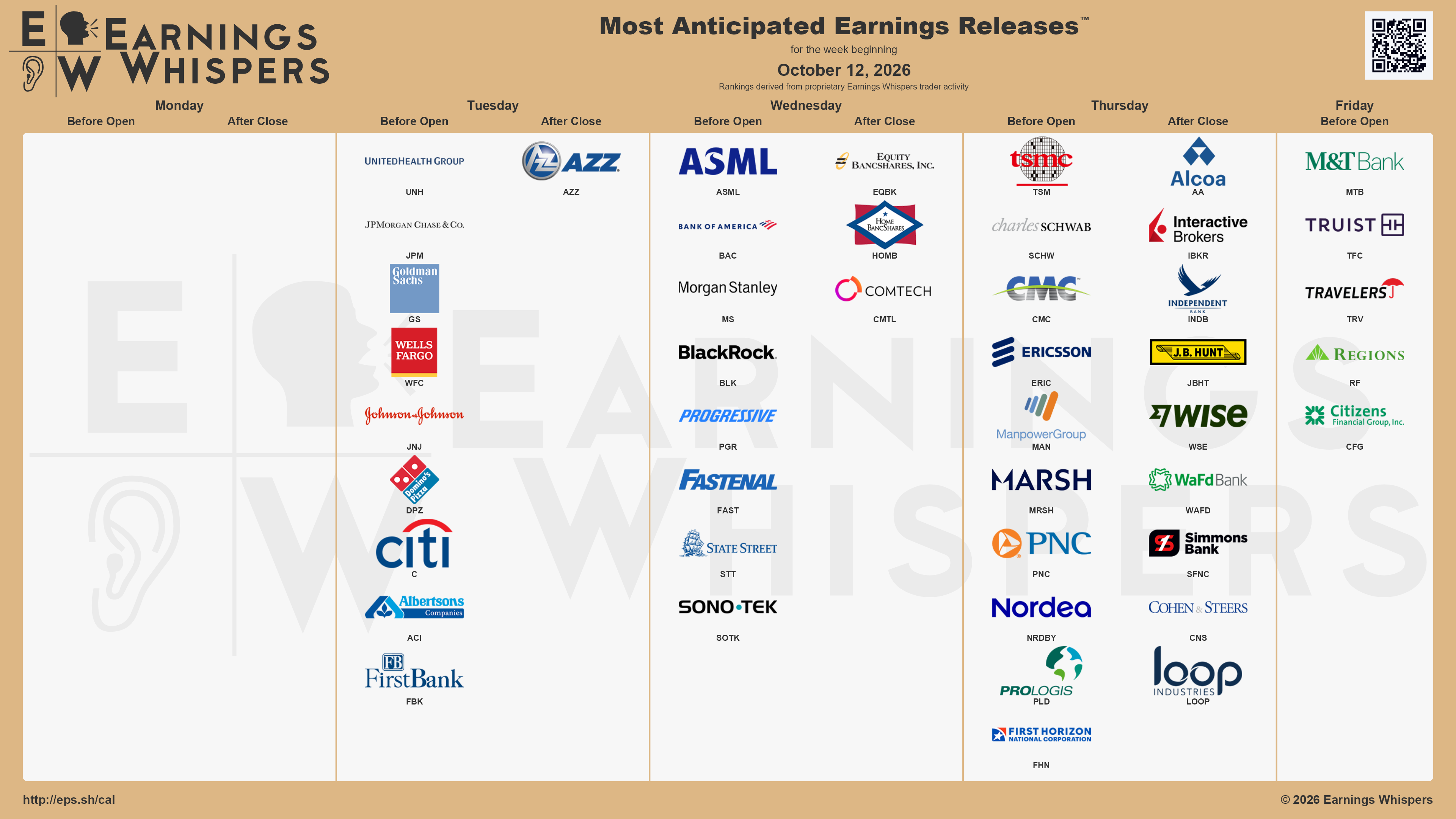
Buckle up, because this is the week Wall Street has been circling on its calendar. The nation's banking giants are about to throw open their books, and this crowd always sets the tone for everything that follows. JPMorgan and Citigroup are strolling in with a swagger, riding real optimism and a tailwind from solid results last time around. Citigroup in particular has the whisper crowd leaning bullish, hoping management keeps the good news flowing. Not everyone is bringing the same energy, though. Goldman Sachs is walking into the room under a cloud, with the mood decidedly sour and analysts quietly bracing for a stumble. Wells Fargo, Bank of America and the regional players round out a packed financials lineup, and when this many banks report in a single stretch, even small surprises can send ripples across the whole market.
Beyond the banks, the real fireworks may come from the chip world. Taiwan Semiconductor and ASML, the twin pillars of the global technology supply chain, are among the most anticipated names this week, and the vibe heading in is genuinely upbeat. Both have momentum on their side and investors are betting the artificial intelligence boom keeps their order books overflowing, so expect plenty of eyeballs when those numbers drop. On the healthcare front, Johnson & Johnson looks steady and well liked, while UnitedHealth remains the wild card everyone is nervous about after a rocky stretch. Keep an eye on Domino's Pizza too, the lone retail star of the week, where the mood has soured and a disappointing slice could leave investors with a bad taste. Add insurer Progressive and a handful of smaller names to the mix, and you have a week with enough drama to keep traders glued to their screens.
UnitedHealth's Comeback Story Rolls On, But Watch the Commercial Cracks
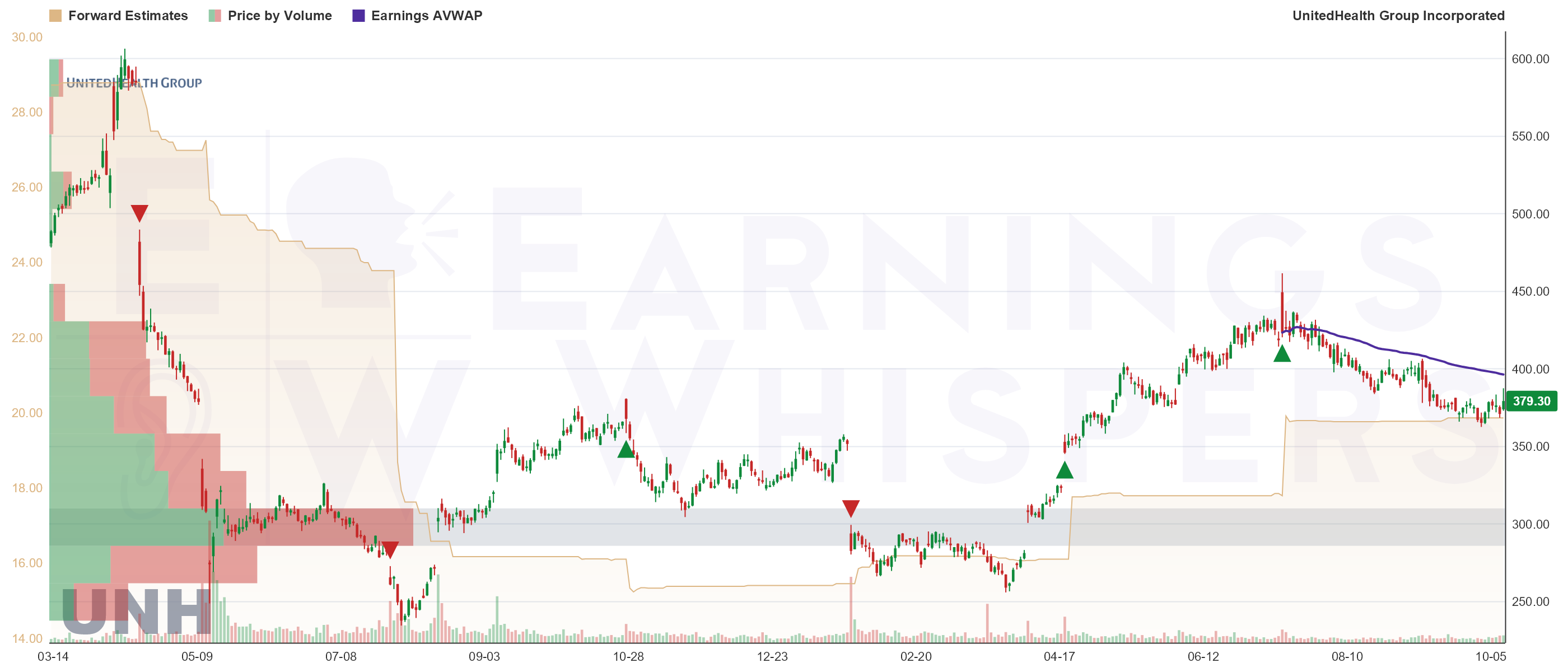
UnitedHealth Group (UNH) steps up to the earnings plate before dawn on Tuesday, October 13, 2026, at roughly 5:55 AM ET. Wall Street is penciling in $4.12 per share on revenue of $111.38 billion, which would be a 1.6% dip from a year ago, but the whisper number says folks are quietly hoping for $4.60. The mood going in is grumpy, though 40.3% still think the company clears the bar. Here's the interesting part: short sellers have run for the exits, cutting their bets by 28.2% since last quarter, even as the stock has slid 15.6% from where it opened after the last report. It is still sitting 6.1% above its 200 day moving average of $357.36, and analysts have actually been nudging their estimates higher. Options traders are bracing for a 7.4% swing, which is tame compared to the 9.7% average lurch of recent quarters. One eyebrow-raiser: on September 23, someone scooped up 2,384 of the $365 puts expiring October 16, so at least one trader is hedging their bets.
The story here is a turnaround that keeps picking up steam. Management has now raised full-year earnings guidance three quarters in a row, lifted profit targets at both UnitedHealthcare and OptumHealth, doubled the buyback to at least $5 billion, and bumped the dividend. Medicare Advantage is finally running better than feared, and the tone from the top has gone from humbled to downright feisty. The fly in the ointment is the commercial business, where costs are climbing past 11% and still rising, pushing the margin recovery out beyond 2027. Medicaid is also still bleeding. So the big question for Tuesday is simple: does the good news keep outrunning the commercial drag, or does that soft spot finally steal the spotlight?
JPMorgan Heads Into Earnings Firing On All Cylinders
JPMorgan Chase (JPM) steps into the earnings box on Tuesday, October 13, 2026 at around 6:40 AM ET. Wall Street is looking for $5.94 per share on $52.21 billion in revenue, which is a 27.4% drop from a year ago, though the Earnings Whisper number is a touch higher at $6.10. The crowd is feeling good, with 66.0% betting on a beat. Short sellers have backed off, cutting their bets by 10.7% since last quarter, while the stock has quietly climbed 1.8% since its last earnings pop to sit 3.4% above its 200 day moving average of $322.14. Estimates have been nudged higher across the board. Options traders are bracing for a 3.7% swing, a bit bigger than the 2.4% the stock usually moves, and on October 07 someone scooped up 4,484 of the $340 calls expiring October 16, a clear vote of confidence.
Last quarter the bank was practically humming, with management saying it is "getting close to as good as it gets." They raised guidance on net interest income, consumer credit came in better than feared, and the trading and dealmaking desks put up monster numbers, with equities up a jaw-dropping 86% year over year. The catch is that some of that magic probably will not repeat, expenses got bumped up (though mostly because business is booming), and there are fresh questions around who runs the show after Marianne Lake's retirement and a management shuffle. Bottom line, the engine looks strong, so watch whether they can keep the momentum going now that the easy comparisons are behind them.
ASML: The AI Chip Picks-and-Shovels King Rolls Into Earnings Hot
ASML Holding N.V. (ASML) reports earnings on Wednesday, October 14, 2026 at roughly 1:00 AM ET. Wall Street is looking for $12.47 per share on revenue of $13.18 billion, which would be a hefty 50% jump from a year ago, though the Earnings Whisper number sits higher at $13.23 per share. Company guidance called for revenue between $12.56 billion and $13.70 billion. Traders are feeling good, with 85.7% betting on a beat. Short interest has climbed 30.5% since last quarter, yet the stock has only slipped 2.5% from its post-earnings open and still sits 14.2% above its 200 day moving average of $1,559.31. Earnings estimates have been nudged higher across the board. Options traders are bracing for a 6.4% swing, a bit bigger than the 4.2% average move of late, and on Tuesday, October 6 someone snapped up 789 of the $1,960 calls expiring October 16.
Here is the real story: ASML has become the backbone of the AI chip boom, and last quarter it raised its full-year revenue outlook for the second time in a row while also bumping up its profit margins. Memory-related sales are expected to soar 75% this year and advanced logic 25%, with even the older non-EUV business flipping from flat to up 25%. The crown jewel was Intel publicly putting ASML's cutting-edge High-NA machines to work, the strongest proof yet that this expensive new tech is for real. The only clouds are modest: China sales cooling to a normal 20% of the mix and some upfront costs on the newest tools. The one thing to watch now is whether ASML can build machines fast enough, because for the first time in ages the problem is keeping up with demand, not finding it.
Goldman Faces a Brutal Comp, But the Engine Still Hums
The Goldman Sachs Group (GS) is set to report earnings before the bell on Tuesday, October 13, 2026, at roughly 7:25 AM ET. Wall Street is looking for $12.90 per share on revenue of $16.87 billion, and while that revenue figure is a jaw-dropping 47.5% drop from a year ago, the Earnings Whisper number sits a touch higher at $12.95. Investors are walking in nervous, yet a solid 64.0% still expect a beat. Short sellers have piled on, bumping short interest up 6.8% since last quarter, and the stock has slid 17.5% from where it opened after the last report, leaving it 6.6% under its 200 day moving average of $958.81. Still, the analyst crowd has been nudging estimates higher, so the mood is more cautious than doomed. Options traders are bracing for a 5.2% swing, a bit hot compared to the 3.4% average move of late, and on Friday someone grabbed 3,012 of the $970 calls expiring October 16, a bet that the bulls are not done yet.
Here is the real story heading in: that scary 47.5% revenue drop is mostly a comparison problem, since last year's quarter was loaded up. Under the hood, the franchise looks healthy. Investment banking has been on a tear, with advisory up 89% year over year last quarter and a backlog near record highs, while equities just posted a record $5.3 billion quarter. The wealth and asset management push is working too, with the alternatives fundraising target raised toward $100 billion and wealth inflows running at 9%, well ahead of the new 5% goal. The soft spots to watch are the fixed income desk, which cooled on tough comps, and private banking, where tighter margins should nag through the year. One honest caveat: last quarter's call transcript was a garbled mess with no usable numbers, so the latest read leans on older data. Translation, the trend looks up, but keep your eyes open on Tuesday.
TSMC Rides the Insatiable AI Wave Into Earnings
The world's chip-making kingpin, Taiwan Semiconductor Manufacturing Company (TSM), is set to report earnings Thursday, October 15, 2026 at roughly 3:00 AM ET, so set your alarm or just read my note instead. Wall Street is looking for $4.45 per share on $45.62 billion in revenue, which would be a hefty 37.8% jump from a year ago, and the whisper number is even juicier at $4.58. Management guided for $44.60 billion to $45.80 billion, so the bar is already set high. Investors are feeling good, with 87% betting on a beat, short interest barely budging, and the stock drifting 11.8% higher since last quarter to sit 15.9% above its 200 day average of $391.28. Estimates have crept up, option traders are bracing for a 4.5% swing even though the stock usually moves about 2.5%, and someone made a big bullish bet buying 12,476 of the $460 calls on September 30.
Here is what really matters: last quarter TSMC did not just raise the bar, it pole vaulted over it. They bumped full-year revenue growth guidance to slightly above 40%, cranked up capital spending to $60 to $64 billion, and dropped another $100 billion on their Arizona buildout. Management went from cautious to calling AI demand flat out insatiable, with visibility stretching into 2029 and 2030 thanks to AI accelerators and a new twist where agentic AI is reviving good old CPU demand. The one thing to watch is margins, which they guided down to about 66% as the pricey new N2 chip ramp eats into profits in the back half of the year. Translation: slightly thinner margins now in exchange for a firehose of AI growth later, and the market seems happy to take that trade.
Wells Fargo Unleashed: Firing on All Cylinders, But Watch the Margin Squeeze
Wells Fargo (WFC) steps up to the earnings plate bright and early on Tuesday, October 13, 2026, at roughly 6:50 AM ET. Wall Street is looking for $1.85 per share on $22.15 billion in revenue, which would be a steep 30.6% drop from a year ago, though the whisper number is a touch higher at $1.93. The crowd is leaning optimistic, with over a third betting on a beat. That said, the skeptics are circling too. Short interest has jumped 10.3% since last quarter, the stock has slipped 1.5% since its last post-earnings open and sits just below its 200-day moving average of $84.52. Options traders are bracing for a 4.8% swing, roughly in line with the 4.4% average move of late. One eyebrow-raiser: on September 23, someone scooped up 11,342 of the $75 puts expiring October 16, so at least one deep-pocketed player is hedging for a stumble.
Here is the real story heading in. With the asset cap finally gone, Wells Fargo has been hitting the gas across the board. Last quarter saw revenue climb 9%, EPS jump 25%, record investment banking fees topping $900 million, auto loans up 41%, and card accounts up 46%. Returns are now near their target, loans and deposits are growing, and the dividend is set to rise 11% to $0.50. The catch everyone keeps circling back to is the net interest margin, which is still shrinking as the bank intentionally piles into lower-spread trading balances. Management expects a bit more pressure this quarter before it steadies out, and that margin story is exactly what spooked investors last time. CEO Charlie Scharf also flagged some late-cycle jitters around banks and non-banks pouring money into AI, data centers and private credit, risks he says are 'hard to see.' Bottom line: the engine is roaring, but keep one eye on the margin gauge.
J&J's Drug Engine Roars While Its Heart-Device Unit Skips a Beat
Johnson & Johnson (JNJ) is confirmed to report earnings on Tuesday, October 13, 2026 at approximately 6:20 AM ET. Wall Street is looking for $2.53 per share on revenue of $25.37 billion, which would be a healthy 5.7% bump in sales from a year ago, but the whisper number is a punchier $2.93. The mood heading in is upbeat, with 12.5% expecting a beat, and the doubters are backing off as short interest has dropped a hefty 20.3% since last quarter. The stock has quietly climbed 4.5% since the last report and now sits 7.7% above its 200 day average of $242.74. One thing to keep an eye on: overall earnings estimates have actually been trimmed since last time, so the bar may be a touch lower than the buzz suggests. Options traders are betting on a 3.9% swing, which is roomier than the 1.7% average move JNJ usually delivers. And on Friday, September 25, someone stepped in and scooped up 2,905 of the $260 puts expiring December 18, so a few folks are hedging their bets.
Here is the real story going in: this has become a two-speed company. The drug business is firing on all cylinders, with Tremfiya blowing past 71% growth and crossing its first $2 billion quarter, plus newer launches like Icotide and Inlexo ramping fast. That strength let management raise guidance across the board last quarter on sales, profit and margins. The soft spot is the MedTech heart unit, where Abiomed actually shrank 2% after a disappointing UK trial made doctors more cautious, and the electrophysiology arm got dinged by a China inventory issue. Management calls these bumps temporary, but watch whether the heart-device drag deepens or the drug momentum keeps carrying the day.
BofA Faces Earnings Hangover After a Blowout Quarter
Bank of America reports before the bell on Wednesday, October 14, 2026, at around 6:45 AM ET. Wall Street is looking for $1.11 per share on revenue of $30.62 billion, though the whisper number is a hair higher at $1.17. That revenue figure looks scary at a 36.5% drop from last year, but that is mostly an accounting mirage against a monster comparison, so do not let it spook you. Investors are feeling grumpy heading in, yet two out of three still expect a beat. Short sellers have backed off by 8.4%, the stock has slid 7.9% since last quarter and now sits just below its 200 day average of $55.28, and overall estimates have actually been nudged higher. Options traders are betting on a 4.2% swing, bigger than the 2.6% the stock usually musters, and someone made a splashy bet on Friday, scooping up 22,605 of the $56 calls expiring October 16.
Here is the real story: last quarter was a knockout, and the question is whether the music keeps playing. Management raised its net interest income guide for the third straight time and more than doubled its operating leverage target to 300-400 basis points, while fee businesses went nuts, with investment banking up 50% and trading hitting record highs. The catch is that the back half of the year faces much tougher comparisons, since the same lines were already booming a year ago, so expect growth to cool from scorching to merely strong. Watch the AI productivity story, consumer spending still running hot at 6% plus, and card growth marching toward its 5% target. If NII and fees hold up against those nasty comps, the recent dip could look like a gift.
Domino's Fills the Cart, Just Not the Bill
Domino's Pizza (DPZ) is confirmed to report earnings on Tuesday, October 13, 2026 at roughly 6:05 AM ET, and this one lands on a leadership changeover so eyes will be glued to the scoreboard. Wall Street is looking for $4.33 per share on revenue of $1.17 billion, which is just 2.0% growth from a year ago, while the Earnings Whisper number sits a touch higher at $4.38. Investors are walking in bearish but bracing for results right in line, and you can see it in the tape: the stock has drifted 9.7% lower since last quarter's open and now sits 11.9% below its 200 day moving average of $350.97. Short sellers have actually backed off, trimming their bets by 10.1%, and analysts have nudged estimates higher since the last report, so the mood is cautious but not panicked. Options traders are penciling in an 8.3% swing, which is beefy next to the 3.4% the stock usually moves, and on September 30 someone scooped up 613 of the $380 calls expiring October 16, a cheeky bet that the pessimism is overdone.
Here is the real story heading in: Domino's is still winning the battle for customers but losing a little steam at the register. More people are ordering than ever, with order counts up meaningfully in both delivery and carryout even as the broader fast food crowd flatlined, and the company is now the top pizza player on both Uber and DoorDash. The problem is what lands in the basket. Same store sales have slowed four quarters straight, from a healthy 5.2% down to a barely-there 0.1% last quarter, after a new Premium Series launch simply flopped and dragged the average ticket down. Management also quietly trimmed its US store growth target and admitted franchisees are feeling a profit pinch, all while handing the CEO reins from Russell Weiner to Joe Jordan this month. The fix is already in motion with a brand new signature pizza and a reinvented Best Deal Ever sporting Parmesan stuffed crust, so watch whether those new menu moves start putting dollars back in the cart.
Alcoa Heads Into Earnings Riding a Record-Breaking High
Alcoa (AA) is locked in to report earnings on Thursday, October 15, 2026 at roughly 4:10 PM ET. Wall Street is looking for $1.65 per share on revenue of $3.61 billion, which would mark a hefty 20.5% jump in sales from a year ago. The crowd is feeling good here, with a whopping 91.7% betting on a beat. But here is the twist: the short sellers have piled in too, boosting short interest by 42.2% since last quarter, and the stock has slid 9.3% from where it opened after the last report. That leaves it sitting a steep 27.0% below its 200 day moving average of $57.82. Analysts, for their part, have been nudging their estimates higher. Options traders are bracing for a 7.3% swing on earnings day, a touch above the 6.2% average move of recent quarters. And on October 1, someone made a big bet, scooping up 4,120 of the $40.00 calls expiring in June 2027.
Last quarter was the best one Alcoa has put up in about a decade, so the stage is set. Revenue hit a record $4.0 billion, free cash flow flipped from deep in the red to a positive $422 million, and the aluminum business cranked out record profits at fat margins thanks to smelter restarts. The big story was the roughly $4.1 billion deal to buy South32's upstream aluminum assets, which supercharges Alcoa's capacity and starts adding to earnings right away. The one sore spot was the Pinjarra refinery, where an oxalate outbreak and a cyclone forced management to trim its alumina production outlook, and that lost output is not fully coming back. Watch for how fast they fold in that acquisition and whether the demand strength, with order books stronger than a year ago, is holding up against softer construction activity in Europe.
AZZ Heads Into Earnings Hot, But the Shorts Are Circling
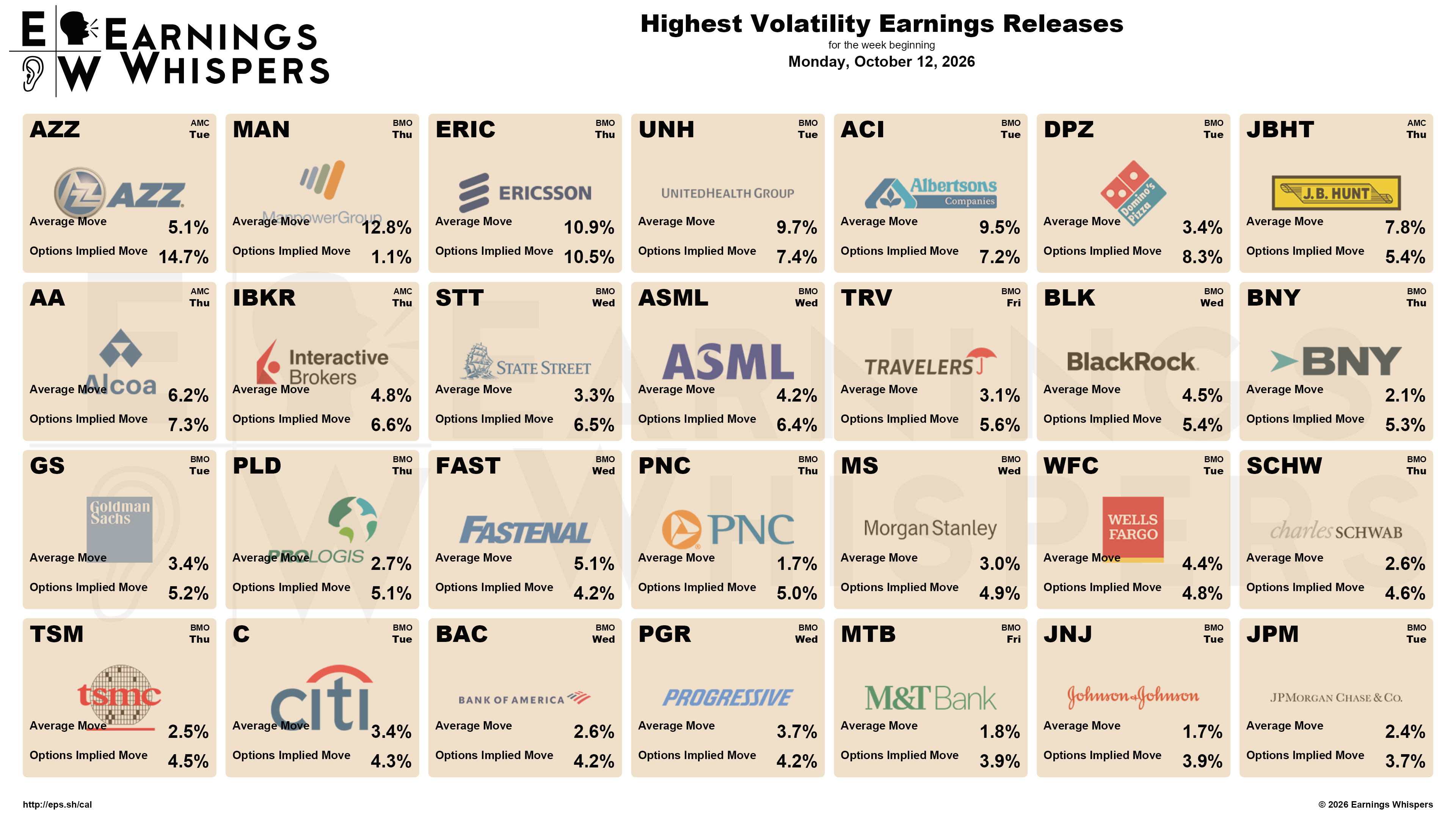
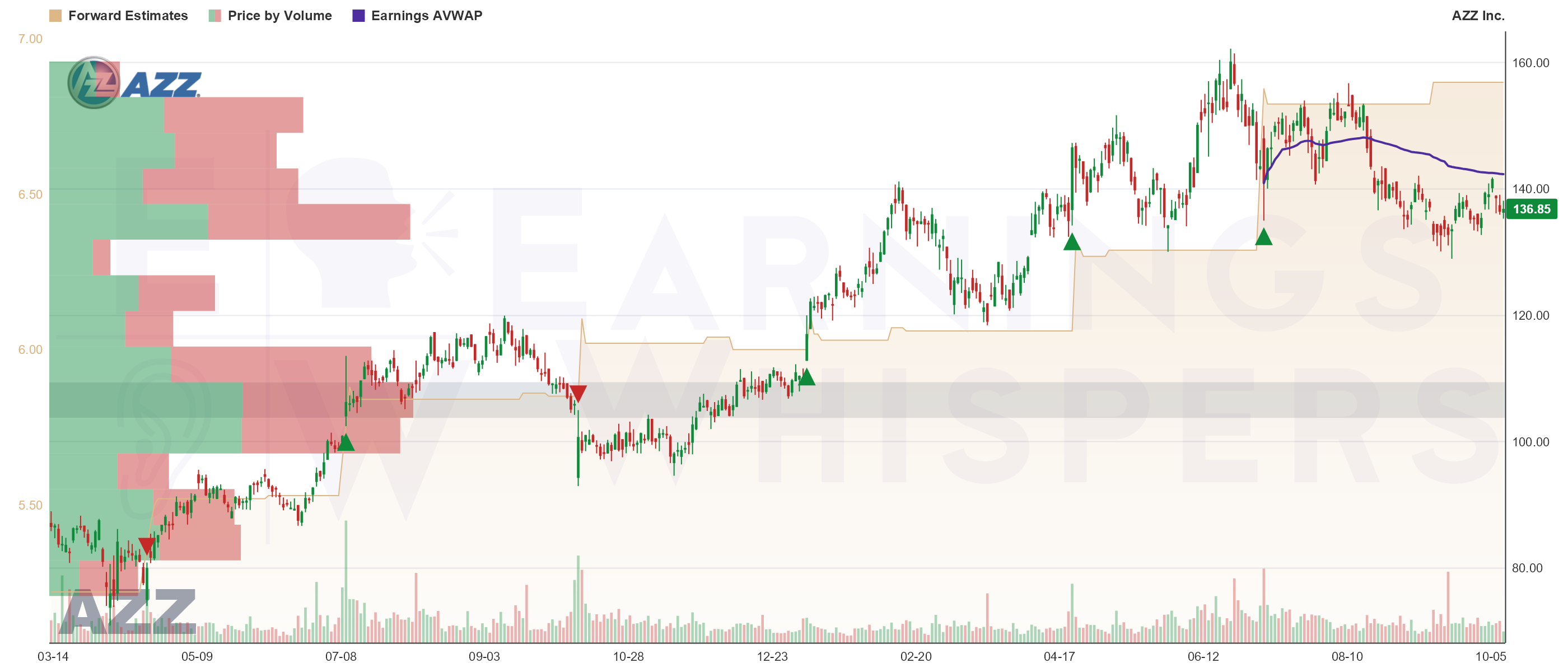
AZZ is on deck to report earnings on Tuesday, October 13, 2026 at roughly 4:15 PM ET. Wall Street is looking for $1.82 per share on revenue of $461.79 million, which would mark a healthy 10.7% jump in sales from a year ago, though the whisper number is running hotter at $1.90. The mood is upbeat, with 62.5% of investors betting on a beat. Still, not everyone is cheering: short interest has jumped 25.2% since last quarter, and the stock has slid 7.5% from where it opened after the last report, leaving it barely above its 200 day average of $136.45. Analysts have been nudging their estimates higher, and options traders are bracing for a big 14.7% swing, well above the 5.1% average move AZZ usually serves up.
Last quarter was a confidence booster. Management raised their full-year outlook across the board, bumped the dividend 20%, and teased a galvanizing acquisition expected to close any day now. The metal coatings business is on a tear with a four-quarter double-digit growth streak, and the Washington, Missouri plant is firing on all cylinders with container sales up a wild 194%. The catch is the pre-coat side, where weak demand in HVAC, appliances, and transportation keeps acting like an anchor. The big question for Tuesday is simple: can the galvanizing momentum and that fresh deal keep drowning out the soft spots, or will those circling short sellers finally get their moment?
Tariff Refunds and AI Gold Rush Paper Over a Shaky Consumer
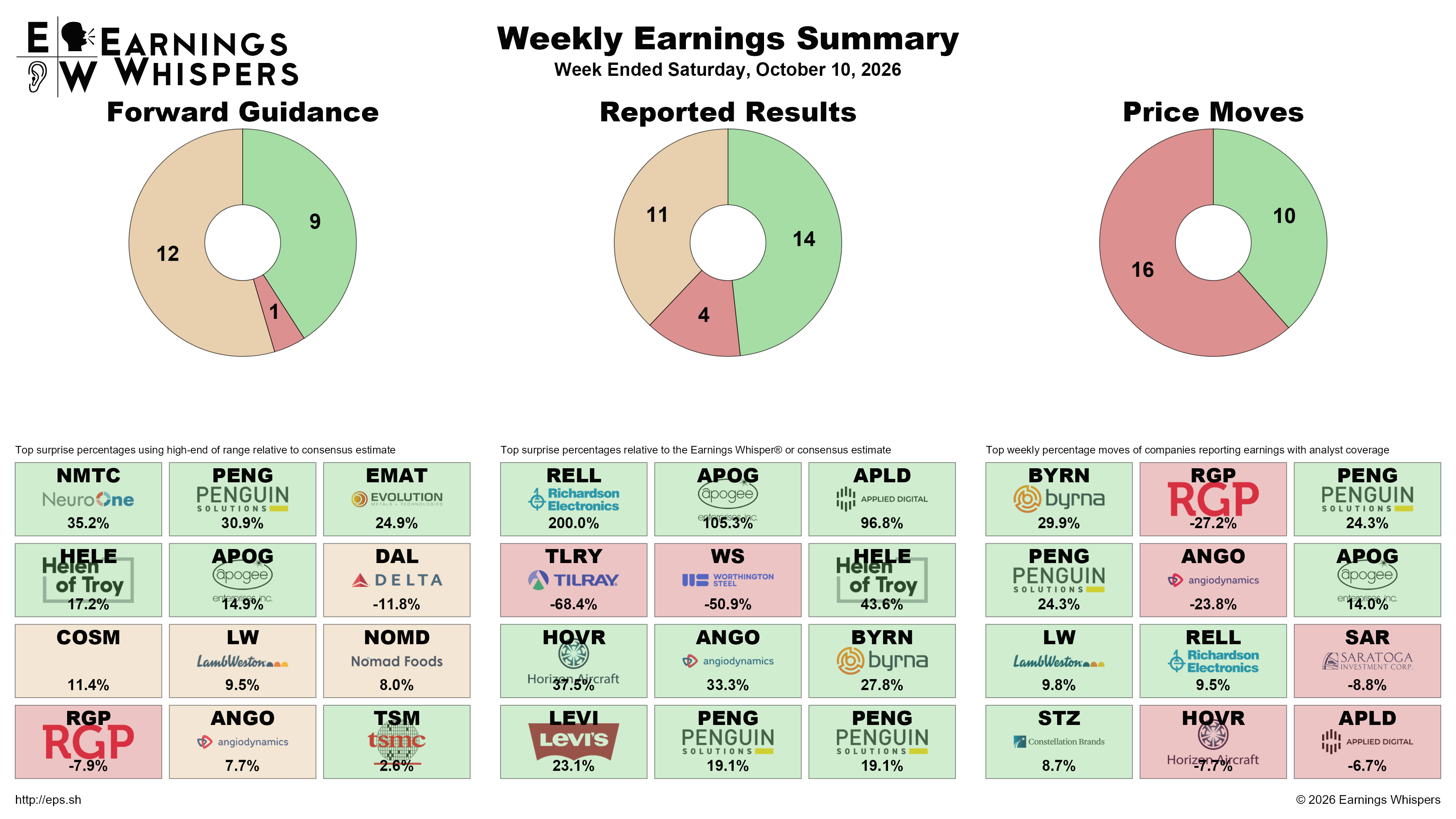
Last week's earnings told a tale of two economies. On one side sat the companies feeding America's appetite for snacks, soda, and sneakers, where a squeezed shopper kept showing up in the numbers. PepsiCo held its full-year forecast but quietly admitted profits would land at the low end of its range, as drivers stung by higher gas prices skipped the impulse buys at convenience stores. Levi Strauss stumbled too, snapping a 17-quarter streak of store sales growth after a flopped back-to-school campaign and warm weather kept shoppers home. A common trick ran through the quarter: one-time tariff refunds. Levi's banked roughly $80 million, Helen of Troy saw its cash flow and profit outlook jump almost entirely on an $80.5 million refund, and even PepsiCo leaned on tariff money to cushion the blow. Strip those out, and the underlying stories were softer than the cheery headlines suggested. Not everyone struggled, though. Constellation Brands nudged its profit forecast toward the high end as its Pacifico and Victoria beers kept gaining ground, and Lamb Weston raised its targets across the board as a heat-damaged European potato crop thinned out the competition.
Then there was the other economy, the one powered by artificial intelligence, where the money is flowing so fast it is hard to keep up. The standout was PENG, which jumped roughly 24 percent in a single week after turning a tentative forecast into a bold promise of 40 percent sales growth, fueled by massive orders for AI computing gear, including a 36,000-chip facility in Norway. Applied Digital also impressed, with revenue nearly tripling from a year ago as it shifted from signing deals to actually building data centers, though it signed no new campus leases and is burning through cash to keep up. That cash-hungry side of the AI boom is the catch worth watching: both companies are spending heavily today on the bet that demand holds up tomorrow. The quieter industrial names rounded out the week with mixed fortunes, as RPM International trimmed its outlook on rising raw material costs and a construction slowdown, while glass and metals maker Apogee surprised to the upside, lifting its forecast on sharp pricing and cost cuts even as its actual sales volumes stayed flat. The message for investors was clear enough: look past the headline beats and ask how much of the good news was built to last.
Applied Digital Crushes Estimates, But the Factory Floor Needs New Orders
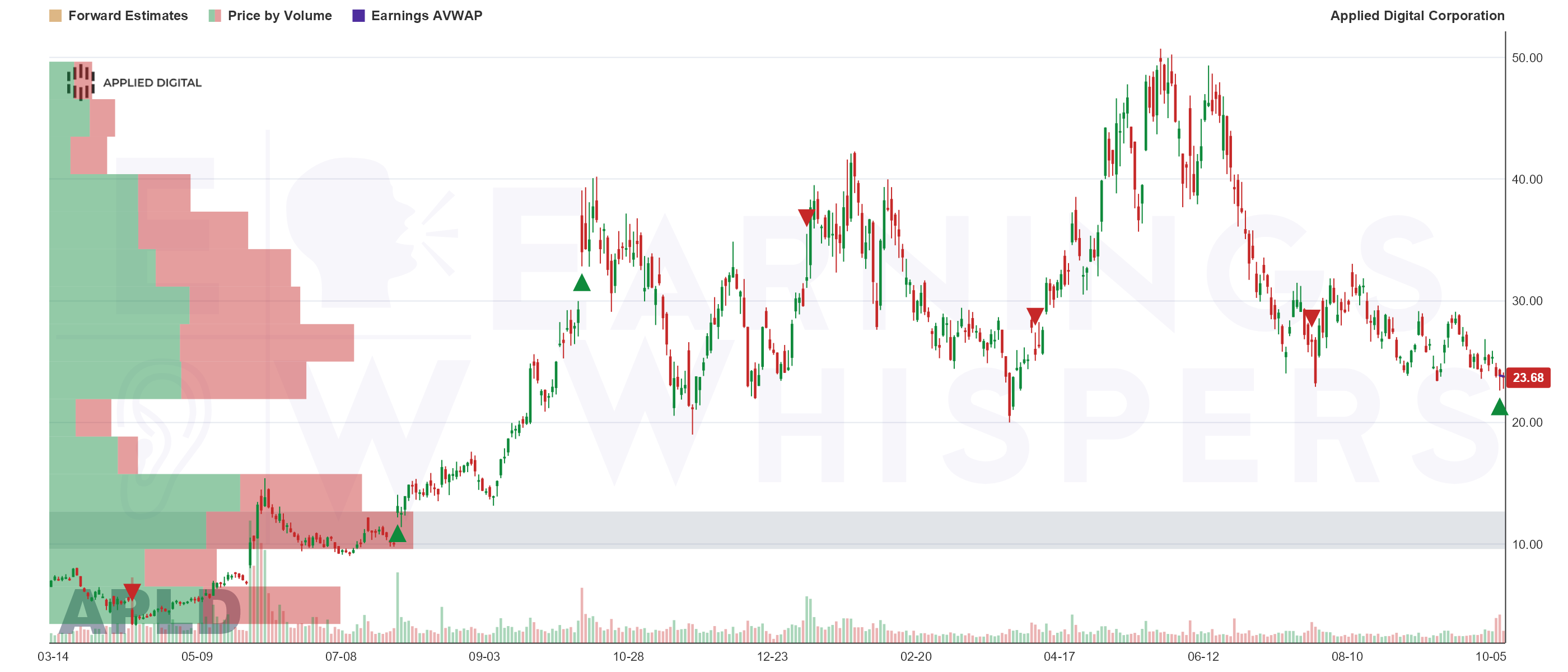
Applied Digital (APLD) just posted a loss of a penny per share on revenue of $341.88 million for its fiscal first quarter ended August 2026. Wall Street was bracing for a lot worse, pegging a loss of $0.25 per share on just $134.10 million in sales, and the Earnings Whisper crowd was even gloomier at a $0.31 loss. The company blew past expectations by nearly 97 percent while revenue rocketed up 432 percent from a year ago. CEO Wes Cummins says the mission is to make Applied Digital the go-to name for building and running what he calls AI factories, the giant purpose-built data centers that feed the high-performance computing boom. In short, APLD designs, builds, and operates next-generation data centers across North America for an industry that is growing faster than it can be plugged in.
Here is the real story. APLD has officially shifted from signing deals to actually delivering them, and the numbers show it. Revenue climbed from $258.7 million last quarter, adjusted EBITDA jumped to $64.4 million, and live capacity at Polaris Forge 1 more than doubled to 250 megawatts. Management is now dangling juicy long-term targets, think 3.5 to 4 gigawatts by 2030, a new Finland foothold, a natural gas power deal, and a fresh Microsoft deployment through ChronoScale. But before you pop the champagne, no new campus leases were signed this quarter, and those expansion deals keep sliding to later and later dates. Cash dropped to $2.9 billion while debt swelled to $6.4 billion, and the GAAP bottom line showed a $221 million loss once you count some ugly one-time charges. The CFO even admitted the bond market is tough right now. The next thing to watch is whether APLD can turn that promised 250 megawatts of expansions into signed ink and lock down financing for its next big builds. Great engine, now it needs more customers in the door.
Penguin's AI Engines Roar, But Cash Is Leaking From the Tank
Penguin Solutions (PENG) blew past the scorekeepers in its fiscal fourth quarter ending August 2026, posting earnings of $1.00 per share on revenue of $566.69 million. Wall Street was looking for just $0.75 per share on $512.50 million, and the so-called whisper number was $0.84, so this was a clean beat of roughly 19 percent while revenue rocketed 67.70 percent from a year ago. Even better, management cranked up the forward guide, now calling for fiscal 2027 earnings of $3.75 to $5.15 per share on revenue of about $2.43 billion, well ahead of the $3.40 and $2.19 billion the Street had penciled in. CEO Kash Shaikh credited the second-half surge to the launch of the company's AI Factory Platform and a sharpened focus on data center customers, saying the team lined up its AI Infrastructure and Memory businesses right where the demand is hottest.
Here is the real story under the hood. This was not a one-off pop but the latest in a string of beat-and-raise quarters, and FY27 earnings growth of about 55 percent is now expected to outrun sales growth of about 40 percent, which is exactly what investors want to see. The wins are splashy too, including a 36,000-GPU AI factory in Norway and a fast-growing memory backlog stretching out at least four quarters. The one thing to keep an eye on is cash. The company burned through $163 million in operating cash this quarter as inventory ballooned to $749 million, and FY27 gross margins are guided slightly lower on the AI hardware mix. Translation: business is booming, but Penguin is spending heavily to feed the beast, so watch whether that cash starts flowing back in as the shipments turn into dollars.
PepsiCo Beats, But the Fizz Is Fading at Home
PepsiCo (PEP) popped the top on third quarter results, posting earnings of $2.34 per share on revenue of $25.27 billion for the quarter ended September 2026. That edged past the $2.29 consensus and the $2.32 whisper number, with revenue climbing a healthy 5.59% from a year ago. But before you crack open a cold one to celebrate, look at the guidance. The company now sees full-year earnings of $8.34 to $8.42 per share on revenue of roughly $99.56 billion, a step down from its prior call for $8.55 to $8.71. With Wall Street camped at $8.56, that trimmed outlook is the real story here, not the small beat. Keep in mind this is a company whose products get enjoyed over a billion times a day in more than 200 countries, so when it dials back expectations, people notice.
The headline reads fine, but the details tell you where the pressure is coming from. The American shopper is feeling squeezed, with higher gas prices tied to the Iran war hitting those impulse buys at the register and gas stations. North America snack and drink volumes softened, drink margins slipped about 90 basis points, and the recovery management promised earlier is now coming in slower and more defensive. The silver lining is overseas, where sales grew about 7% with margins expanding and the World Cup giving Europe and Latin America a boost. Just know that a chunk of the profit cushion this year is coming from one-time tariff refunds, not core strength, so this is a modest step backward dressed up in a decent quarter.
Levi's Beats the Number, But the Jeans Are Starting to Sag
Levi Strauss & Company Cl A (LEVI) stitched together earnings of $0.48 per share on revenue of $1.61 billion for the fiscal third quarter ended August 2026, comfortably clearing the consensus estimate of $0.36 per share and the $0.39 Earnings Whisper number, a beat of roughly 23%. Revenue landed right on the $1.61 billion mark and grew 4.3% versus a year ago. Management also nudged up its full-year outlook, now calling for non-GAAP earnings of $1.54 to $1.56 per share on revenue of about $6.722 billion, up from the prior $1.46 to $1.52 range. For context, Levi is one of the biggest names in apparel and the global king of jeanswear, selling denim, casual wear and accessories under the Levi's, Dockers, Signature and Denizen labels.
Here is the fine print, and it matters. The earnings bump is mostly borrowed, not earned. Roughly $0.04 of the raise comes from a one-time $80 million tariff refund, not from selling more jeans. Strip that out and guidance is basically where it was. More worrying, the direct-to-consumer business, long the company's bright spot, grew just 2% with flat same-store sales after double-digit comps earlier this year, snapping a 17-quarter winning streak. A flubbed back-to-school campaign that bet on loose fits while shoppers wanted low-rise, plus soft traffic in the US and Europe, took the shine off. Promised warehouse savings got pushed to 2027 after a fire and messy transition, and growth is cooling quarter by quarter. There are still bright spots, with Asia up 10% and China up 13%, but after years of beat-and-raise swagger, this quarter looks like the first real wobble. Watch September's numbers closely.
Constellation Pops the Cap on a Beer-Fueled Beat
Constellation Brands (STZ) just served up a quarter worth cheersing. The company posted earnings of $3.74 per share on revenue of $2.82 billion for the fiscal second quarter ended August 2026, topping the consensus of $3.62 per share and $2.57 billion. That is a 5.35% beat on earnings while revenue grew 6.13% from a year ago. Management kept its full-year 2027 forecast of $11.20 to $11.90 per share, but the real headline is the confident wink that they now expect to land at the high end if September momentum holds, which puts them right up against the $11.81 consensus. For the uninitiated, Constellation is the beer, wine, and spirits heavyweight behind many household names on the shelf.
The story here is beer, and it is brewing nicely. Constellation was the number one dollar share gainer in all of alcohol last quarter, with its beer business beating the category by about 400 basis points. Pacifico has muscled its way into the top ten US beer brands with roughly 20% growth, Victoria is up mid-teens, and even Corona is steadying after a rough patch. They also grabbed a small ready-to-drink brand called Spiked Aide to ride the canned cocktail wave. The hangover risk? Their new Veracruz brewery got pushed from the middle of this year to early next year, which drags about 90 basis points on beer margins starting in fiscal 2028, and beer pricing came in basically flat this quarter thanks to coupons and dealer incentives. Still, with buybacks rolling and a fresh cost-cutting plan in the works, this round is on the house.
Beyond the banks, the real fireworks may come from the chip world. Taiwan Semiconductor and ASML, the twin pillars of the global technology supply chain, are among the most anticipated names this week, and the vibe heading in is genuinely upbeat. Both have momentum on their side and investors are betting the artificial intelligence boom keeps their order books overflowing, so expect plenty of eyeballs when those numbers drop. On the healthcare front, Johnson & Johnson looks steady and well liked, while UnitedHealth remains the wild card everyone is nervous about after a rocky stretch. Keep an eye on Domino's Pizza too, the lone retail star of the week, where the mood has soured and a disappointing slice could leave investors with a bad taste. Add insurer Progressive and a handful of smaller names to the mix, and you have a week with enough drama to keep traders glued to their screens.
UnitedHealth's Comeback Story Rolls On, But Watch the Commercial Cracks
UnitedHealth Group (UNH) steps up to the earnings plate before dawn on Tuesday, October 13, 2026, at roughly 5:55 AM ET. Wall Street is penciling in $4.12 per share on revenue of $111.38 billion, which would be a 1.6% dip from a year ago, but the whisper number says folks are quietly hoping for $4.60. The mood going in is grumpy, though 40.3% still think the company clears the bar. Here's the interesting part: short sellers have run for the exits, cutting their bets by 28.2% since last quarter, even as the stock has slid 15.6% from where it opened after the last report. It is still sitting 6.1% above its 200 day moving average of $357.36, and analysts have actually been nudging their estimates higher. Options traders are bracing for a 7.4% swing, which is tame compared to the 9.7% average lurch of recent quarters. One eyebrow-raiser: on September 23, someone scooped up 2,384 of the $365 puts expiring October 16, so at least one trader is hedging their bets.
The story here is a turnaround that keeps picking up steam. Management has now raised full-year earnings guidance three quarters in a row, lifted profit targets at both UnitedHealthcare and OptumHealth, doubled the buyback to at least $5 billion, and bumped the dividend. Medicare Advantage is finally running better than feared, and the tone from the top has gone from humbled to downright feisty. The fly in the ointment is the commercial business, where costs are climbing past 11% and still rising, pushing the margin recovery out beyond 2027. Medicaid is also still bleeding. So the big question for Tuesday is simple: does the good news keep outrunning the commercial drag, or does that soft spot finally steal the spotlight?
JPMorgan Heads Into Earnings Firing On All Cylinders
JPMorgan Chase (JPM) steps into the earnings box on Tuesday, October 13, 2026 at around 6:40 AM ET. Wall Street is looking for $5.94 per share on $52.21 billion in revenue, which is a 27.4% drop from a year ago, though the Earnings Whisper number is a touch higher at $6.10. The crowd is feeling good, with 66.0% betting on a beat. Short sellers have backed off, cutting their bets by 10.7% since last quarter, while the stock has quietly climbed 1.8% since its last earnings pop to sit 3.4% above its 200 day moving average of $322.14. Estimates have been nudged higher across the board. Options traders are bracing for a 3.7% swing, a bit bigger than the 2.4% the stock usually moves, and on October 07 someone scooped up 4,484 of the $340 calls expiring October 16, a clear vote of confidence.
Last quarter the bank was practically humming, with management saying it is "getting close to as good as it gets." They raised guidance on net interest income, consumer credit came in better than feared, and the trading and dealmaking desks put up monster numbers, with equities up a jaw-dropping 86% year over year. The catch is that some of that magic probably will not repeat, expenses got bumped up (though mostly because business is booming), and there are fresh questions around who runs the show after Marianne Lake's retirement and a management shuffle. Bottom line, the engine looks strong, so watch whether they can keep the momentum going now that the easy comparisons are behind them.
ASML: The AI Chip Picks-and-Shovels King Rolls Into Earnings Hot
ASML Holding N.V. (ASML) reports earnings on Wednesday, October 14, 2026 at roughly 1:00 AM ET. Wall Street is looking for $12.47 per share on revenue of $13.18 billion, which would be a hefty 50% jump from a year ago, though the Earnings Whisper number sits higher at $13.23 per share. Company guidance called for revenue between $12.56 billion and $13.70 billion. Traders are feeling good, with 85.7% betting on a beat. Short interest has climbed 30.5% since last quarter, yet the stock has only slipped 2.5% from its post-earnings open and still sits 14.2% above its 200 day moving average of $1,559.31. Earnings estimates have been nudged higher across the board. Options traders are bracing for a 6.4% swing, a bit bigger than the 4.2% average move of late, and on Tuesday, October 6 someone snapped up 789 of the $1,960 calls expiring October 16.
Here is the real story: ASML has become the backbone of the AI chip boom, and last quarter it raised its full-year revenue outlook for the second time in a row while also bumping up its profit margins. Memory-related sales are expected to soar 75% this year and advanced logic 25%, with even the older non-EUV business flipping from flat to up 25%. The crown jewel was Intel publicly putting ASML's cutting-edge High-NA machines to work, the strongest proof yet that this expensive new tech is for real. The only clouds are modest: China sales cooling to a normal 20% of the mix and some upfront costs on the newest tools. The one thing to watch now is whether ASML can build machines fast enough, because for the first time in ages the problem is keeping up with demand, not finding it.
Goldman Faces a Brutal Comp, But the Engine Still Hums
The Goldman Sachs Group (GS) is set to report earnings before the bell on Tuesday, October 13, 2026, at roughly 7:25 AM ET. Wall Street is looking for $12.90 per share on revenue of $16.87 billion, and while that revenue figure is a jaw-dropping 47.5% drop from a year ago, the Earnings Whisper number sits a touch higher at $12.95. Investors are walking in nervous, yet a solid 64.0% still expect a beat. Short sellers have piled on, bumping short interest up 6.8% since last quarter, and the stock has slid 17.5% from where it opened after the last report, leaving it 6.6% under its 200 day moving average of $958.81. Still, the analyst crowd has been nudging estimates higher, so the mood is more cautious than doomed. Options traders are bracing for a 5.2% swing, a bit hot compared to the 3.4% average move of late, and on Friday someone grabbed 3,012 of the $970 calls expiring October 16, a bet that the bulls are not done yet.
Here is the real story heading in: that scary 47.5% revenue drop is mostly a comparison problem, since last year's quarter was loaded up. Under the hood, the franchise looks healthy. Investment banking has been on a tear, with advisory up 89% year over year last quarter and a backlog near record highs, while equities just posted a record $5.3 billion quarter. The wealth and asset management push is working too, with the alternatives fundraising target raised toward $100 billion and wealth inflows running at 9%, well ahead of the new 5% goal. The soft spots to watch are the fixed income desk, which cooled on tough comps, and private banking, where tighter margins should nag through the year. One honest caveat: last quarter's call transcript was a garbled mess with no usable numbers, so the latest read leans on older data. Translation, the trend looks up, but keep your eyes open on Tuesday.
TSMC Rides the Insatiable AI Wave Into Earnings
The world's chip-making kingpin, Taiwan Semiconductor Manufacturing Company (TSM), is set to report earnings Thursday, October 15, 2026 at roughly 3:00 AM ET, so set your alarm or just read my note instead. Wall Street is looking for $4.45 per share on $45.62 billion in revenue, which would be a hefty 37.8% jump from a year ago, and the whisper number is even juicier at $4.58. Management guided for $44.60 billion to $45.80 billion, so the bar is already set high. Investors are feeling good, with 87% betting on a beat, short interest barely budging, and the stock drifting 11.8% higher since last quarter to sit 15.9% above its 200 day average of $391.28. Estimates have crept up, option traders are bracing for a 4.5% swing even though the stock usually moves about 2.5%, and someone made a big bullish bet buying 12,476 of the $460 calls on September 30.
Here is what really matters: last quarter TSMC did not just raise the bar, it pole vaulted over it. They bumped full-year revenue growth guidance to slightly above 40%, cranked up capital spending to $60 to $64 billion, and dropped another $100 billion on their Arizona buildout. Management went from cautious to calling AI demand flat out insatiable, with visibility stretching into 2029 and 2030 thanks to AI accelerators and a new twist where agentic AI is reviving good old CPU demand. The one thing to watch is margins, which they guided down to about 66% as the pricey new N2 chip ramp eats into profits in the back half of the year. Translation: slightly thinner margins now in exchange for a firehose of AI growth later, and the market seems happy to take that trade.
Wells Fargo Unleashed: Firing on All Cylinders, But Watch the Margin Squeeze
Wells Fargo (WFC) steps up to the earnings plate bright and early on Tuesday, October 13, 2026, at roughly 6:50 AM ET. Wall Street is looking for $1.85 per share on $22.15 billion in revenue, which would be a steep 30.6% drop from a year ago, though the whisper number is a touch higher at $1.93. The crowd is leaning optimistic, with over a third betting on a beat. That said, the skeptics are circling too. Short interest has jumped 10.3% since last quarter, the stock has slipped 1.5% since its last post-earnings open and sits just below its 200-day moving average of $84.52. Options traders are bracing for a 4.8% swing, roughly in line with the 4.4% average move of late. One eyebrow-raiser: on September 23, someone scooped up 11,342 of the $75 puts expiring October 16, so at least one deep-pocketed player is hedging for a stumble.
Here is the real story heading in. With the asset cap finally gone, Wells Fargo has been hitting the gas across the board. Last quarter saw revenue climb 9%, EPS jump 25%, record investment banking fees topping $900 million, auto loans up 41%, and card accounts up 46%. Returns are now near their target, loans and deposits are growing, and the dividend is set to rise 11% to $0.50. The catch everyone keeps circling back to is the net interest margin, which is still shrinking as the bank intentionally piles into lower-spread trading balances. Management expects a bit more pressure this quarter before it steadies out, and that margin story is exactly what spooked investors last time. CEO Charlie Scharf also flagged some late-cycle jitters around banks and non-banks pouring money into AI, data centers and private credit, risks he says are 'hard to see.' Bottom line: the engine is roaring, but keep one eye on the margin gauge.
J&J's Drug Engine Roars While Its Heart-Device Unit Skips a Beat
Johnson & Johnson (JNJ) is confirmed to report earnings on Tuesday, October 13, 2026 at approximately 6:20 AM ET. Wall Street is looking for $2.53 per share on revenue of $25.37 billion, which would be a healthy 5.7% bump in sales from a year ago, but the whisper number is a punchier $2.93. The mood heading in is upbeat, with 12.5% expecting a beat, and the doubters are backing off as short interest has dropped a hefty 20.3% since last quarter. The stock has quietly climbed 4.5% since the last report and now sits 7.7% above its 200 day average of $242.74. One thing to keep an eye on: overall earnings estimates have actually been trimmed since last time, so the bar may be a touch lower than the buzz suggests. Options traders are betting on a 3.9% swing, which is roomier than the 1.7% average move JNJ usually delivers. And on Friday, September 25, someone stepped in and scooped up 2,905 of the $260 puts expiring December 18, so a few folks are hedging their bets.
Here is the real story going in: this has become a two-speed company. The drug business is firing on all cylinders, with Tremfiya blowing past 71% growth and crossing its first $2 billion quarter, plus newer launches like Icotide and Inlexo ramping fast. That strength let management raise guidance across the board last quarter on sales, profit and margins. The soft spot is the MedTech heart unit, where Abiomed actually shrank 2% after a disappointing UK trial made doctors more cautious, and the electrophysiology arm got dinged by a China inventory issue. Management calls these bumps temporary, but watch whether the heart-device drag deepens or the drug momentum keeps carrying the day.
BofA Faces Earnings Hangover After a Blowout Quarter
Bank of America reports before the bell on Wednesday, October 14, 2026, at around 6:45 AM ET. Wall Street is looking for $1.11 per share on revenue of $30.62 billion, though the whisper number is a hair higher at $1.17. That revenue figure looks scary at a 36.5% drop from last year, but that is mostly an accounting mirage against a monster comparison, so do not let it spook you. Investors are feeling grumpy heading in, yet two out of three still expect a beat. Short sellers have backed off by 8.4%, the stock has slid 7.9% since last quarter and now sits just below its 200 day average of $55.28, and overall estimates have actually been nudged higher. Options traders are betting on a 4.2% swing, bigger than the 2.6% the stock usually musters, and someone made a splashy bet on Friday, scooping up 22,605 of the $56 calls expiring October 16.
Here is the real story: last quarter was a knockout, and the question is whether the music keeps playing. Management raised its net interest income guide for the third straight time and more than doubled its operating leverage target to 300-400 basis points, while fee businesses went nuts, with investment banking up 50% and trading hitting record highs. The catch is that the back half of the year faces much tougher comparisons, since the same lines were already booming a year ago, so expect growth to cool from scorching to merely strong. Watch the AI productivity story, consumer spending still running hot at 6% plus, and card growth marching toward its 5% target. If NII and fees hold up against those nasty comps, the recent dip could look like a gift.
Domino's Fills the Cart, Just Not the Bill
Domino's Pizza (DPZ) is confirmed to report earnings on Tuesday, October 13, 2026 at roughly 6:05 AM ET, and this one lands on a leadership changeover so eyes will be glued to the scoreboard. Wall Street is looking for $4.33 per share on revenue of $1.17 billion, which is just 2.0% growth from a year ago, while the Earnings Whisper number sits a touch higher at $4.38. Investors are walking in bearish but bracing for results right in line, and you can see it in the tape: the stock has drifted 9.7% lower since last quarter's open and now sits 11.9% below its 200 day moving average of $350.97. Short sellers have actually backed off, trimming their bets by 10.1%, and analysts have nudged estimates higher since the last report, so the mood is cautious but not panicked. Options traders are penciling in an 8.3% swing, which is beefy next to the 3.4% the stock usually moves, and on September 30 someone scooped up 613 of the $380 calls expiring October 16, a cheeky bet that the pessimism is overdone.
Here is the real story heading in: Domino's is still winning the battle for customers but losing a little steam at the register. More people are ordering than ever, with order counts up meaningfully in both delivery and carryout even as the broader fast food crowd flatlined, and the company is now the top pizza player on both Uber and DoorDash. The problem is what lands in the basket. Same store sales have slowed four quarters straight, from a healthy 5.2% down to a barely-there 0.1% last quarter, after a new Premium Series launch simply flopped and dragged the average ticket down. Management also quietly trimmed its US store growth target and admitted franchisees are feeling a profit pinch, all while handing the CEO reins from Russell Weiner to Joe Jordan this month. The fix is already in motion with a brand new signature pizza and a reinvented Best Deal Ever sporting Parmesan stuffed crust, so watch whether those new menu moves start putting dollars back in the cart.
Alcoa Heads Into Earnings Riding a Record-Breaking High
Alcoa (AA) is locked in to report earnings on Thursday, October 15, 2026 at roughly 4:10 PM ET. Wall Street is looking for $1.65 per share on revenue of $3.61 billion, which would mark a hefty 20.5% jump in sales from a year ago. The crowd is feeling good here, with a whopping 91.7% betting on a beat. But here is the twist: the short sellers have piled in too, boosting short interest by 42.2% since last quarter, and the stock has slid 9.3% from where it opened after the last report. That leaves it sitting a steep 27.0% below its 200 day moving average of $57.82. Analysts, for their part, have been nudging their estimates higher. Options traders are bracing for a 7.3% swing on earnings day, a touch above the 6.2% average move of recent quarters. And on October 1, someone made a big bet, scooping up 4,120 of the $40.00 calls expiring in June 2027.
Last quarter was the best one Alcoa has put up in about a decade, so the stage is set. Revenue hit a record $4.0 billion, free cash flow flipped from deep in the red to a positive $422 million, and the aluminum business cranked out record profits at fat margins thanks to smelter restarts. The big story was the roughly $4.1 billion deal to buy South32's upstream aluminum assets, which supercharges Alcoa's capacity and starts adding to earnings right away. The one sore spot was the Pinjarra refinery, where an oxalate outbreak and a cyclone forced management to trim its alumina production outlook, and that lost output is not fully coming back. Watch for how fast they fold in that acquisition and whether the demand strength, with order books stronger than a year ago, is holding up against softer construction activity in Europe.
AZZ Heads Into Earnings Hot, But the Shorts Are Circling
AZZ is on deck to report earnings on Tuesday, October 13, 2026 at roughly 4:15 PM ET. Wall Street is looking for $1.82 per share on revenue of $461.79 million, which would mark a healthy 10.7% jump in sales from a year ago, though the whisper number is running hotter at $1.90. The mood is upbeat, with 62.5% of investors betting on a beat. Still, not everyone is cheering: short interest has jumped 25.2% since last quarter, and the stock has slid 7.5% from where it opened after the last report, leaving it barely above its 200 day average of $136.45. Analysts have been nudging their estimates higher, and options traders are bracing for a big 14.7% swing, well above the 5.1% average move AZZ usually serves up.
Last quarter was a confidence booster. Management raised their full-year outlook across the board, bumped the dividend 20%, and teased a galvanizing acquisition expected to close any day now. The metal coatings business is on a tear with a four-quarter double-digit growth streak, and the Washington, Missouri plant is firing on all cylinders with container sales up a wild 194%. The catch is the pre-coat side, where weak demand in HVAC, appliances, and transportation keeps acting like an anchor. The big question for Tuesday is simple: can the galvanizing momentum and that fresh deal keep drowning out the soft spots, or will those circling short sellers finally get their moment?
Tariff Refunds and AI Gold Rush Paper Over a Shaky Consumer
Last week's earnings told a tale of two economies. On one side sat the companies feeding America's appetite for snacks, soda, and sneakers, where a squeezed shopper kept showing up in the numbers. PepsiCo held its full-year forecast but quietly admitted profits would land at the low end of its range, as drivers stung by higher gas prices skipped the impulse buys at convenience stores. Levi Strauss stumbled too, snapping a 17-quarter streak of store sales growth after a flopped back-to-school campaign and warm weather kept shoppers home. A common trick ran through the quarter: one-time tariff refunds. Levi's banked roughly $80 million, Helen of Troy saw its cash flow and profit outlook jump almost entirely on an $80.5 million refund, and even PepsiCo leaned on tariff money to cushion the blow. Strip those out, and the underlying stories were softer than the cheery headlines suggested. Not everyone struggled, though. Constellation Brands nudged its profit forecast toward the high end as its Pacifico and Victoria beers kept gaining ground, and Lamb Weston raised its targets across the board as a heat-damaged European potato crop thinned out the competition.
Then there was the other economy, the one powered by artificial intelligence, where the money is flowing so fast it is hard to keep up. The standout was PENG, which jumped roughly 24 percent in a single week after turning a tentative forecast into a bold promise of 40 percent sales growth, fueled by massive orders for AI computing gear, including a 36,000-chip facility in Norway. Applied Digital also impressed, with revenue nearly tripling from a year ago as it shifted from signing deals to actually building data centers, though it signed no new campus leases and is burning through cash to keep up. That cash-hungry side of the AI boom is the catch worth watching: both companies are spending heavily today on the bet that demand holds up tomorrow. The quieter industrial names rounded out the week with mixed fortunes, as RPM International trimmed its outlook on rising raw material costs and a construction slowdown, while glass and metals maker Apogee surprised to the upside, lifting its forecast on sharp pricing and cost cuts even as its actual sales volumes stayed flat. The message for investors was clear enough: look past the headline beats and ask how much of the good news was built to last.
Applied Digital Crushes Estimates, But the Factory Floor Needs New Orders
Applied Digital (APLD) just posted a loss of a penny per share on revenue of $341.88 million for its fiscal first quarter ended August 2026. Wall Street was bracing for a lot worse, pegging a loss of $0.25 per share on just $134.10 million in sales, and the Earnings Whisper crowd was even gloomier at a $0.31 loss. The company blew past expectations by nearly 97 percent while revenue rocketed up 432 percent from a year ago. CEO Wes Cummins says the mission is to make Applied Digital the go-to name for building and running what he calls AI factories, the giant purpose-built data centers that feed the high-performance computing boom. In short, APLD designs, builds, and operates next-generation data centers across North America for an industry that is growing faster than it can be plugged in.
Here is the real story. APLD has officially shifted from signing deals to actually delivering them, and the numbers show it. Revenue climbed from $258.7 million last quarter, adjusted EBITDA jumped to $64.4 million, and live capacity at Polaris Forge 1 more than doubled to 250 megawatts. Management is now dangling juicy long-term targets, think 3.5 to 4 gigawatts by 2030, a new Finland foothold, a natural gas power deal, and a fresh Microsoft deployment through ChronoScale. But before you pop the champagne, no new campus leases were signed this quarter, and those expansion deals keep sliding to later and later dates. Cash dropped to $2.9 billion while debt swelled to $6.4 billion, and the GAAP bottom line showed a $221 million loss once you count some ugly one-time charges. The CFO even admitted the bond market is tough right now. The next thing to watch is whether APLD can turn that promised 250 megawatts of expansions into signed ink and lock down financing for its next big builds. Great engine, now it needs more customers in the door.
Penguin's AI Engines Roar, But Cash Is Leaking From the Tank
Penguin Solutions (PENG) blew past the scorekeepers in its fiscal fourth quarter ending August 2026, posting earnings of $1.00 per share on revenue of $566.69 million. Wall Street was looking for just $0.75 per share on $512.50 million, and the so-called whisper number was $0.84, so this was a clean beat of roughly 19 percent while revenue rocketed 67.70 percent from a year ago. Even better, management cranked up the forward guide, now calling for fiscal 2027 earnings of $3.75 to $5.15 per share on revenue of about $2.43 billion, well ahead of the $3.40 and $2.19 billion the Street had penciled in. CEO Kash Shaikh credited the second-half surge to the launch of the company's AI Factory Platform and a sharpened focus on data center customers, saying the team lined up its AI Infrastructure and Memory businesses right where the demand is hottest.
Here is the real story under the hood. This was not a one-off pop but the latest in a string of beat-and-raise quarters, and FY27 earnings growth of about 55 percent is now expected to outrun sales growth of about 40 percent, which is exactly what investors want to see. The wins are splashy too, including a 36,000-GPU AI factory in Norway and a fast-growing memory backlog stretching out at least four quarters. The one thing to keep an eye on is cash. The company burned through $163 million in operating cash this quarter as inventory ballooned to $749 million, and FY27 gross margins are guided slightly lower on the AI hardware mix. Translation: business is booming, but Penguin is spending heavily to feed the beast, so watch whether that cash starts flowing back in as the shipments turn into dollars.
PepsiCo Beats, But the Fizz Is Fading at Home
PepsiCo (PEP) popped the top on third quarter results, posting earnings of $2.34 per share on revenue of $25.27 billion for the quarter ended September 2026. That edged past the $2.29 consensus and the $2.32 whisper number, with revenue climbing a healthy 5.59% from a year ago. But before you crack open a cold one to celebrate, look at the guidance. The company now sees full-year earnings of $8.34 to $8.42 per share on revenue of roughly $99.56 billion, a step down from its prior call for $8.55 to $8.71. With Wall Street camped at $8.56, that trimmed outlook is the real story here, not the small beat. Keep in mind this is a company whose products get enjoyed over a billion times a day in more than 200 countries, so when it dials back expectations, people notice.
The headline reads fine, but the details tell you where the pressure is coming from. The American shopper is feeling squeezed, with higher gas prices tied to the Iran war hitting those impulse buys at the register and gas stations. North America snack and drink volumes softened, drink margins slipped about 90 basis points, and the recovery management promised earlier is now coming in slower and more defensive. The silver lining is overseas, where sales grew about 7% with margins expanding and the World Cup giving Europe and Latin America a boost. Just know that a chunk of the profit cushion this year is coming from one-time tariff refunds, not core strength, so this is a modest step backward dressed up in a decent quarter.
Levi's Beats the Number, But the Jeans Are Starting to Sag
Levi Strauss & Company Cl A (LEVI) stitched together earnings of $0.48 per share on revenue of $1.61 billion for the fiscal third quarter ended August 2026, comfortably clearing the consensus estimate of $0.36 per share and the $0.39 Earnings Whisper number, a beat of roughly 23%. Revenue landed right on the $1.61 billion mark and grew 4.3% versus a year ago. Management also nudged up its full-year outlook, now calling for non-GAAP earnings of $1.54 to $1.56 per share on revenue of about $6.722 billion, up from the prior $1.46 to $1.52 range. For context, Levi is one of the biggest names in apparel and the global king of jeanswear, selling denim, casual wear and accessories under the Levi's, Dockers, Signature and Denizen labels.
Here is the fine print, and it matters. The earnings bump is mostly borrowed, not earned. Roughly $0.04 of the raise comes from a one-time $80 million tariff refund, not from selling more jeans. Strip that out and guidance is basically where it was. More worrying, the direct-to-consumer business, long the company's bright spot, grew just 2% with flat same-store sales after double-digit comps earlier this year, snapping a 17-quarter winning streak. A flubbed back-to-school campaign that bet on loose fits while shoppers wanted low-rise, plus soft traffic in the US and Europe, took the shine off. Promised warehouse savings got pushed to 2027 after a fire and messy transition, and growth is cooling quarter by quarter. There are still bright spots, with Asia up 10% and China up 13%, but after years of beat-and-raise swagger, this quarter looks like the first real wobble. Watch September's numbers closely.
Constellation Pops the Cap on a Beer-Fueled Beat
Constellation Brands (STZ) just served up a quarter worth cheersing. The company posted earnings of $3.74 per share on revenue of $2.82 billion for the fiscal second quarter ended August 2026, topping the consensus of $3.62 per share and $2.57 billion. That is a 5.35% beat on earnings while revenue grew 6.13% from a year ago. Management kept its full-year 2027 forecast of $11.20 to $11.90 per share, but the real headline is the confident wink that they now expect to land at the high end if September momentum holds, which puts them right up against the $11.81 consensus. For the uninitiated, Constellation is the beer, wine, and spirits heavyweight behind many household names on the shelf.
The story here is beer, and it is brewing nicely. Constellation was the number one dollar share gainer in all of alcohol last quarter, with its beer business beating the category by about 400 basis points. Pacifico has muscled its way into the top ten US beer brands with roughly 20% growth, Victoria is up mid-teens, and even Corona is steadying after a rough patch. They also grabbed a small ready-to-drink brand called Spiked Aide to ride the canned cocktail wave. The hangover risk? Their new Veracruz brewery got pushed from the middle of this year to early next year, which drags about 90 basis points on beer margins starting in fiscal 2028, and beer pricing came in basically flat this quarter thanks to coupons and dealer incentives. Still, with buybacks rolling and a fresh cost-cutting plan in the works, this round is on the house.