Upcoming Earnings
This Week in Earnings: Travel Giants Stumble as Homebuilders Sweat and Retail Holds Its Breath
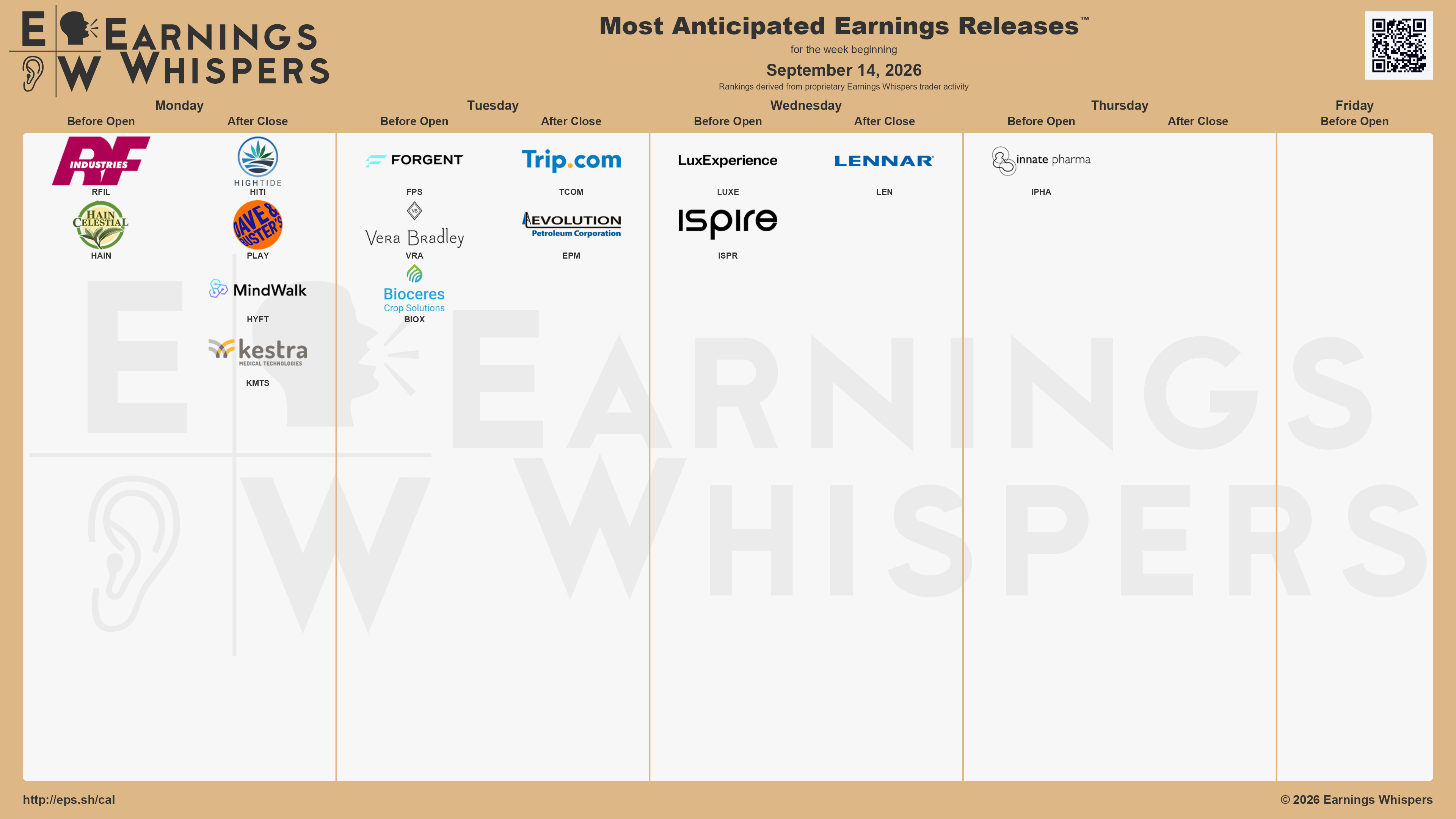
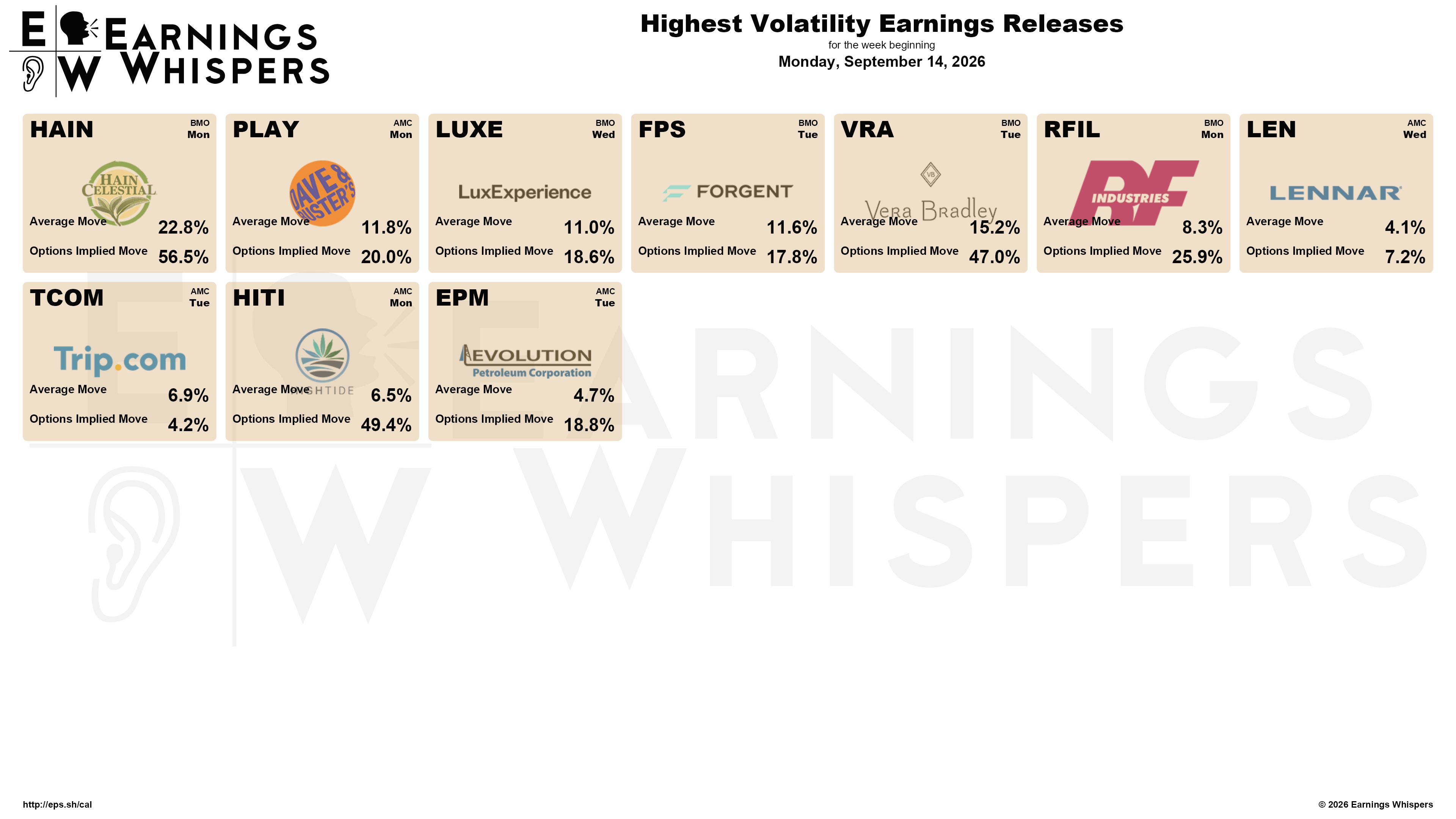
This week's earnings docket is a mixed bag of nerves and cautious optimism. The headliner is Trip.com, the travel booking powerhouse, and the mood heading in looks decidedly gloomy. Analysts have been quietly walking back their expectations, and the whispers on the street suggest the company may struggle to live up to the sky-high hopes investors had after its post-pandemic travel boom. Homebuilder Lennar is in a similar boat, with the housing market's higher-for-longer interest rate hangover weighing heavily on sentiment. Both stocks tend to swing hard when they report, so anyone holding them should expect fireworks either way. Meanwhile, Dave & Buster's, the arcade-and-eats chain, is walking into its report on shaky legs. Momentum has cooled, and the crowd is bracing for a bumpy night at the games.
Not everything looks grim, though. Vera Bradley, the colorful handbag and accessories maker, is quietly one of the brighter spots this week. The mood around it has turned notably upbeat, and there are signs the company has been steadily getting its house in order after a rough stretch, so don't be shocked if it surprises to the upside. Cannabis retailer High Tide also enters with a bit of a tailwind and improving conditions behind it, making it a small name worth watching. On the flip side, keep an eye on medical device up-and-comer Kestra and energy player Evolution Petroleum, both of which face skeptical crowds and could see selling pressure if results disappoint. As always, the numbers only tell half the story. What really matters is how they stack up against the whispered expectations, and this week those whispers are running in wildly different directions.
Forgent Power: Fear Meets Firepower Ahead of Tuesday's Print
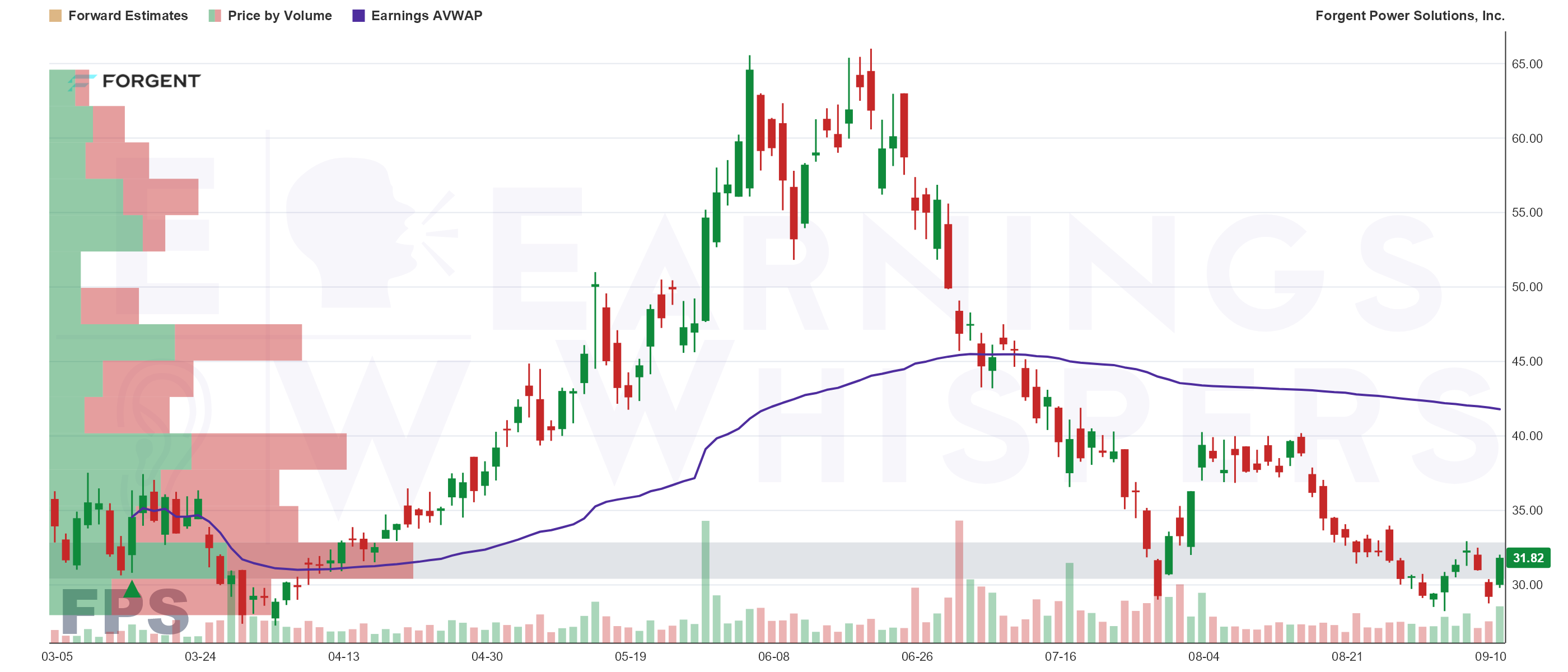
Forgent Power Solutions (FPS) is set to report earnings before the bell on Tuesday, September 15, 2026 at roughly 6:30 AM ET. Wall Street is looking for $0.22 per share on $425.58 million in revenue, but the Earnings Whisper number sits higher at $0.24. Here is the funny part: investors are walking in bearish, yet a whopping 92.3% of them still expect the company to beat. The stock is trading 19.6% below its 200 day moving average of $39.57, so there is plenty of ground to make up. And someone is clearly betting on a comeback, because Friday, September 4 saw a notable pile-up of 4,616 contracts on the $32.50 calls expiring September 18.
Here is why the gloom feels a bit overdone. Last quarter Forgent hit the gas, growing revenue 103% and raising its full-year outlook so much that the new low end sits above the old high end. Margins jumped, bookings hit a record $867 million, and backlog swelled to about $2 billion. On top of that, management landed two fresh data-center orders north of $100 million each and finally flipped cash flow positive. The one real wrinkle is short-term cost pressure from ramping up so fast, which nudged margins down slightly, but that is the price of growing this quickly. In short, the setup screams momentum while sentiment says caution, and that gap is exactly what makes Tuesday worth watching.
High Tide's German Rocket Meets Canada's Cooling Shopper
High Tide (HITI) rings the bell on Monday, September 14, 2026 at roughly 4:00 PM ET, and Wall Street is feeling good about it. The crowd expects a penny per share on revenue of $140.28 million, a healthy 28.8% jump from a year ago, and a whopping 90% of investors are betting on a beat. Here's the odd twist though: short interest has ballooned 68.3% since last quarter, so the doubters are piling in too. The stock has slipped 2.3% from where it opened after last quarter's report, yet it still sits 4.2% above its 200 day moving average of $2.43. Estimates haven't budged since last time, and on September 10 someone scooped up 1,013 of the $5.00 calls expiring in April 2027, a cheeky bet that this thing has real room to run.
The real story is a tale of two continents. Germany is the breakout star here, where the Ramexian business flipped from barely breaking even to gushing profit as gross margins leapt from 12% to 27% and market share more than doubled to 14.1%. Toss in a first ever big bank credit line from Bank of Montreal and an accretive four store deal, and the growth engine looks strong. The catch is back home in Canada, where same store sales turned negative for the first time since 2021 as budget conscious shoppers buy in bulk and visit less often. Bottom line: the international momentum is more than covering for the soft patch at home, so watch whether Germany keeps humming and whether that Canadian dip is a blip or a trend.
Trip.com: Great Engine, Speed Bumps Ahead
Trip.com Group (TCOM) is set to report earnings on Tuesday, September 15, 2026 at around 6:00 PM ET. Wall Street is looking for $0.98 per share on revenue of $2.29 billion, a healthy 19.9% jump from a year ago, though the Earnings Whisper number sits a touch lower at $0.92. The mood heading in is cautious, with only half the crowd betting on a beat. Still, some folks are quietly optimistic: short interest has dropped 18.3% since last quarter, even as the stock has drifted 2.8% lower since its last report and now trades a steep 27.3% below its 200 day average of $53.68. And on August 31, someone scooped up 4,238 of the $50 calls expiring September 18, so not everyone is bearish.
Here is the real story. The business itself is humming along nicely, with international bookings up 65%, inbound travel up 90%, and a bold new goal to bring in 200 million visitors over five years, plus a shiny new AI strategy to boot. The catch is what management said about the road ahead. They guided next quarter's revenue growth to a measly 3 to 8%, a jarring drop from the 16 to 21% they had been posting. Blame pricier airfares, softening long-haul travel, and a regulatory probe that is now forcing changes to how they sell train tickets. When executives start using words like 'very limited visibility' and 'prudent,' it pays to listen. The company is still strong under the hood, but the near-term ride looks bumpier than investors are used to.
Dave & Buster's: Fun and Games, But the Register Isn't Ringing
Dave & Buster's (PLAY) steps up to the plate Monday, September 14, 2026 at about 4:05 PM ET. Wall Street is looking for $0.19 per share on revenue of $561.26 million, which would be a barely-there 0.7% bump from last year, while the Earnings Whisper number sits lower at $0.16. Investors are walking in glum, with only 11.1% betting on a beat. That gloom shows up in the stock too, which has slid 21.9% since it last reported and now sits a painful 39.2% below its 200 day moving average of $13.39. Short interest actually eased 3.2%, and estimates have been trimmed lower across the board. One bright spot for the gamblers among us: someone scooped up 2,500 of the $12.00 calls expiring September 18 on August 24, so not everyone has left the arcade.
Here's the real story. Last quarter broke the good vibes when same-store sales dropped 5.4%, worse than management expected, and they flat-out apologized for a 'dollar per day' marketing pitch that flopped. The pain is hitting the wallet-watching crowd hardest, and quarter-to-date sales were still running down about 4%. Management is now hitting the brakes on new stores, guiding to just five openings in the coming years versus the double-digit pace they used to brag about. That said, it's not all doom. Free cash flow swung a huge $84 million into the green, food and drink sales have been positive nine months straight, and the cheaper remodel design plus fresh games and a World Cup blowout could pull people back through the doors. The big question Monday: is the promised back-half rebound actually showing up, or is the crane game just eating quarters?
Lennar: Betting on Margins Over Muscle
Lennar (LEN) is confirmed to report earnings on Wednesday, September 16, 2026 at approximately 4:45 PM ET. Wall Street is looking for $1.30 per share on revenue of $8.33 billion, a 5.5% drop from a year ago, while the Earnings Whisper number sits a touch lower at $1.28. Management had guided revenue to a range of $7.69 billion to $8.17 billion. Investors are walking in nervous, with only a third betting on a beat. Short sellers have piled on, up 8.6% since last quarter, and the stock has slid 14.6% since it last opened post-earnings, leaving it 18.6% below its 200 day average of $97.73. Estimates have been trimmed across the board, and on September 3rd someone made a bold move, snapping up 5,041 of the $82.00 puts expiring September 25th.
Here is the real story: Lennar is deliberately trading volume for profit, and last quarter that bet started to pay off. For the first time in three years, the discounts they throw at buyers actually shrank, dropping to 12.9%, and margins ticked up alongside it with Q3 guided to around 16%. They are building homes faster and cheaper than ever, with record-low cycle times and construction costs down 7%. The catch is they cut their full-year delivery target by about 3% and home prices keep slipping, all while mortgage rates stay stuck near 6.5% and a fresh inflation spike takes any Fed rescue off the table. The question this quarter is simple: did the margin comeback hold, or did soft demand claw it back?
RF Industries: The Turnaround Is Real, But the Bears Just Showed Up
RF Industries (RFIL) steps up to report earnings on Monday, September 14, 2026, before the market opens. Wall Street is looking for $0.18 per share on revenue of $23.28 million, which would mark a healthy 17.6% jump in sales from a year ago. Here is the odd part: investors are leaning bearish heading in, though nearly 43% still think the company clears the bar. The skeptics have gotten loud, with short interest exploding by almost 390% since the last report, and the stock has slid a painful 47.1% from where it opened after that release, now sitting 15% under its 200 day average of $12.14. The twist? Analysts have actually been nudging their estimates higher, so somebody is betting against the crowd.
Here is what the bears may be missing. Last quarter was a genuine turning point. Bookings hit $26.3 million, the best haul in years, and backlog swelled to roughly $20 million, giving real visibility into the back half of the year. Margins are climbing, profit swung positive, and the whole business is getting less lumpy as custom cabling and defense work pick up the slack. The one soft spot is small cell and integrated systems, where a big customer's merger drama pushed shipments into the second half rather than killing them off. Cash is a bit tight after paying down debt, and tariff noise lingers, but management sounded more confident than they have in a long while. The question Monday is whether the numbers back up that swagger.
Hain's Cleanup Is Working, But the Cash Register Still Isn't Ringing
The Hain Celestial Group (HAIN) is set to report earnings on Monday, September 14, 2026 at roughly 7:00 AM ET. Wall Street is bracing for a loss of $0.03 per share on revenue of $256.51 million, a hefty 29.4% drop from a year ago. The mood heading in is gloomy, though a third of the crowd (33.3%) still thinks the company can pull off a beat. Interestingly, the doubters are backing off, with short interest down 54.5% since last quarter, yet the stock has slid 17.4% since its last earnings pop and now sits 23.8% below its 200 day average of $0.81. Analysts have been trimming their numbers, so expectations are low. One bright spot for the optimists: on September 3rd, someone scooped up 1,012 of the $1.00 call options expiring in February 2027, a bet that better days may be coming.
Here is the real story. Hain is a tale of two companies right now. On one side, the cleanup crew is doing great work. After selling off its North America Snacks business for $115 million back in February, the company slashed debt by $155 million in a single quarter, fattened up its margins, and turned cash flow sharply positive. That is genuine progress you can take to the bank. On the other side, the actual selling of products is still shrinking, and the international business got worse last quarter, not better, dragged down by weak baby food and soup sales in a nervous European market. Add in a December 2026 debt deadline that still hasn't been sorted out and a management team unwilling to give firm guidance, and you get a company that is getting healthier on paper but still can't get customers to buy more. Watch whether the top line finally steadies. That is the whole ballgame.
Bulls Are Betting on a Beat, But the Cash Register Is Running Low
Before the market opens, this one steps into the earnings spotlight with the crowd feeling upbeat. A solid 66.7% of investors are expecting a beat, so optimism is riding high going into the release. The question is whether the numbers can live up to the hype.
Here is what to actually watch. The science side is doing its job. The IPH4502 program hit a key dosing milestone, and the MATIS study delivered genuinely good news, with strong tumor response rates in the patients that matter most. But the real story is the money. Cash dropped from about 56 million euros to 44 million and now sits near 25 million, which is a steep slide in just two quarters. That leaves the company staring at a funding cliff, and its most important late-stage trial for Lacutamab is stuck in neutral until a financing or partnership deal gets signed. Management says it is confident that deal happens before the fall, but confident is not the same as signed. Good drugs, thin wallet. That tension is the whole ballgame this quarter.
LuxExperience: The Profit Story Is Working, But Sales Growth Hit a Wall
LuxExperience B.V. (LUXE) steps into the earnings spotlight on Wednesday, September 16, 2026 at around 6:00 AM ET. Wall Street is bracing for a loss of $0.11 per share on revenue of $727.39 million, which would be solid 9.1% growth from a year ago, though our whisper number leans a touch gloomier at a loss of $0.14. Investors are walking in cautious, yet it is basically a coin flip, with half the crowd betting on a beat. Short interest has ticked down 0.8% since last quarter, the stock has crept up 1.4% since its last report, and it still sits 10.9% below its 200 day moving average of $8.29. One thing to keep an eye on: overall earnings estimates have been trimmed lower since the last go-around.
Here is the real tug-of-war. On the good side, this turnaround is showing its teeth, with margins climbing across all three brands, a second straight quarter of group profitability, tighter costs, and less cash going out the door. MyTheresa's US business is on fire, up nearly 34%, and buzzy launches from Gucci's Demna and Phoebe Philo are pulling in fresh shoppers. The catch is that sales growth stalled, MyTheresa slowed down, and Net-a-Porter actually went backwards after looking like it was healing, partly thanks to a Middle East war shock that spooked buyers in March. Bottom line: management is doing exactly what it promised on profits, but until the top line gets its groove back, this stays a 'staying the course' story rather than a breakout.
MindWalk's Big Wins Meet the Bill: Can Revenue Keep Up?
MindWalk Holdings (HYFT) steps into the earnings booth on Monday, September 14, 2026, at around 4:55 PM ET. Wall Street is bracing for a loss of $0.05 per share on revenue of $3.25 million, which would still mark a healthy 42.2% jump from a year ago. The mood going in is cautious, though it's basically a coin flip, with half of investors betting on a beat. Short sellers have backed off a bit, trimming their bets by 8.6% since last quarter, while the stock has crept 8.8% higher off its post-earnings open. Even so, it's sitting 13.6% below its 200 day moving average of $1.51, and analysts haven't budged their estimates since the last report.
Here's the real story. Last quarter was a genuine turning point for MindWalk, with full-year revenue up 46%, fatter margins, a net loss that got cut in half, and a highlight reel of wins including its first FDA approval on a client molecule, addition to the Russell indexes, and a splashy AMD partnership that screened 170,000 antibody pairs in about four and a half hours instead of 145 days. But here's the catch clients need to watch: the recurring software revenue that everyone's counting on to justify the valuation is still tiny compared to the fee-for-service work that pays the bills. Cash keeps draining, management is warning that spending goes up next year, and they've promised fewer pipeline updates. The flashy headlines are real, but the question on Monday is whether the money engine can actually scale.
Vera Bradley's Turnaround Faces Its First Real Test
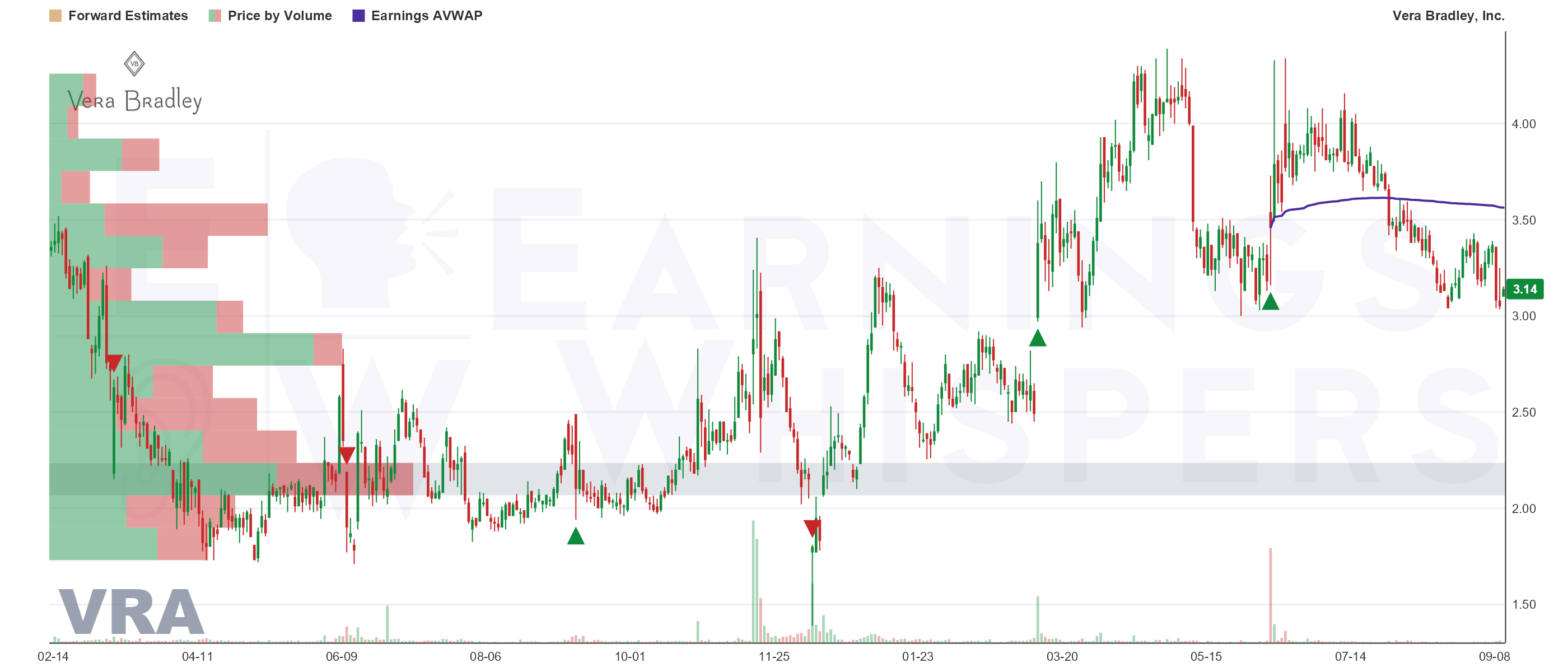
Vera Bradley (VRA) is confirmed to report earnings on Tuesday, September 15, 2026 at approximately 8:00 AM ET. Wall Street is bracing for a loss of $0.08 per share on revenue of $65.96 million, a 6.9% slide from a year ago, though the whisper number is a friendlier loss of just $0.02. Traders are feeling upbeat heading in but aren't betting on fireworks, just a clean, in-line print. The bears have been backing off too, with short interest down 28.5% since last quarter, yet the stock has quietly drifted 11.3% lower and now sits 1.9% under its 200 day average of $3.20. Estimates have been trimmed, and someone made a notable move on September 1st, scooping up 2,273 of the $2.50 puts expiring September 18th, so not everyone is convinced the good times keep rolling.
Here's the real story: last quarter was the best one this handbag maker has strung together in years. Revenue actually grew 7.8%, the first time it went positive since early 2022, and management got confident enough to bump up its target for shrinking losses to at least 50%. The 'Project Sunshine' overhaul is working, helped by splashy team-ups with Target and Bath & Body Works and a limited bag drop that sold out in under three minutes. The catch? A big chunk of that wholesale surge came from those collaboration shipments, so strip those out and growth was basically flat. Management also kept its full-year sales range unchanged and warned progress will be bumpy quarter to quarter. So the question this time isn't whether the turnaround is real, it's whether it can stand on its own two feet.
The AI Gold Rush Meets the Everyday Shopper: A Tale of Two Earnings Seasons
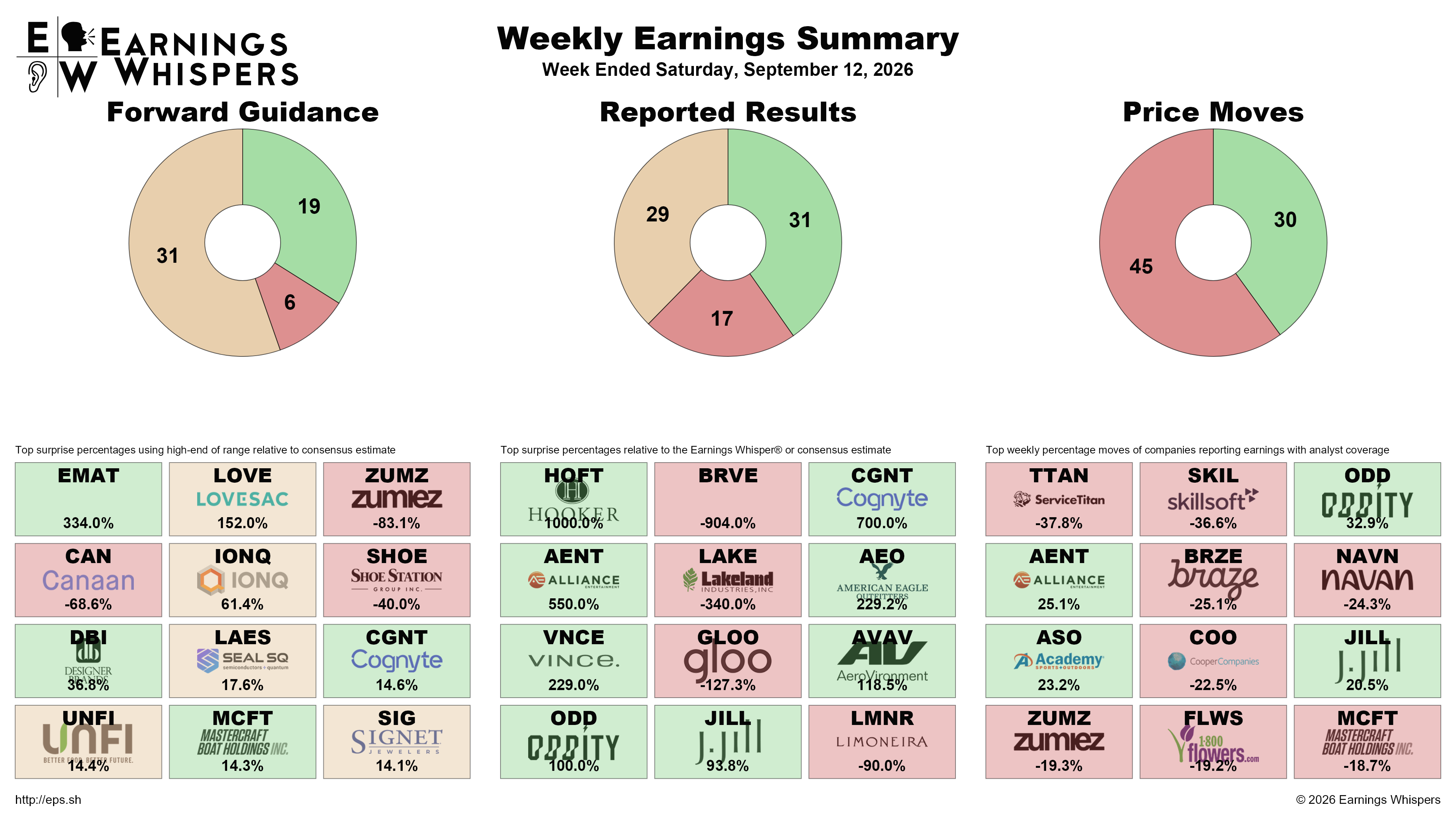
If you wanted proof that corporate America is splitting into two very different economies, last week's earnings delivered it. On one side sat the AI infrastructure boom, and nobody embodied it more than Oracle, which posted a blowout quarter with cloud infrastructure revenue rocketing up 121 percent and management lifting its full-year forecast to at least $90 billion. The company is essentially building the plumbing for the artificial intelligence era, delivering hundreds of thousands of new chips, deepening ties with OpenAI, and reselling computing capacity at a 20 percent premium. The catch, and it is a big one, is that all this construction is eating cash fast: Oracle burned through $5 billion in the quarter and offered no timeline for when that turns around, which helps explain why the stock actually slipped 5 percent even after such glowing numbers. Software peers Adobe and Signet told friendlier versions of the same story. Adobe finally settled its long-running CEO mystery, named a successor, snapped up an AI photo-editing startup, and watched its AI-focused revenue balloon past $650 million, though nervous investors fixated on slowing future bookings. Signet, the jewelry giant behind Kay and Zales, was arguably the week's quiet winner, raising guidance for the second straight time and locking in a credit-card partnership worth more than $1 billion over its life, sending shares up a sparkling 17.5 percent.
Then there was the other economy, the one where regular families are watching their wallets, and the picture grew noticeably murkier. Retailers repeatedly flagged the same villain: a lower-income shopper who is pulling back hard. Academy Sports laid it bare, as its sales comparison flipped from up nearly 3 percent to slightly negative, with traffic from households earning under $50,000 falling by high single digits; the company propped up profits mainly through one-time tariff refunds rather than genuine demand, a trick that also flattered results at American Eagle. Speaking of AEO, it became a case study in split personalities, as its Aerie brand kept posting eye-popping 19 percent growth while the flagship American Eagle label stalled to flat, forcing a guidance trim and dragging the stock down nearly 14 percent. Even the bright spots came with asterisks. Macy's impressed with a second consecutive guidance raise and a red-hot Bloomingdale's, and grocery distributor UNFI hit its margin goals a full year early, yet both leaned on caution about the back half. Convenience-store favorite Casey's and pet retailer Chewy showed real operational grit, but even they conceded the consumer recovery they keep hoping for simply has not arrived. The takeaway for anyone reading between the lines: the machines are spending like there is no tomorrow, while the humans buying groceries and sneakers are doing exactly the opposite.
Oracle's Cloud Machine Kicks Into Overdrive
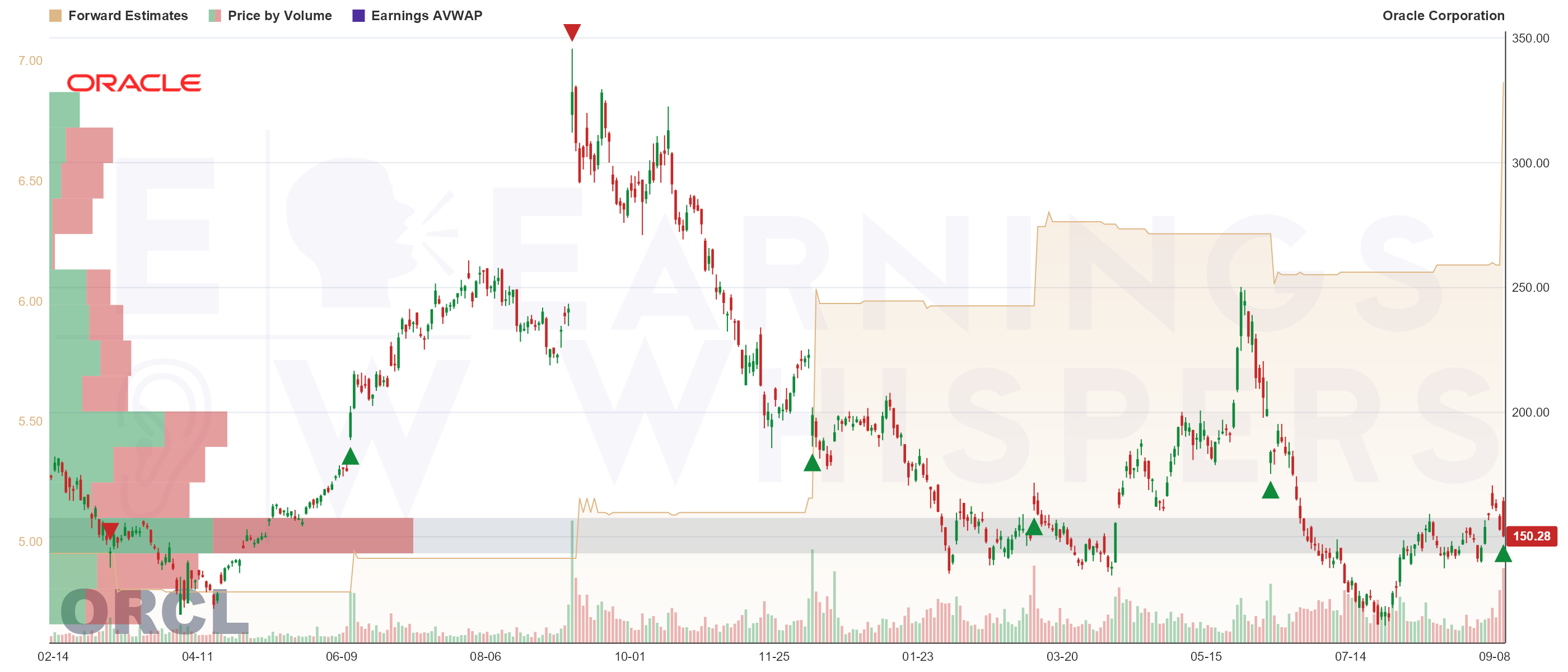
Oracle (ORCL) crushed its fiscal first quarter ended August 2026, posting earnings of $1.92 per share on revenue of $19.35 billion. Wall Street was looking for just $1.75 per share on $19.13 billion, and the Earnings Whisper number sat at $1.80, so Oracle blew past expectations by nearly 7 percent while revenue jumped a hefty 29.61 percent from a year ago. Looking ahead, the company guided second-quarter earnings to $1.83 to $1.91 per share on revenue of $21.00 billion to $21.64 billion, right in line with the $1.92 and $21.23 billion analysts expect. For the full year, Oracle now sees earnings of about $8.10 per share on revenue of at least $90.0 billion, a nudge up from its prior call for $8.05 and ahead of the Street's $8.05 estimate. In short, the software giant that runs the Oracle Cloud is not just beating the number, it is raising the bar.
The real story here is speed. All those giant cloud contracts Oracle has been signing are finally turning into actual dollars faster than anyone guessed, with cloud infrastructure revenue rocketing up 121 percent. The company delivered roughly three times the computing power it did last quarter, its chips are running nearly flat out at 98 percent usage, and customers renewing deals are paying a 20 percent premium. New wins with OpenAI and a fresh quantum computing partnership add even more fuel. The catch is that building all this costs a fortune, so Oracle burned through $5 billion in cash this quarter and expects to spend up to $95 billion this year, with no clear date for when the cash flow turns positive. For now, demand is roaring and the tone from management is the most upbeat we have heard in a year, but keep one eye on that spending bill.
Adobe Beats, Raises the Bar, and Finally Names a Boss
Adobe Systems (ADBE) posted fiscal third quarter earnings of $6.13 per share on revenue of $6.76 billion for the period ended August 2026, edging past the $6.08 consensus and the whisper of $6.05 while revenue climbed a healthy 12.89% from a year ago. Management guided the fourth quarter to $6.30 to $6.35 per share on revenue of $6.80 billion to $6.85 billion, right in line with the $6.30 and $6.84 billion the Street is looking for. The big headline, though, is that Adobe now has more than one billion monthly active users, a milestone CEO Shantanu Narayen called a defining moment as he hands the wheel to Anil Chakravarthy on December 1.
Here is the real story for your portfolio. This was the most confident Adobe call in a while, and for good reason. They raised full-year targets across the board, finally settled the CEO question that had been hanging over the stock since Q1, and tucked in Topaz Labs, an Emmy-winning AI enhancement outfit, closing next quarter. The AI numbers are cooking too, with AI-first ARR now topping $650 million and growing more than 150%, and Firefly still posting big sequential gains. The one thing keeping us from popping the champagne is that future bookings look softer, with RPO growth slowing to 8% and net new ARR down roughly 36%. Management insists this is on purpose, a give-away-now, get-paid-later freemium bet that pays off in 2027. We believe them, mostly, but the proof is still coming. Net read: a solid step forward, just not a home run.
AeroVironment Blows Past Estimates as Laser Weapons Go Prime Time
AeroVironment (AVAV) just crushed it, posting $0.59 per share on $480.49 million in revenue for the fiscal first quarter ended July 2026. Wall Street was looking for a measly $0.22 per share on $467.91 million, so the company didn't just clear the bar, it pole-vaulted over it by nearly 119 percent while growing revenue almost 6 percent from a year ago. Even the whisper crowd, expecting $0.27, got left in the dust. Management stuck with its fiscal 2027 revenue forecast of $2.125 billion to $2.225 billion, right in line with the $2.170 billion analysts pencil in for the year ending April 30, 2027. CEO Wahid Nawabi called it a strong start with record first-quarter revenue and funded backlog, adding that the team executed with discipline on the programs customers care about most. The company designs, builds, and supports drones, tactical missiles, and related tech, largely for the U.S. Department of Defense.
Here is the real story: AeroVironment landed the first-ever U.S. directed-energy production contract, a roughly $465 million deal for its EHEL laser system, plus its first international laser order right behind it. In plain English, the company's science-fiction laser weapons just became a real business, and management thinks it could be worth over half a billion dollars a year. Funded backlog hit a record $1.5 billion, up 37 percent, and drone revenue jumped 71 percent. The catch? They played it safe and did not raise guidance, cash flow is running negative as they spend big on new factories, and the older cyber and services unit remains a soft spot dragging on margins. Bottom line: the momentum is real, but they are keeping the champagne on ice until the back half of the year plays out.
Casey's Beats and Eats: Wings, Pizza, and Fatter Fuel Margins Fuel a Record Quarter
Casey's General Stores (CASY) rolled up to the drive-thru window and handed investors a fat quarter. Earnings came in at $7.37 per share on revenue of $5.68 billion for the fiscal first quarter ended July 2026, blowing past the $6.60 consensus and the $6.80 Earnings Whisper number by more than 8 percent, while revenue jumped a hearty 24 percent from a year ago. Management still expects EBITDA of $1.60 billion to $1.63 billion for the fiscal year ending April 30, 2027, so they held the line on the outlook rather than raising it. For those new to the name, Casey's runs convenience stores across 14 Midwestern states, selling food, drinks, tobacco, and a growing pile of surprisingly good pizza.
Here is what really matters. The profit engine is humming: fuel margins climbed to nearly 48 cents a gallon, and the food business keeps printing money, helped by cheaper cheese and chicken wings now in 850 stores. Rewards members topped 11 million. The one wart is that same-store fuel gallons dipped slightly negative for the first time in about six quarters, but that is mostly self-inflicted, as Casey's is tearing up and remodeling its newly acquired SEFCO stores, which temporarily hurts sales but should flip to a tailwind by the final quarter of the year. In short, the pain is planned, the profits are real, and the momentum looks like it has legs.
Chewy Stops the Bleeding and Starts Fetching Profits
Chewy (CHWY) delivered a solid fiscal second quarter ended July 2026, posting earnings of $0.36 per share on revenue of $3.33 billion. That matched the Street's profit expectation of $0.36 and edged past the $3.32 billion revenue estimate, though it fell just shy of the $0.37 Earnings Whisper number by a whisker. Revenue grew a healthy 7.3% from a year ago, landing at the high end of guidance. More importantly, the online pet retailer raised its full-year outlook, now guiding to revenue of $13.46 billion to $13.57 billion, up from its prior view, with third quarter revenue pegged at $3.323 billion to $3.358 billion. CEO Sumit Singh credited the company's sticky recurring revenue, steady customer growth, and disciplined execution for the confidence to lift both the top and bottom line targets.
Here is the real story: after cutting guidance earlier this year on a jittery pet-owner wallet, Chewy just proved the slowdown has hit bottom rather than gotten worse. Autoship, the subscription engine that keeps kibble showing up on your doorstep, now drives nearly 85% of sales, and the company's vet clinics posted triple-digit growth. The freshly closed $400 million Modern Animal deal is already running ahead of plan, and two new AI helpers named Kai and Cali are quietly handling about a third of customer chats and trimming costs. The catch is that shoppers are still splurging less on treats and premium extras, and new customer growth remains modest. Bottom line, the macro clouds have not cleared, but Chewy is squeezing more profit out of what it has, and that is enough to keep tails wagging.
Not everything looks grim, though. Vera Bradley, the colorful handbag and accessories maker, is quietly one of the brighter spots this week. The mood around it has turned notably upbeat, and there are signs the company has been steadily getting its house in order after a rough stretch, so don't be shocked if it surprises to the upside. Cannabis retailer High Tide also enters with a bit of a tailwind and improving conditions behind it, making it a small name worth watching. On the flip side, keep an eye on medical device up-and-comer Kestra and energy player Evolution Petroleum, both of which face skeptical crowds and could see selling pressure if results disappoint. As always, the numbers only tell half the story. What really matters is how they stack up against the whispered expectations, and this week those whispers are running in wildly different directions.
Forgent Power: Fear Meets Firepower Ahead of Tuesday's Print
Forgent Power Solutions (FPS) is set to report earnings before the bell on Tuesday, September 15, 2026 at roughly 6:30 AM ET. Wall Street is looking for $0.22 per share on $425.58 million in revenue, but the Earnings Whisper number sits higher at $0.24. Here is the funny part: investors are walking in bearish, yet a whopping 92.3% of them still expect the company to beat. The stock is trading 19.6% below its 200 day moving average of $39.57, so there is plenty of ground to make up. And someone is clearly betting on a comeback, because Friday, September 4 saw a notable pile-up of 4,616 contracts on the $32.50 calls expiring September 18.
Here is why the gloom feels a bit overdone. Last quarter Forgent hit the gas, growing revenue 103% and raising its full-year outlook so much that the new low end sits above the old high end. Margins jumped, bookings hit a record $867 million, and backlog swelled to about $2 billion. On top of that, management landed two fresh data-center orders north of $100 million each and finally flipped cash flow positive. The one real wrinkle is short-term cost pressure from ramping up so fast, which nudged margins down slightly, but that is the price of growing this quickly. In short, the setup screams momentum while sentiment says caution, and that gap is exactly what makes Tuesday worth watching.
High Tide's German Rocket Meets Canada's Cooling Shopper
High Tide (HITI) rings the bell on Monday, September 14, 2026 at roughly 4:00 PM ET, and Wall Street is feeling good about it. The crowd expects a penny per share on revenue of $140.28 million, a healthy 28.8% jump from a year ago, and a whopping 90% of investors are betting on a beat. Here's the odd twist though: short interest has ballooned 68.3% since last quarter, so the doubters are piling in too. The stock has slipped 2.3% from where it opened after last quarter's report, yet it still sits 4.2% above its 200 day moving average of $2.43. Estimates haven't budged since last time, and on September 10 someone scooped up 1,013 of the $5.00 calls expiring in April 2027, a cheeky bet that this thing has real room to run.
The real story is a tale of two continents. Germany is the breakout star here, where the Ramexian business flipped from barely breaking even to gushing profit as gross margins leapt from 12% to 27% and market share more than doubled to 14.1%. Toss in a first ever big bank credit line from Bank of Montreal and an accretive four store deal, and the growth engine looks strong. The catch is back home in Canada, where same store sales turned negative for the first time since 2021 as budget conscious shoppers buy in bulk and visit less often. Bottom line: the international momentum is more than covering for the soft patch at home, so watch whether Germany keeps humming and whether that Canadian dip is a blip or a trend.
Trip.com: Great Engine, Speed Bumps Ahead
Trip.com Group (TCOM) is set to report earnings on Tuesday, September 15, 2026 at around 6:00 PM ET. Wall Street is looking for $0.98 per share on revenue of $2.29 billion, a healthy 19.9% jump from a year ago, though the Earnings Whisper number sits a touch lower at $0.92. The mood heading in is cautious, with only half the crowd betting on a beat. Still, some folks are quietly optimistic: short interest has dropped 18.3% since last quarter, even as the stock has drifted 2.8% lower since its last report and now trades a steep 27.3% below its 200 day average of $53.68. And on August 31, someone scooped up 4,238 of the $50 calls expiring September 18, so not everyone is bearish.
Here is the real story. The business itself is humming along nicely, with international bookings up 65%, inbound travel up 90%, and a bold new goal to bring in 200 million visitors over five years, plus a shiny new AI strategy to boot. The catch is what management said about the road ahead. They guided next quarter's revenue growth to a measly 3 to 8%, a jarring drop from the 16 to 21% they had been posting. Blame pricier airfares, softening long-haul travel, and a regulatory probe that is now forcing changes to how they sell train tickets. When executives start using words like 'very limited visibility' and 'prudent,' it pays to listen. The company is still strong under the hood, but the near-term ride looks bumpier than investors are used to.
Dave & Buster's: Fun and Games, But the Register Isn't Ringing
Dave & Buster's (PLAY) steps up to the plate Monday, September 14, 2026 at about 4:05 PM ET. Wall Street is looking for $0.19 per share on revenue of $561.26 million, which would be a barely-there 0.7% bump from last year, while the Earnings Whisper number sits lower at $0.16. Investors are walking in glum, with only 11.1% betting on a beat. That gloom shows up in the stock too, which has slid 21.9% since it last reported and now sits a painful 39.2% below its 200 day moving average of $13.39. Short interest actually eased 3.2%, and estimates have been trimmed lower across the board. One bright spot for the gamblers among us: someone scooped up 2,500 of the $12.00 calls expiring September 18 on August 24, so not everyone has left the arcade.
Here's the real story. Last quarter broke the good vibes when same-store sales dropped 5.4%, worse than management expected, and they flat-out apologized for a 'dollar per day' marketing pitch that flopped. The pain is hitting the wallet-watching crowd hardest, and quarter-to-date sales were still running down about 4%. Management is now hitting the brakes on new stores, guiding to just five openings in the coming years versus the double-digit pace they used to brag about. That said, it's not all doom. Free cash flow swung a huge $84 million into the green, food and drink sales have been positive nine months straight, and the cheaper remodel design plus fresh games and a World Cup blowout could pull people back through the doors. The big question Monday: is the promised back-half rebound actually showing up, or is the crane game just eating quarters?
Lennar: Betting on Margins Over Muscle
Lennar (LEN) is confirmed to report earnings on Wednesday, September 16, 2026 at approximately 4:45 PM ET. Wall Street is looking for $1.30 per share on revenue of $8.33 billion, a 5.5% drop from a year ago, while the Earnings Whisper number sits a touch lower at $1.28. Management had guided revenue to a range of $7.69 billion to $8.17 billion. Investors are walking in nervous, with only a third betting on a beat. Short sellers have piled on, up 8.6% since last quarter, and the stock has slid 14.6% since it last opened post-earnings, leaving it 18.6% below its 200 day average of $97.73. Estimates have been trimmed across the board, and on September 3rd someone made a bold move, snapping up 5,041 of the $82.00 puts expiring September 25th.
Here is the real story: Lennar is deliberately trading volume for profit, and last quarter that bet started to pay off. For the first time in three years, the discounts they throw at buyers actually shrank, dropping to 12.9%, and margins ticked up alongside it with Q3 guided to around 16%. They are building homes faster and cheaper than ever, with record-low cycle times and construction costs down 7%. The catch is they cut their full-year delivery target by about 3% and home prices keep slipping, all while mortgage rates stay stuck near 6.5% and a fresh inflation spike takes any Fed rescue off the table. The question this quarter is simple: did the margin comeback hold, or did soft demand claw it back?
RF Industries: The Turnaround Is Real, But the Bears Just Showed Up
RF Industries (RFIL) steps up to report earnings on Monday, September 14, 2026, before the market opens. Wall Street is looking for $0.18 per share on revenue of $23.28 million, which would mark a healthy 17.6% jump in sales from a year ago. Here is the odd part: investors are leaning bearish heading in, though nearly 43% still think the company clears the bar. The skeptics have gotten loud, with short interest exploding by almost 390% since the last report, and the stock has slid a painful 47.1% from where it opened after that release, now sitting 15% under its 200 day average of $12.14. The twist? Analysts have actually been nudging their estimates higher, so somebody is betting against the crowd.
Here is what the bears may be missing. Last quarter was a genuine turning point. Bookings hit $26.3 million, the best haul in years, and backlog swelled to roughly $20 million, giving real visibility into the back half of the year. Margins are climbing, profit swung positive, and the whole business is getting less lumpy as custom cabling and defense work pick up the slack. The one soft spot is small cell and integrated systems, where a big customer's merger drama pushed shipments into the second half rather than killing them off. Cash is a bit tight after paying down debt, and tariff noise lingers, but management sounded more confident than they have in a long while. The question Monday is whether the numbers back up that swagger.
Hain's Cleanup Is Working, But the Cash Register Still Isn't Ringing
The Hain Celestial Group (HAIN) is set to report earnings on Monday, September 14, 2026 at roughly 7:00 AM ET. Wall Street is bracing for a loss of $0.03 per share on revenue of $256.51 million, a hefty 29.4% drop from a year ago. The mood heading in is gloomy, though a third of the crowd (33.3%) still thinks the company can pull off a beat. Interestingly, the doubters are backing off, with short interest down 54.5% since last quarter, yet the stock has slid 17.4% since its last earnings pop and now sits 23.8% below its 200 day average of $0.81. Analysts have been trimming their numbers, so expectations are low. One bright spot for the optimists: on September 3rd, someone scooped up 1,012 of the $1.00 call options expiring in February 2027, a bet that better days may be coming.
Here is the real story. Hain is a tale of two companies right now. On one side, the cleanup crew is doing great work. After selling off its North America Snacks business for $115 million back in February, the company slashed debt by $155 million in a single quarter, fattened up its margins, and turned cash flow sharply positive. That is genuine progress you can take to the bank. On the other side, the actual selling of products is still shrinking, and the international business got worse last quarter, not better, dragged down by weak baby food and soup sales in a nervous European market. Add in a December 2026 debt deadline that still hasn't been sorted out and a management team unwilling to give firm guidance, and you get a company that is getting healthier on paper but still can't get customers to buy more. Watch whether the top line finally steadies. That is the whole ballgame.
Bulls Are Betting on a Beat, But the Cash Register Is Running Low
Before the market opens, this one steps into the earnings spotlight with the crowd feeling upbeat. A solid 66.7% of investors are expecting a beat, so optimism is riding high going into the release. The question is whether the numbers can live up to the hype.
Here is what to actually watch. The science side is doing its job. The IPH4502 program hit a key dosing milestone, and the MATIS study delivered genuinely good news, with strong tumor response rates in the patients that matter most. But the real story is the money. Cash dropped from about 56 million euros to 44 million and now sits near 25 million, which is a steep slide in just two quarters. That leaves the company staring at a funding cliff, and its most important late-stage trial for Lacutamab is stuck in neutral until a financing or partnership deal gets signed. Management says it is confident that deal happens before the fall, but confident is not the same as signed. Good drugs, thin wallet. That tension is the whole ballgame this quarter.
LuxExperience: The Profit Story Is Working, But Sales Growth Hit a Wall
LuxExperience B.V. (LUXE) steps into the earnings spotlight on Wednesday, September 16, 2026 at around 6:00 AM ET. Wall Street is bracing for a loss of $0.11 per share on revenue of $727.39 million, which would be solid 9.1% growth from a year ago, though our whisper number leans a touch gloomier at a loss of $0.14. Investors are walking in cautious, yet it is basically a coin flip, with half the crowd betting on a beat. Short interest has ticked down 0.8% since last quarter, the stock has crept up 1.4% since its last report, and it still sits 10.9% below its 200 day moving average of $8.29. One thing to keep an eye on: overall earnings estimates have been trimmed lower since the last go-around.
Here is the real tug-of-war. On the good side, this turnaround is showing its teeth, with margins climbing across all three brands, a second straight quarter of group profitability, tighter costs, and less cash going out the door. MyTheresa's US business is on fire, up nearly 34%, and buzzy launches from Gucci's Demna and Phoebe Philo are pulling in fresh shoppers. The catch is that sales growth stalled, MyTheresa slowed down, and Net-a-Porter actually went backwards after looking like it was healing, partly thanks to a Middle East war shock that spooked buyers in March. Bottom line: management is doing exactly what it promised on profits, but until the top line gets its groove back, this stays a 'staying the course' story rather than a breakout.
MindWalk's Big Wins Meet the Bill: Can Revenue Keep Up?
MindWalk Holdings (HYFT) steps into the earnings booth on Monday, September 14, 2026, at around 4:55 PM ET. Wall Street is bracing for a loss of $0.05 per share on revenue of $3.25 million, which would still mark a healthy 42.2% jump from a year ago. The mood going in is cautious, though it's basically a coin flip, with half of investors betting on a beat. Short sellers have backed off a bit, trimming their bets by 8.6% since last quarter, while the stock has crept 8.8% higher off its post-earnings open. Even so, it's sitting 13.6% below its 200 day moving average of $1.51, and analysts haven't budged their estimates since the last report.
Here's the real story. Last quarter was a genuine turning point for MindWalk, with full-year revenue up 46%, fatter margins, a net loss that got cut in half, and a highlight reel of wins including its first FDA approval on a client molecule, addition to the Russell indexes, and a splashy AMD partnership that screened 170,000 antibody pairs in about four and a half hours instead of 145 days. But here's the catch clients need to watch: the recurring software revenue that everyone's counting on to justify the valuation is still tiny compared to the fee-for-service work that pays the bills. Cash keeps draining, management is warning that spending goes up next year, and they've promised fewer pipeline updates. The flashy headlines are real, but the question on Monday is whether the money engine can actually scale.
Vera Bradley's Turnaround Faces Its First Real Test
Vera Bradley (VRA) is confirmed to report earnings on Tuesday, September 15, 2026 at approximately 8:00 AM ET. Wall Street is bracing for a loss of $0.08 per share on revenue of $65.96 million, a 6.9% slide from a year ago, though the whisper number is a friendlier loss of just $0.02. Traders are feeling upbeat heading in but aren't betting on fireworks, just a clean, in-line print. The bears have been backing off too, with short interest down 28.5% since last quarter, yet the stock has quietly drifted 11.3% lower and now sits 1.9% under its 200 day average of $3.20. Estimates have been trimmed, and someone made a notable move on September 1st, scooping up 2,273 of the $2.50 puts expiring September 18th, so not everyone is convinced the good times keep rolling.
Here's the real story: last quarter was the best one this handbag maker has strung together in years. Revenue actually grew 7.8%, the first time it went positive since early 2022, and management got confident enough to bump up its target for shrinking losses to at least 50%. The 'Project Sunshine' overhaul is working, helped by splashy team-ups with Target and Bath & Body Works and a limited bag drop that sold out in under three minutes. The catch? A big chunk of that wholesale surge came from those collaboration shipments, so strip those out and growth was basically flat. Management also kept its full-year sales range unchanged and warned progress will be bumpy quarter to quarter. So the question this time isn't whether the turnaround is real, it's whether it can stand on its own two feet.
The AI Gold Rush Meets the Everyday Shopper: A Tale of Two Earnings Seasons
If you wanted proof that corporate America is splitting into two very different economies, last week's earnings delivered it. On one side sat the AI infrastructure boom, and nobody embodied it more than Oracle, which posted a blowout quarter with cloud infrastructure revenue rocketing up 121 percent and management lifting its full-year forecast to at least $90 billion. The company is essentially building the plumbing for the artificial intelligence era, delivering hundreds of thousands of new chips, deepening ties with OpenAI, and reselling computing capacity at a 20 percent premium. The catch, and it is a big one, is that all this construction is eating cash fast: Oracle burned through $5 billion in the quarter and offered no timeline for when that turns around, which helps explain why the stock actually slipped 5 percent even after such glowing numbers. Software peers Adobe and Signet told friendlier versions of the same story. Adobe finally settled its long-running CEO mystery, named a successor, snapped up an AI photo-editing startup, and watched its AI-focused revenue balloon past $650 million, though nervous investors fixated on slowing future bookings. Signet, the jewelry giant behind Kay and Zales, was arguably the week's quiet winner, raising guidance for the second straight time and locking in a credit-card partnership worth more than $1 billion over its life, sending shares up a sparkling 17.5 percent.
Then there was the other economy, the one where regular families are watching their wallets, and the picture grew noticeably murkier. Retailers repeatedly flagged the same villain: a lower-income shopper who is pulling back hard. Academy Sports laid it bare, as its sales comparison flipped from up nearly 3 percent to slightly negative, with traffic from households earning under $50,000 falling by high single digits; the company propped up profits mainly through one-time tariff refunds rather than genuine demand, a trick that also flattered results at American Eagle. Speaking of AEO, it became a case study in split personalities, as its Aerie brand kept posting eye-popping 19 percent growth while the flagship American Eagle label stalled to flat, forcing a guidance trim and dragging the stock down nearly 14 percent. Even the bright spots came with asterisks. Macy's impressed with a second consecutive guidance raise and a red-hot Bloomingdale's, and grocery distributor UNFI hit its margin goals a full year early, yet both leaned on caution about the back half. Convenience-store favorite Casey's and pet retailer Chewy showed real operational grit, but even they conceded the consumer recovery they keep hoping for simply has not arrived. The takeaway for anyone reading between the lines: the machines are spending like there is no tomorrow, while the humans buying groceries and sneakers are doing exactly the opposite.
Oracle's Cloud Machine Kicks Into Overdrive
Oracle (ORCL) crushed its fiscal first quarter ended August 2026, posting earnings of $1.92 per share on revenue of $19.35 billion. Wall Street was looking for just $1.75 per share on $19.13 billion, and the Earnings Whisper number sat at $1.80, so Oracle blew past expectations by nearly 7 percent while revenue jumped a hefty 29.61 percent from a year ago. Looking ahead, the company guided second-quarter earnings to $1.83 to $1.91 per share on revenue of $21.00 billion to $21.64 billion, right in line with the $1.92 and $21.23 billion analysts expect. For the full year, Oracle now sees earnings of about $8.10 per share on revenue of at least $90.0 billion, a nudge up from its prior call for $8.05 and ahead of the Street's $8.05 estimate. In short, the software giant that runs the Oracle Cloud is not just beating the number, it is raising the bar.
The real story here is speed. All those giant cloud contracts Oracle has been signing are finally turning into actual dollars faster than anyone guessed, with cloud infrastructure revenue rocketing up 121 percent. The company delivered roughly three times the computing power it did last quarter, its chips are running nearly flat out at 98 percent usage, and customers renewing deals are paying a 20 percent premium. New wins with OpenAI and a fresh quantum computing partnership add even more fuel. The catch is that building all this costs a fortune, so Oracle burned through $5 billion in cash this quarter and expects to spend up to $95 billion this year, with no clear date for when the cash flow turns positive. For now, demand is roaring and the tone from management is the most upbeat we have heard in a year, but keep one eye on that spending bill.
Adobe Beats, Raises the Bar, and Finally Names a Boss
Adobe Systems (ADBE) posted fiscal third quarter earnings of $6.13 per share on revenue of $6.76 billion for the period ended August 2026, edging past the $6.08 consensus and the whisper of $6.05 while revenue climbed a healthy 12.89% from a year ago. Management guided the fourth quarter to $6.30 to $6.35 per share on revenue of $6.80 billion to $6.85 billion, right in line with the $6.30 and $6.84 billion the Street is looking for. The big headline, though, is that Adobe now has more than one billion monthly active users, a milestone CEO Shantanu Narayen called a defining moment as he hands the wheel to Anil Chakravarthy on December 1.
Here is the real story for your portfolio. This was the most confident Adobe call in a while, and for good reason. They raised full-year targets across the board, finally settled the CEO question that had been hanging over the stock since Q1, and tucked in Topaz Labs, an Emmy-winning AI enhancement outfit, closing next quarter. The AI numbers are cooking too, with AI-first ARR now topping $650 million and growing more than 150%, and Firefly still posting big sequential gains. The one thing keeping us from popping the champagne is that future bookings look softer, with RPO growth slowing to 8% and net new ARR down roughly 36%. Management insists this is on purpose, a give-away-now, get-paid-later freemium bet that pays off in 2027. We believe them, mostly, but the proof is still coming. Net read: a solid step forward, just not a home run.
AeroVironment Blows Past Estimates as Laser Weapons Go Prime Time
AeroVironment (AVAV) just crushed it, posting $0.59 per share on $480.49 million in revenue for the fiscal first quarter ended July 2026. Wall Street was looking for a measly $0.22 per share on $467.91 million, so the company didn't just clear the bar, it pole-vaulted over it by nearly 119 percent while growing revenue almost 6 percent from a year ago. Even the whisper crowd, expecting $0.27, got left in the dust. Management stuck with its fiscal 2027 revenue forecast of $2.125 billion to $2.225 billion, right in line with the $2.170 billion analysts pencil in for the year ending April 30, 2027. CEO Wahid Nawabi called it a strong start with record first-quarter revenue and funded backlog, adding that the team executed with discipline on the programs customers care about most. The company designs, builds, and supports drones, tactical missiles, and related tech, largely for the U.S. Department of Defense.
Here is the real story: AeroVironment landed the first-ever U.S. directed-energy production contract, a roughly $465 million deal for its EHEL laser system, plus its first international laser order right behind it. In plain English, the company's science-fiction laser weapons just became a real business, and management thinks it could be worth over half a billion dollars a year. Funded backlog hit a record $1.5 billion, up 37 percent, and drone revenue jumped 71 percent. The catch? They played it safe and did not raise guidance, cash flow is running negative as they spend big on new factories, and the older cyber and services unit remains a soft spot dragging on margins. Bottom line: the momentum is real, but they are keeping the champagne on ice until the back half of the year plays out.
Casey's Beats and Eats: Wings, Pizza, and Fatter Fuel Margins Fuel a Record Quarter
Casey's General Stores (CASY) rolled up to the drive-thru window and handed investors a fat quarter. Earnings came in at $7.37 per share on revenue of $5.68 billion for the fiscal first quarter ended July 2026, blowing past the $6.60 consensus and the $6.80 Earnings Whisper number by more than 8 percent, while revenue jumped a hearty 24 percent from a year ago. Management still expects EBITDA of $1.60 billion to $1.63 billion for the fiscal year ending April 30, 2027, so they held the line on the outlook rather than raising it. For those new to the name, Casey's runs convenience stores across 14 Midwestern states, selling food, drinks, tobacco, and a growing pile of surprisingly good pizza.
Here is what really matters. The profit engine is humming: fuel margins climbed to nearly 48 cents a gallon, and the food business keeps printing money, helped by cheaper cheese and chicken wings now in 850 stores. Rewards members topped 11 million. The one wart is that same-store fuel gallons dipped slightly negative for the first time in about six quarters, but that is mostly self-inflicted, as Casey's is tearing up and remodeling its newly acquired SEFCO stores, which temporarily hurts sales but should flip to a tailwind by the final quarter of the year. In short, the pain is planned, the profits are real, and the momentum looks like it has legs.
Chewy Stops the Bleeding and Starts Fetching Profits
Chewy (CHWY) delivered a solid fiscal second quarter ended July 2026, posting earnings of $0.36 per share on revenue of $3.33 billion. That matched the Street's profit expectation of $0.36 and edged past the $3.32 billion revenue estimate, though it fell just shy of the $0.37 Earnings Whisper number by a whisker. Revenue grew a healthy 7.3% from a year ago, landing at the high end of guidance. More importantly, the online pet retailer raised its full-year outlook, now guiding to revenue of $13.46 billion to $13.57 billion, up from its prior view, with third quarter revenue pegged at $3.323 billion to $3.358 billion. CEO Sumit Singh credited the company's sticky recurring revenue, steady customer growth, and disciplined execution for the confidence to lift both the top and bottom line targets.
Here is the real story: after cutting guidance earlier this year on a jittery pet-owner wallet, Chewy just proved the slowdown has hit bottom rather than gotten worse. Autoship, the subscription engine that keeps kibble showing up on your doorstep, now drives nearly 85% of sales, and the company's vet clinics posted triple-digit growth. The freshly closed $400 million Modern Animal deal is already running ahead of plan, and two new AI helpers named Kai and Cali are quietly handling about a third of customer chats and trimming costs. The catch is that shoppers are still splurging less on treats and premium extras, and new customer growth remains modest. Bottom line, the macro clouds have not cleared, but Chewy is squeezing more profit out of what it has, and that is enough to keep tails wagging.