Upcoming Earnings
Big Tech, Banks and Jets: Why This Earnings Week Could Set the Market's Tone
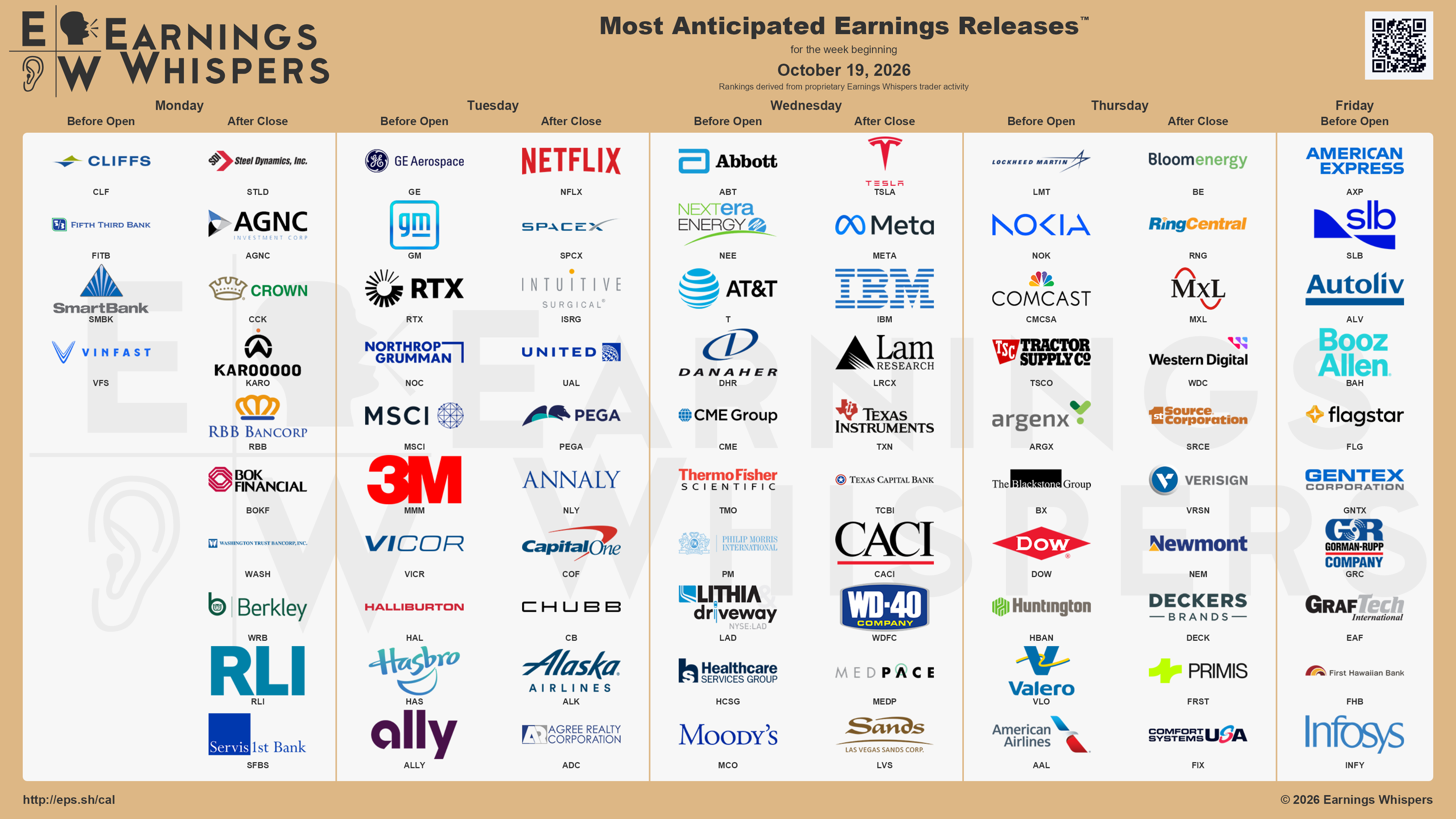
This is one of those weeks where Wall Street practically holds its breath. The marquee names are the ones everyone already has an opinion about. Netflix kicks things off with the kind of buzz that suggests traders expect good news from your weekend binge habit, while the social media giant behind your feed is heading in with quiet confidence and a tailwind at its back. On the industrial side, the aerospace and defense crowd looks sturdy, with the jet-engine maker and a cluster of missile-and-radar names walking in on solid footing. Carmakers are the wildcard: the electric-vehicle pioneer remains the stock everyone loves to argue about, and after a rough stretch the mood around it is cautiously warming, while the old-guard Detroit automaker is drawing surprisingly upbeat vibes. Expect fireworks either way, since options traders are bracing for some of these to swing hard the morning after.
The second half of the week turns into a parade of banks, insurers and pipeline-to-pump energy players, and here the signals are decidedly mixed. Regional lenders and the big credit-card issuers are getting a warm reception, suggesting investors think the consumer is holding up better than the doom-and-gloom crowd fears. Industrials tied to construction and equipment rentals look genuinely strong, a sign that builders are still busy. But not everyone is invited to the party: a few consumer-staples stalwarts, some utilities, casinos and the airlines are drawing skeptical looks, with traders betting the results may underwhelm. The smart money seems to be leaning toward the story of a resilient economy with pockets of weakness, so the real drama will be watching which companies confirm the optimism and which ones quietly disappoint. Either way, by Friday we should have a much clearer read on where the market thinks the rest of the year is headed.
Netflix: Streaming Smoothly, But The Crowd's Biting Nails
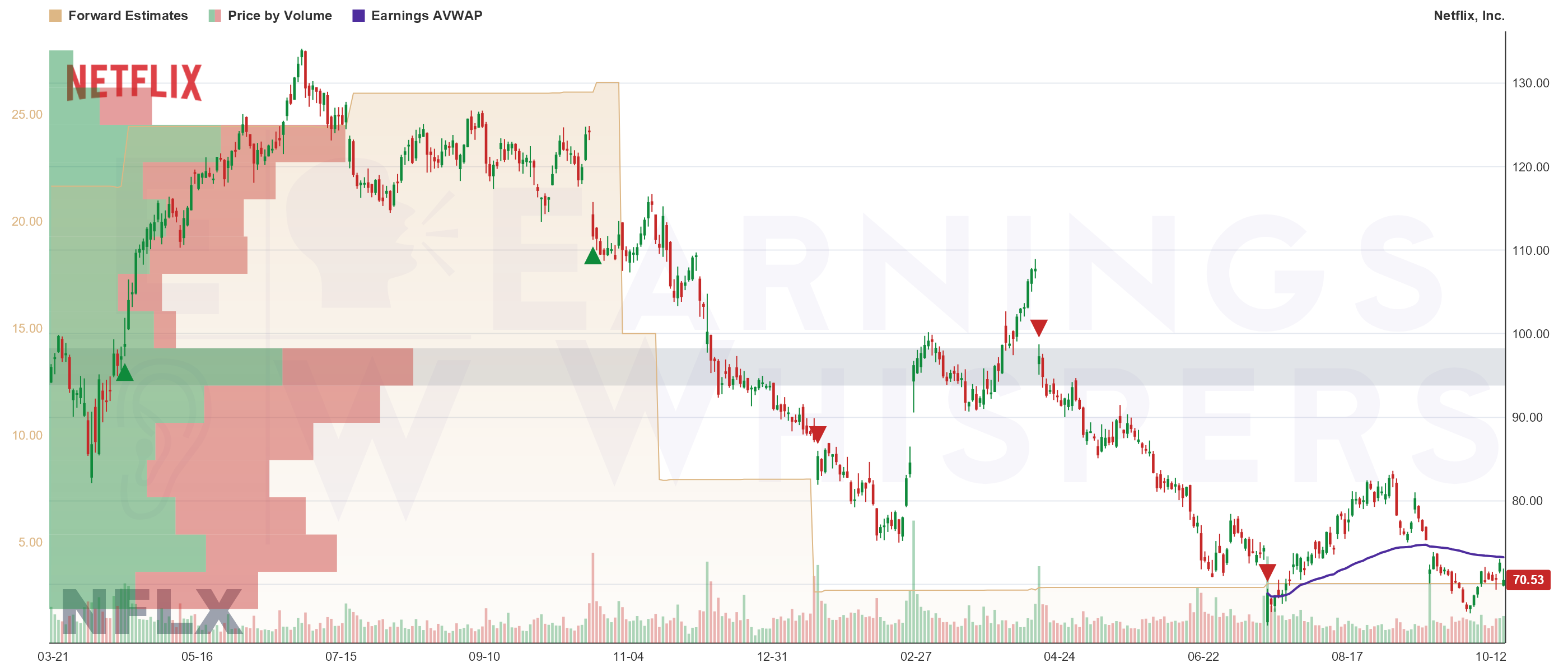
Netflix (NFLX) is set to report earnings after the bell on Tuesday, October 20, 2026, at around 4:05 PM ET. Wall Street is looking for $0.82 per share on $12.87 billion in revenue, which would be 11.8% growth from a year ago, while the Earnings Whisper number sits a touch higher at $0.84. The company itself guided to roughly $0.82 and $12.86 billion, so expectations are tightly clustered. Here's the funny part: investors are feeling bearish heading in, yet 55.4% still expect a beat, which tells you nobody really knows which way to lean. Short sellers have been backing off, cutting their bets by 21.0% since last quarter, and the stock has quietly climbed 7.7% since its last report, though it's still sitting 15.0% below its 200 day average of $82.93. Analysts have trimmed their estimates a bit, option traders are bracing for a 9.6% swing (the stock usually moves about 6.0%), and on October 14 someone scooped up 14,288 of the $75.00 calls expiring in December, a sign a few folks are betting on a bounce.
Last quarter told a clean, confident story. Netflix nudged up its full-year revenue growth target to 13-14% and ran its biggest buyback ever at $4.7 billion, with roughly $27 billion still in the tank. The newer bets are starting to click too, from the TF1 France partnership to cloud games, kids mobile titles, and AI tools now helping produce around 300 shows faster and cheaper. The catch to watch this time: growth is cooling slightly into the back half, viewing hours per member have softened a bit, and the cost of its content library is climbing faster than usual. None of it screams trouble, but it does mean management needs to keep proving that all this spending turns into real revenue. The big relief is that the messy Warner Bros. deal chatter is finally off the table, leaving a simpler, build-it-ourselves story for investors to judge.
Nokia's AI Engine Is Roaring, But Wall Street Wants to See the Cash
Nokia (NOK) is set to report earnings on Thursday, October 22, 2026 at approximately 12:00 AM ET. Wall Street is looking for $0.08 per share on revenue of $5.80 billion, which would be 2.8% year-over-year revenue growth. Investors are leaning optimistic, with 27.3% expecting a beat, but there is a tug-of-war under the surface. Short interest has jumped a hefty 44.9% since the last report, and the stock has drifted 9.6% lower since that release to sit 10.2% below its 200 day moving average of $10.17. Estimates have actually been nudged lower since last quarter. Options traders are bracing for a 10.9% swing, bigger than the 6.9% average move of recent quarters, and on Wednesday, October 14, 2026 someone scooped up 12,919 of the $10.00 calls expiring December 18, 2026, a sizable bet that the fireworks point up.
Here is the real story heading in. Nokia's AI and cloud business is on a tear, with sales more than doubling last quarter and orders piling up fast as the whole world races to wire up data centers. The optical and internet plumbing side is the muscle driving it, and management added fresh US factory muscle with the NXP Arizona deal and a big Pennsylvania expansion. The catch is that last quarter they only reaffirmed their profit outlook instead of raising it again, and they trimmed their cash flow expectations toward the low end as they stockpile parts and wrestle with pricey memory chips. So the growth engine is clearly humming, but the market wants proof the cash follows the hype. Watch whether they finally lift that profit guide this time.
Tesla's Growth Is Back, But So Is the Spending Spree
Tesla (TSLA) is confirmed to report earnings on Wednesday, October 21, 2026 at approximately 4:15 PM ET. Wall Street is looking for $0.44 per share on revenue of $27.79 billion, a slight 1.1% dip from a year ago, while the Earnings Whisper number sits a touch lower at $0.40. Investors are feeling pretty good here, with 28.6% expecting a beat. Short sellers have backed off by 10.3% since last quarter, and the stock has crept 4.0% higher off its post-earnings open, though it still trails its 200 day moving average of $388.32 by 8.7%. Analysts have been quietly trimming their estimates since the last report. Options traders are bracing for a 7.5% swing, a bit hotter than the 6.2% average move of late. And here is a head-scratcher: on Friday, October 16, someone scooped up 23,018 of the $130 puts expiring October 23, a deep bet that doesn't match the upbeat mood.
Here's the real tug-of-war going into this print. Last quarter, demand came roaring back with record Q2 deliveries, the biggest order backlog since 2023, and paid Full Self-Driving customers climbing to roughly 1.5 million. Robotaxi expanded to seven US cities with over 380,000 miles and no major hiccups, and Elon is clearly fired up about Optimus and the new AI compute plans. The catch? Margins got squeezed almost everywhere. Auto profit margins slipped, energy margins got cut in half on a warranty hit and tougher competition, and free cash flow flipped negative for the first time in a while. Tesla is now pouring more than $25 billion into capital spending and leaning on up to $30 billion in new debt to fund it. So the story is growth is real, but Tesla is spending like crazy to chase it. Watch the margins and the cash flow commentary, because that is where this one gets decided.
Big Swings Ahead: Bulls Quietly Bet on a Breakout
The curtain rises for SpaceX (SPCX) after the market closes on Tuesday, October 20, 2026, and Wall Street is bracing for fireworks. The consensus wants $0.11 per share on revenue of $12.55 billion, but the Earnings Whisper number is whispering louder at $0.18 per share. Here's the funny part: investors are feeling bearish walking in the door, yet 69.4% of them still expect a beat. Short interest has climbed 9.7% since last quarter, even as the stock quietly drifted 24.5% higher from its post-earnings open, now sitting just 0.4% above its 200 day moving average of $145.51. Meanwhile, the number crunchers have been nudging their estimates up, not down.
So what should you watch for? Option traders are betting on an 8.8% move, and this stock has lived up to that kind of drama with a 9.4% average swing lately. Buckle up. The most eye catching tell came on Wednesday, October 14, when someone scooped up 44,595 contracts of the $220.00 calls expiring November 20. That is a bold wager that this one has plenty of room left to run.
Cleveland-Cliffs: From Promises to Proof
Cleveland-Cliffs (CLF) steps up to report earnings on Monday, October 19, 2026 at roughly 6:00 AM ET. Wall Street is looking for $0.24 per share on $5.58 billion in revenue, which would be a tasty 17.9% jump in sales from a year ago, but the smart money whispers $0.29 per share. Here is the funny part: investors are walking in grumpy and bearish, yet a slim majority (52.9%) still expects a beat. Short sellers have backed off by 4.1% since last quarter, the stock has climbed 13.6% since its last earnings pop, and it now sits 6.9% above its 200 day moving average of $11.34. Estimates have been drifting higher too. Buckle up, because options traders are bracing for a 13.2% swing, and this stock has averaged a 14.0% move in recent quarters. One trader clearly has a long memory, scooping up 23,195 of the $10.00 puts expiring way out in January 2028 on October 13.
Here is the real story heading in. Last quarter was the one where management finally stopped saying the recovery is coming and actually showed it. Cash flow turned positive for the first time in roughly two years, EBITDA tripled to $286 million, and they guided Q3 to about $575 million with Q4 even higher. Prices are flowing through nicely, costs are coming down, and shipments are rising, with auto volumes the strongest in two years thanks to top-supplier nods from GM and Toyota. They even flagged a fresh $500 million EBITDA boost coming in 2027 as old low-price contracts reset. The soft spot to watch is Canada, where the Stelco galvanized business is still dragging and leadership hinted at possible job cuts if trade help does not arrive. The once hyped POSCO deal has also cooled off. Bottom line: the numbers are finally backing up the talk, so this release is about whether the inflection keeps rolling.
Bloom Energy: The Power Play Behind the AI Boom Goes to Bat Again
Bloom Energy (BE) is set to report earnings on Thursday, October 22, 2026 at about 4:05 PM ET. Wall Street is looking for $0.71 per share on revenue of $1.07 billion, which would be a jaw-dropping 106.1% jump in sales from a year ago, and the whisper number is even juicier at $0.84 per share. Here is the funny part: investors are feeling bearish heading in, yet 85.2% still expect a beat, which is a little like booing the band while buying tickets to the encore. Short interest has climbed 9.4% since last quarter, but the stock has quietly drifted up 20.6% and now sits 2.6% above its 200 day average of $215.66. Estimates have been revised higher across the board. Options traders are bracing for a 12.4% swing, a bit more than the usual 10.3% move, and on October 14 someone grabbed over 5,000 of the $290 calls and $290 puts expiring March 2027, basically betting big in both directions.
Here is what really matters. Last quarter Bloom crossed the billion-dollar revenue line for the first time, up a stunning 166% from a year ago, and raised its full-year outlook for the third straight time. The headline mic drop was Brookfield quintupling its financing commitment to a massive $25 billion, plus a fresh $2.6 billion deal with Oaktree, MUFG and Morgan Stanley, so money to fund growth is clearly not the problem. Demand has exploded from just one big data center customer a year ago to every major US hyperscaler plus a dozen others, and rivals are losing deals outright, with Nebius ditching combustion engines to switch to Bloom. The only wrinkle to watch is that management pulled its formal free cash flow guidance, and the whole story now rides on the AI data center spending wave holding up. But with margins rising, customers piling in and the company now calling itself the standard rather than hoping to become it, the momentum is hard to ignore going into Thursday.
Meta's Ad Machine Is Humming, But the Spending Spree Is the Real Story
Meta Platforms (META) steps up to the earnings plate on Wednesday, October 21, 2026 at roughly 4:00 PM ET, and Wall Street is feeling good about it. Analysts are looking for $6.54 per share on $63.18 billion in revenue, which would mark a juicy 23.3% jump from a year ago, while the Earnings Whisper number sits a notch higher at $6.65. Management had guided revenue to $61.00 billion to $64.00 billion, so they are swimming comfortably in their own lane. The bulls are out in force, with 66.7% of investors betting on a beat. Short sellers have blinked too, trimming their bets by 11.3% since last quarter, as the stock has cruised 34.9% higher from its post-earnings open to sit 12.2% above its 200 day moving average of $632.15. One wrinkle: overall estimates have actually drifted lower since last time. Options traders are bracing for a 7.4% swing, a touch below the 9.0% the stock has typically delivered lately, and on October 15 someone grabbed 14,074 of the $750.00 calls expiring October 23, a clear bet on fireworks.
Here is the thing to watch. Last quarter proved Meta's AI-powered ad engine is firing on all cylinders, with its new ad-matching system lifting clicks 8.3% and conversions 15.7% on Facebook, and new products like Meta One, the Business Agent Platform, and even its own branded glasses finally hitting shelves. The catch is what all this costs. Spending ballooned 55% last quarter, operating margins caved from around 41% down to 31%, and free cash flow nearly vanished, falling to $784 million from over $12 billion the quarter before as capital spending hit a staggering $31.1 billion in just three months. Management keeps raising the spending ceiling, now $130 to $145 billion for the year, but won't even hint at 2027 numbers. So the question for Wednesday is simple: is the revenue growth fast enough to justify a money furnace running this hot?
ISRG: Great Margins, But Watch That Slowing Robot Traffic
Intuitive Surgical (ISRG) steps into the earnings spotlight on Tuesday, October 20, 2026 at roughly 4:05 PM ET. Wall Street is looking for $2.61 per share on $2.88 billion in revenue, a healthy 15.0% jump from a year ago, while our Earnings Whisper number sits a touch higher at $2.65. Here is the funny part: investors are walking in grumpy and bearish, yet 71.4% of them still expect a beat. Short interest ticked up a modest 1.2% since last time, but the stock has quietly climbed 16.9% off its post-earnings low, leaving it just 3.1% under its 200 day average of $440.30. Analysts have been nudging estimates higher, option traders are bracing for a 9.5% swing (bigger than the usual 6.5% wiggle), and on October 12 someone scooped up 712 of the $365 puts expiring November 20, a small but telling bearish bet.
Here is what actually matters going in. The money story is still gorgeous, with margins climbing, free cash flow up 71%, and robot placements rolling out the door. The worry is at the front line: US da Vinci procedure growth cooled to 12% last quarter from 14% before that, as patients put off elective surgeries, weight-loss drugs eat into bariatric cases, and insurance coverage gets shakier. Management also quietly nudged its full-year procedure outlook toward the midpoint instead of raising it, and China remains a headache. Bottom line, this is a profit machine firing on all cylinders, but all eyes should be on whether the slowdown in actual surgeries got worse or finally steadied.
IBM's Big Test: Did Those Delayed Deals Actually Come Back?
IBM reports after the closing bell on Wednesday, October 21, 2026, at around 4:10 PM ET. Wall Street is looking for $2.88 per share on $16.84 billion in revenue, which would be 3.1% growth from a year ago, though the smart money Whisper number sits a touch higher at $2.91. Folks are feeling good heading in, with 63.2% betting on a beat. Short sellers have backed way off, cutting their bets by 29.5% since last quarter, while the stock has climbed 14.6% from where it opened after the last report, leaving it 7.9% under its 200 day average of $251.94. Options traders are bracing for an 8.1% swing, which is bigger than the 4.8% average move IBM usually serves up. One trader even scooped up 3,201 of the $235 puts expiring November 20, so someone is hedging their bets.
Here is the real story. Last quarter was ugly because dozens of big deals slipped through IBM's fingers in the final weeks of June, as clients rushed to grab scarce servers and memory before prices went up. Management swears that money is just delayed, not gone, and pointed out that a third to 40% of those deals already closed in the first three weeks of the new quarter. That is the number to watch. If those deals keep rolling in, the bulls are right and this was a timing hiccup. If they do not, that 4 to 5% revenue guidance starts to look shaky. On the bright side, infrastructure guidance got bumped up, Red Hat is picking up speed, and the AI consulting pipeline keeps growing. The flashy quantum and Project Lightwell bets are exciting, but they are tomorrow's story. Wednesday is all about whether IBM can prove last quarter was a stumble and not a slide.
Lam Research: AI Chip Boom Has This Toolmaker Firing on All Cylinders
Lam Research (LRCX) steps up to report earnings on Wednesday, October 21, 2026 at roughly 4:05 PM ET, and Wall Street is leaning in. The consensus calls for $2.17 per share on $8.12 billion in revenue, which would be a jaw-dropping 52.5% jump in sales from a year ago, while the Earnings Whisper number sits higher at $2.28. Management had guided for $2.00 to $2.30 per share on $7.70 to $8.50 billion, so the whisper is basically betting on the top half of that range. Investors are feeling good, with 66.7% expecting a beat, and short sellers have backed off by 12.6% since last quarter. Still, the stock has quietly slipped 17.1% from where it opened after the last report and now trades 6.2% below its 200 day average of $281.41, so expectations and the chart are telling slightly different stories. Options traders are bracing for an 8.8% swing, a bit bigger than the 6.5% average move lately, and someone made a big bullish bet on September 28 by scooping up 4,390 of the $390 calls expiring November 20.
Here is the real story heading in. Last quarter was a blowout, with record revenue and the fattest gross margin in two decades, and management has now raised its spending outlook for the industry three calls in a row to the low $150 billion range as the AI buildout keeps pulling in more chipmaking gear. NAND memory is the fresh spark, with that business more than doubling in a single quarter, and advanced packaging is screaming higher too. The catch is that overall analyst estimates have actually drifted lower since the last report, so the bar may be beatable even as the stock has cooled off. Watch two soft spots: China sales fell to 26% of revenue as local buyers pulled back, and the tax rate is creeping up as more business shifts to the higher-taxed US. Neither looks big enough to spoil the party, but they are the things that could nibble at an otherwise strong print.
MaxLinear's Optical Rocket Keeps Climbing Into Earnings
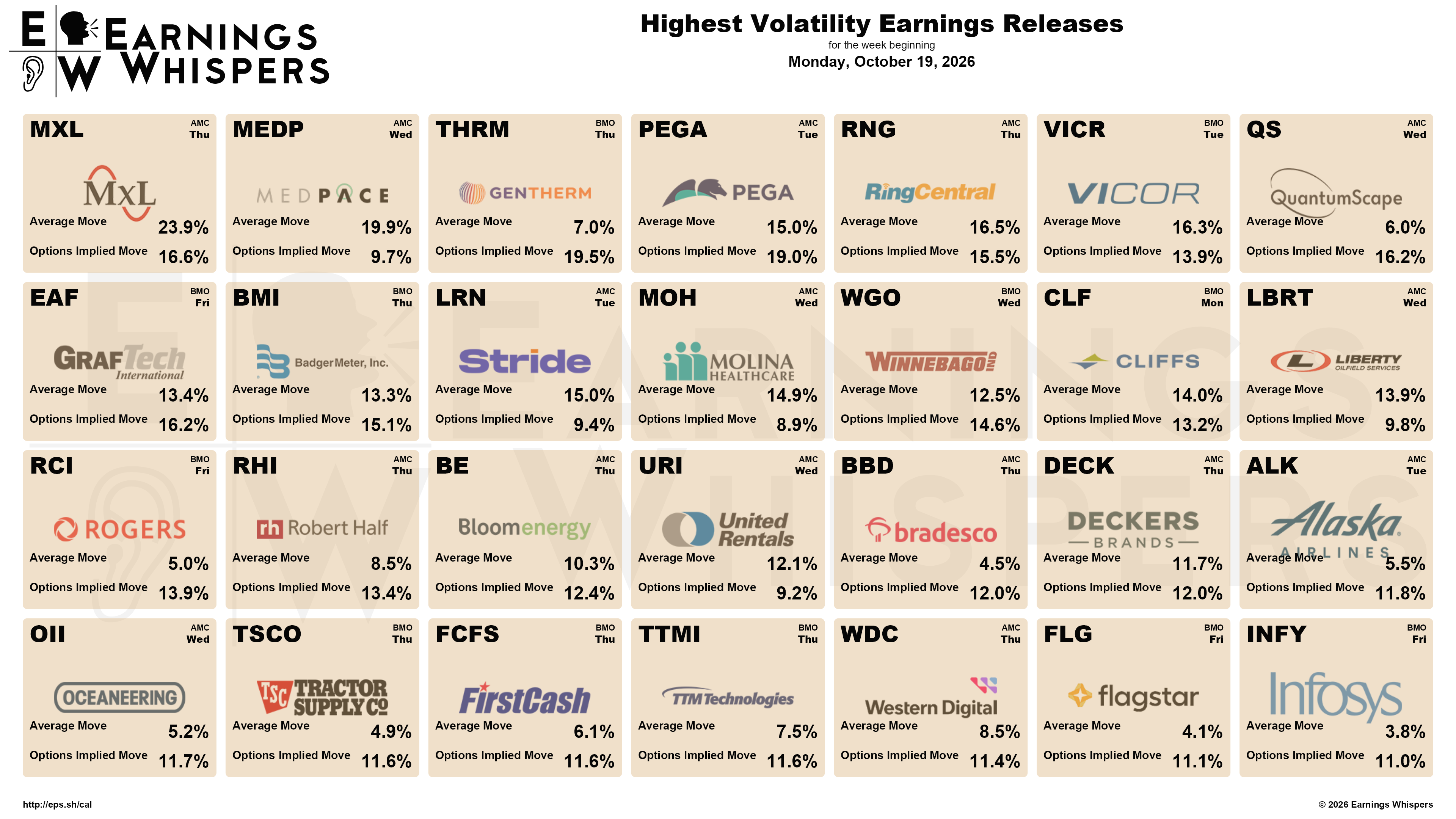
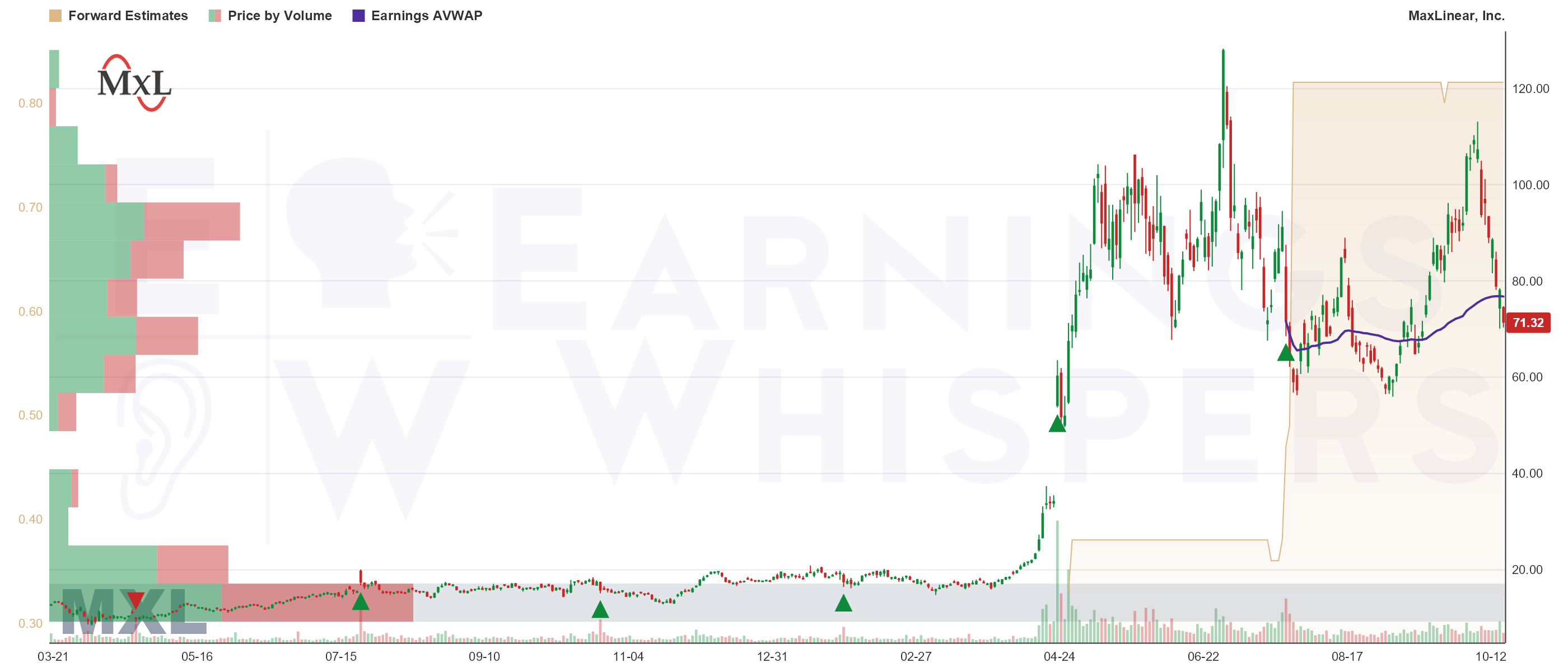
MaxLinear (MXL) is confirmed to report earnings on Thursday, October 22, 2026 at approximately 4:05 PM ET. Wall Street is looking for $0.56 per share on revenue of $215.00 million, which would be a whopping 70.0% jump in sales from a year ago, but the whisper number is even juicier at $0.61 per share. Management had guided revenue to $210.00 million to $220.00 million, so they are right in the pocket. Investors are feeling good, with 81.8% betting on a beat. Here is the funny part though: short sellers piled in too, up 17.8% since last quarter, and the stock has quietly slid 14.1% from where it opened after the last report, yet it still sits 24.8% above its 200 day moving average of $57.13. Buckle up, because option traders are pricing in a 16.6% swing, and this stock has actually averaged a wild 23.9% move in recent quarters. One trader clearly wants a seatbelt too, snapping up 1,001 of the $55.00 puts expiring March 19, 2027 on October 12.
The real story here is the optical data center business, which has been on an absolute tear. Management has raised its full-year optical guide four quarters in a row, going from $60-70 million all the way to $210-230 million, and the latest bump was driven entirely by the 800G Keystone ramp, with newer products like Washington and Annapurna not even counted yet. Infrastructure is now the biggest segment at roughly $85 million, up 145% from last year, and profits have finally flipped positive. Gross margins are hitting 60% ahead of schedule on the way to a 65% target. The things to watch are rising wafer and packaging costs that could nibble at margins, a cash balance that dipped to $93.7 million as they prepay for supply, and growing reliance on a handful of big data center customers. Still, with multiple new 2027 product launches lining up, the momentum is firmly pointed up.
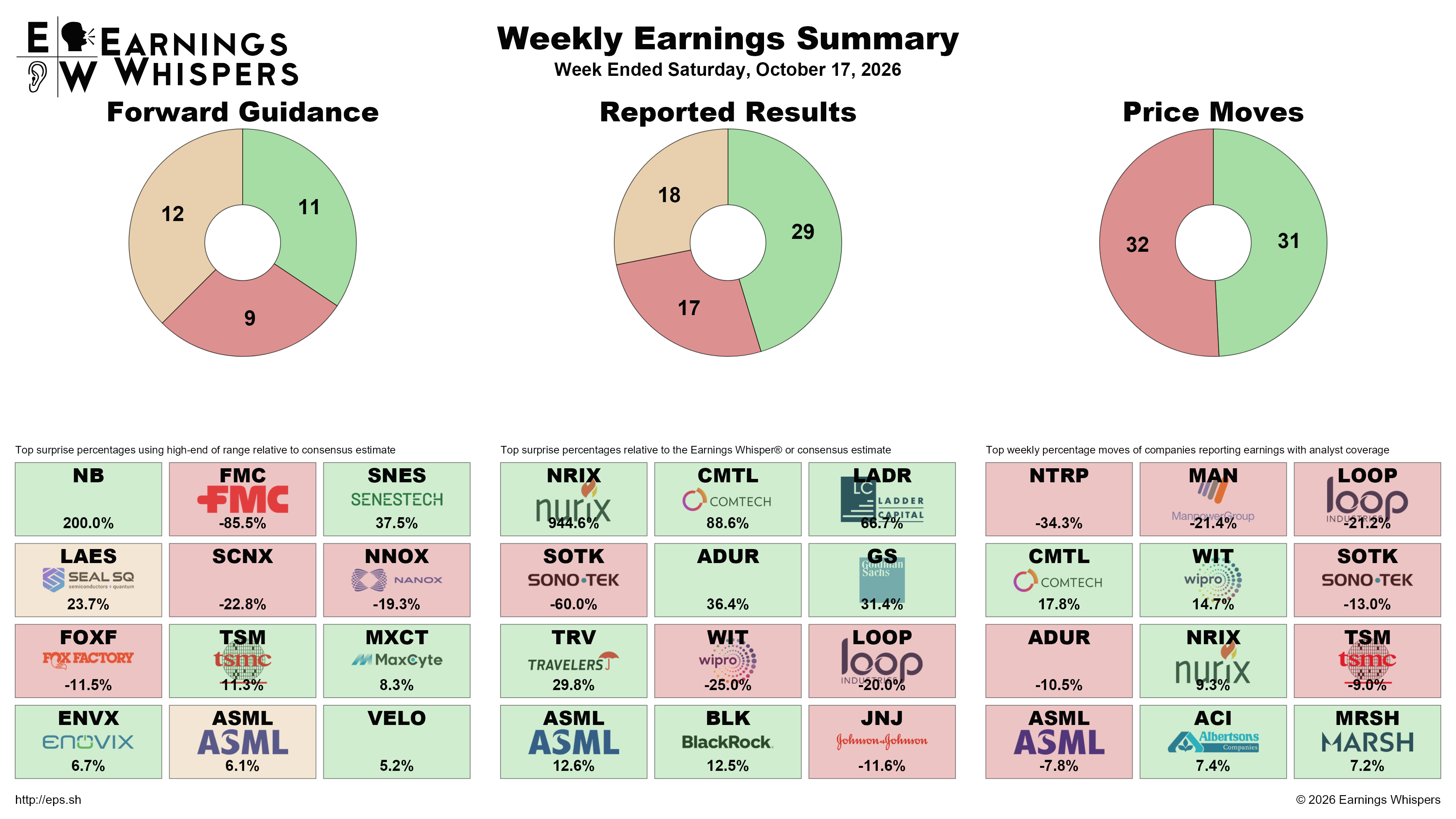
Big Banks Hit Peak Profit While the Rate Tide Turns: Earnings Season's Winners and the One Grocery Flop
The theme of last week's earnings was a tale of two speeds: the engines are still humming, but you can hear them starting to downshift. The nation's biggest banks all delivered solid numbers, yet nearly every one told the same story. A fresh round of Fed rate hikes is actually good news for their lending businesses, so firms like JPMorgan, Bank of America and Wells Fargo all nudged up their forecasts for how much they'll earn on loans, even floating rosy numbers for 2027. The catch is that the Wall Street trading and dealmaking boom that fueled their blockbuster spring quarter has clearly cooled. A late-September bond market selloff froze IPOs and dinged trading desks, so bond-trading revenue actually shrank at JPMorgan and Bank of America. BofA had the roughest week of the bunch, slumping nearly 6% after swallowing a $1.2 billion regulatory settlement tied to money-laundering controls, while Goldman Sachs and Morgan Stanley both posted strong quarters that nonetheless fell short of their own record highs. Citigroup was the quiet standout, raising its profitability targets across the board. The common thread: executives swapped their springtime swagger for cautious talk about higher energy prices, a softening economy, and nervousness over how much debt is piling up to finance the AI building boom.
Away from the banks, the picture was just as split. UnitedHealth continued its comeback, raising its profit outlook for a third straight quarter and talking up a stronger 2027, though its commercial insurance business remains the stubborn weak spot. Chipmaker TSMC, the company that makes the brains behind the AI craze, once again cranked up its growth forecast to a stunning 44% for the year, with demand still outrunning what it can produce, though its stock fell 9% as investors fixated on thinner profit margins from ramping up its newest factories. Johnson & Johnson leaned on its booming drug business, especially cancer treatments, to offset a third straight slowdown in its medical devices unit. The clear loser of the week was grocery chain Albertsons, where sales actually went backwards and profits tumbled. New Executive Chair Meg Whitman, the former eBay and HP boss, has essentially hit the pause button, yanking the company's financial forecasts while she launches a sweeping turnaround with, in her words, 'everything on the table.' Oddly, investors cheered the shakeup, sending the stock up more than 7% on hopes that bigger cost cuts and a cleaner strategy are finally coming.
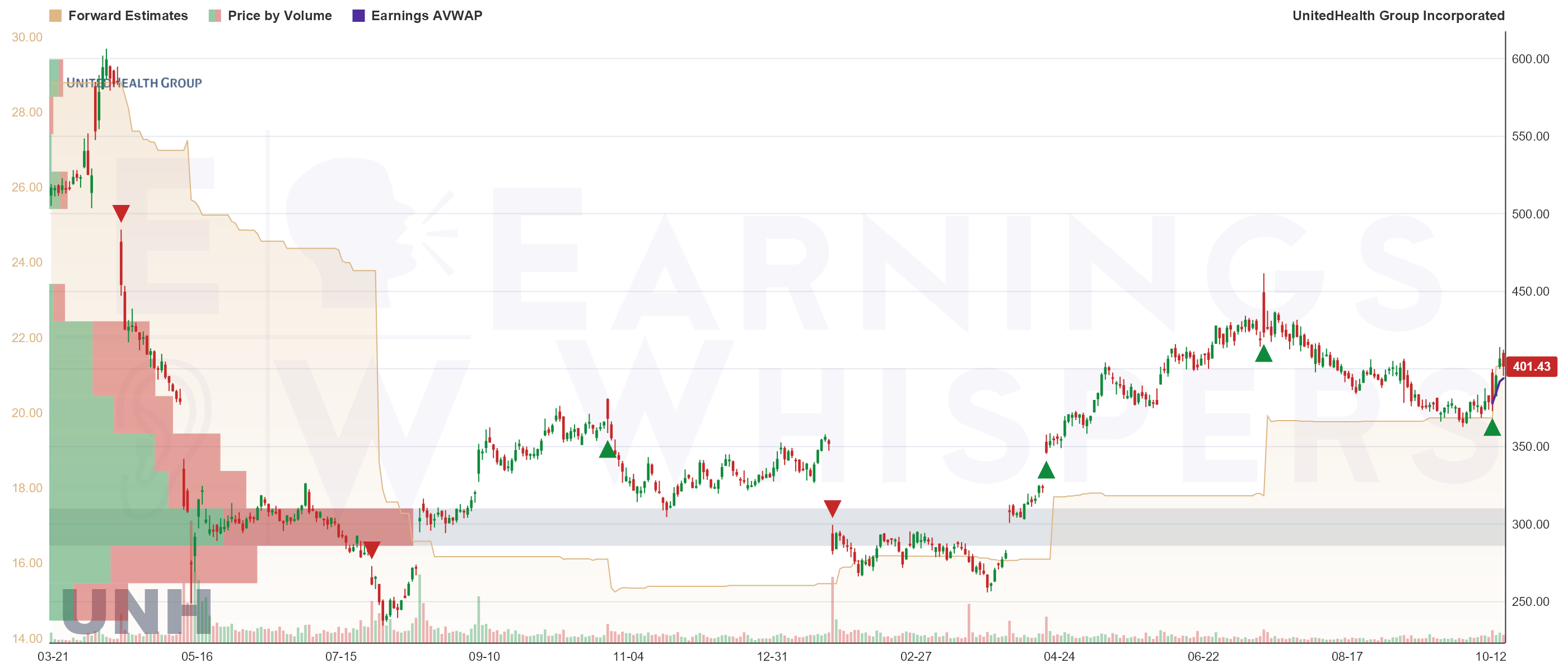
UnitedHealth raises the bar again, but commercial is still the problem child
UnitedHealth Group (UNH) delivered $4.69 per share on $112.69 billion in revenue for the third quarter, topping both the $4.12 consensus and the $4.60 whisper number, beating by about 2 percent. Revenue slipped a tiny 0.41 percent from a year ago, but that was planned as the company shrinks membership on purpose. More importantly, the company raised its full-year 2026 outlook for the third quarter in a row, now guiding to at least $20.50 per share, up from the prior $19.50 to $20.00 range and well ahead of the $19.85 consensus. CEO Stephen Hemsley credited disciplined execution and said the company keeps reshaping itself to make life simpler for patients and the doctors who treat them.
Here is what really matters. This was a textbook turnaround quarter, with profit per share jumping from $2.92 a year ago and the medical cost ratio improving to 88.4 percent from 89.9 percent. Medicare Advantage margins are climbing toward the top of their target range, Medicaid is clawing back toward breakeven, and management even planted a flag on 2027, pointing to the low end of its 13 to 16 percent growth range and hinting that Wall Street estimates are too timid. The one blemish is the commercial business, where cost trends are still running above 11 percent and the promised margin recovery keeps getting pushed out past 2027. Translation: the engine is humming, but one wheel is still dragging.
JPMorgan's Rate Windfall Meets a Slowdown Reality Check
JP Morgan Chase (JPM) posted earnings of $5.75 per share on revenue of $76.19 billion for the third quarter ended September 2026, topping the Street's revenue call of $52.21 billion but coming up short on the bottom line, where analysts wanted $5.94 and the whisper crowd hoped for $6.10. That's a 5.74% miss on profit even as revenue grew a healthy 5.97% from a year ago. CEO Jamie Dimon kept the chin up, pointing to $15.8 billion in net income and a 21% return on tangible common equity (stripping out roughly $498 million in after-tax securities losses), and noted every business line pulled its weight. For the uninitiated, JPMorgan is the giant that does a little of everything in finance, from your checking account to Wall Street dealmaking to managing the rich folks' money.
Here's the real story: a new rate-hiking cycle is handing JPM a fatter interest-income check, and management even teased a first-ever 2027 target of about $107 billion, well above today's pace. Deposits are flowing in, with roughly 650,000 new checking accounts and card spending up 10%. But the party has a hangover. The flashy trading and dealmaking engine is cooling fast, with bond trading actually going negative and investment banking slowing after September's rate selloff. Costs are climbing faster than revenue, returns are slipping, and the bank quietly slashed its buyback from about $7 billion to just $1 billion while beefing up its rainy-day reserves. Translation: JPM is making more from higher rates but bracing for tougher times ahead, tightening credit and watching nervously for strain in mid-sized businesses and all that AI financing. The swagger of last quarter has given way to a more careful whisper.
TSMC Keeps Raising the Bar, and the Bill Comes Due in Margins
Taiwan Semiconductor (TSM) kept its hot streak alive, posting third quarter earnings of $4.60 per share on $46.72 billion in revenue for the period ended September 2026. That topped Wall Street's call of $4.45 per share on $45.62 billion, and it even edged past the Earnings Whisper number of $4.58. The headline grabber is revenue, which jumped a whopping 41.16% from a year ago. Then management did the thing analysts love most: they looked ahead and guided fourth quarter revenue to a range of $52.30 billion to $54.30 billion, blowing past the $48.78 billion the Street was penciling in. For the folks keeping score at home, TSMC makes the chips that make the world run, handling the design, manufacturing, packaging, and testing of integrated circuits.
Here is the real story under the hood. This is the fourth straight time TSMC has raised its full-year growth outlook, now calling for about 44% growth, with demand flat out running ahead of what they can build. The AI boom is so strong they are adding a fourth new chip fab in Tainan, speeding up their second Arizona plant, and sizing up a possible Texas site. The one wrinkle worth watching is margins. Gross margin slipped to 66.4% and is guided a touch lower next quarter, but this is the good kind of pain. It comes from spinning up their cutting-edge N2 chips and building plants overseas, not from weak demand or price cuts. In plain English, business is booming and the only cost is growing pains.
ASML's Problem? Too Much Demand to Handle
ASML Holding NV (ASML) crushed the third quarter ended September 2026, posting earnings of $14.89 per share on revenue of $13.42 billion. Wall Street was looking for just $12.47 per share on $13.18 billion, and even the whisper crowd only expected $13.23, so the company sailed past expectations by 12.55% while revenue jumped a hefty 52.77% from a year ago. Management credited a record €11.7 billion in net sales, strong upgrade demand that pushed Installed Base Management sales to €3.3 billion, and a juicy 57.5% gross margin that topped guidance. Looking ahead, ASML expects fourth quarter revenue between $15.89 billion and $17.00 billion, bracketing the $16.03 billion analysts are modeling. For those new to the name, ASML builds the wildly complex lithography machines, like its TWINSCAN and PAS 5500 systems, that chipmakers simply cannot make modern chips without.
Here is the real story: ASML has the opposite of a demand problem. Management flat out said its planned 30% capacity increases for 2027 and 2028 will not be enough, and customers are now trying to lock in orders stretching all the way into 2029 and 2030. On top of that, it finished negotiating higher, value-based prices that start showing up in 2027 and 2028, and heavyweights like TSMC, Samsung, and Intel are all racing toward next-generation High-NA chip production. The only real catch is execution, since ASML now has to build fast enough to keep up. Just note the quarter's $5 billion net income got a roughly $0.5 billion boost from a one-time Mistral stake revaluation, and the slimmed-down video-format call skipped some usual details, so the earnings quality is a touch flattered. Bottom line, momentum keeps building and the biggest question is simply how much ASML can ship.
Goldman Crushes Estimates, But the Victory Lap Just Got Slower
Goldman Sachs Group (GS) reported earnings of $17.01 per share on revenue of $18.7 billion for the third quarter ended September 2026. The consensus earnings estimate was $12.90 per share, so Goldman blew past the number by a jaw-dropping 31.35% while revenue grew 17.25% year-over-year. Make no mistake, this was the firm's second-best quarter ever. But here is the catch: it was still a step down from the blockbuster Q2, where EPS hit $20.98. In other words, Goldman threw a fantastic party, it just was not quite as loud as the last one. As a reminder, Goldman is an investment banking, securities, and investment management firm, with its hands in Investment Banking, Trading, Asset Management, and Securities Services.
The story here is two companies living in one. The steady, boring, money-printing side keeps getting better: management fees hit a record $3.6 billion, advisory set a record at $1.7 billion, and the firm bumped up its alternatives fundraising goal for the third time, now aiming for roughly $150 billion. Wealth inflows are gushing at more than double the target. The flashy trading and dealmaking engine, however, has clearly cooled off. Equities slipped to $6.4 billion, IPOs got pulled on shaky valuations, and bad loan provisions jumped to $368 million. CEO David Solomon even quietly downgraded his view of the market from 'top decile' to merely 'top quartile,' which is Wall Street speak for 'still good, but let's not get carried away.' Buybacks are shrinking too. Net read: the durable stuff is humming, the cyclical stuff has peaked, and the tone has shifted from swagger to caution.
The second half of the week turns into a parade of banks, insurers and pipeline-to-pump energy players, and here the signals are decidedly mixed. Regional lenders and the big credit-card issuers are getting a warm reception, suggesting investors think the consumer is holding up better than the doom-and-gloom crowd fears. Industrials tied to construction and equipment rentals look genuinely strong, a sign that builders are still busy. But not everyone is invited to the party: a few consumer-staples stalwarts, some utilities, casinos and the airlines are drawing skeptical looks, with traders betting the results may underwhelm. The smart money seems to be leaning toward the story of a resilient economy with pockets of weakness, so the real drama will be watching which companies confirm the optimism and which ones quietly disappoint. Either way, by Friday we should have a much clearer read on where the market thinks the rest of the year is headed.
Netflix: Streaming Smoothly, But The Crowd's Biting Nails
Netflix (NFLX) is set to report earnings after the bell on Tuesday, October 20, 2026, at around 4:05 PM ET. Wall Street is looking for $0.82 per share on $12.87 billion in revenue, which would be 11.8% growth from a year ago, while the Earnings Whisper number sits a touch higher at $0.84. The company itself guided to roughly $0.82 and $12.86 billion, so expectations are tightly clustered. Here's the funny part: investors are feeling bearish heading in, yet 55.4% still expect a beat, which tells you nobody really knows which way to lean. Short sellers have been backing off, cutting their bets by 21.0% since last quarter, and the stock has quietly climbed 7.7% since its last report, though it's still sitting 15.0% below its 200 day average of $82.93. Analysts have trimmed their estimates a bit, option traders are bracing for a 9.6% swing (the stock usually moves about 6.0%), and on October 14 someone scooped up 14,288 of the $75.00 calls expiring in December, a sign a few folks are betting on a bounce.
Last quarter told a clean, confident story. Netflix nudged up its full-year revenue growth target to 13-14% and ran its biggest buyback ever at $4.7 billion, with roughly $27 billion still in the tank. The newer bets are starting to click too, from the TF1 France partnership to cloud games, kids mobile titles, and AI tools now helping produce around 300 shows faster and cheaper. The catch to watch this time: growth is cooling slightly into the back half, viewing hours per member have softened a bit, and the cost of its content library is climbing faster than usual. None of it screams trouble, but it does mean management needs to keep proving that all this spending turns into real revenue. The big relief is that the messy Warner Bros. deal chatter is finally off the table, leaving a simpler, build-it-ourselves story for investors to judge.
Nokia's AI Engine Is Roaring, But Wall Street Wants to See the Cash
Nokia (NOK) is set to report earnings on Thursday, October 22, 2026 at approximately 12:00 AM ET. Wall Street is looking for $0.08 per share on revenue of $5.80 billion, which would be 2.8% year-over-year revenue growth. Investors are leaning optimistic, with 27.3% expecting a beat, but there is a tug-of-war under the surface. Short interest has jumped a hefty 44.9% since the last report, and the stock has drifted 9.6% lower since that release to sit 10.2% below its 200 day moving average of $10.17. Estimates have actually been nudged lower since last quarter. Options traders are bracing for a 10.9% swing, bigger than the 6.9% average move of recent quarters, and on Wednesday, October 14, 2026 someone scooped up 12,919 of the $10.00 calls expiring December 18, 2026, a sizable bet that the fireworks point up.
Here is the real story heading in. Nokia's AI and cloud business is on a tear, with sales more than doubling last quarter and orders piling up fast as the whole world races to wire up data centers. The optical and internet plumbing side is the muscle driving it, and management added fresh US factory muscle with the NXP Arizona deal and a big Pennsylvania expansion. The catch is that last quarter they only reaffirmed their profit outlook instead of raising it again, and they trimmed their cash flow expectations toward the low end as they stockpile parts and wrestle with pricey memory chips. So the growth engine is clearly humming, but the market wants proof the cash follows the hype. Watch whether they finally lift that profit guide this time.
Tesla's Growth Is Back, But So Is the Spending Spree
Tesla (TSLA) is confirmed to report earnings on Wednesday, October 21, 2026 at approximately 4:15 PM ET. Wall Street is looking for $0.44 per share on revenue of $27.79 billion, a slight 1.1% dip from a year ago, while the Earnings Whisper number sits a touch lower at $0.40. Investors are feeling pretty good here, with 28.6% expecting a beat. Short sellers have backed off by 10.3% since last quarter, and the stock has crept 4.0% higher off its post-earnings open, though it still trails its 200 day moving average of $388.32 by 8.7%. Analysts have been quietly trimming their estimates since the last report. Options traders are bracing for a 7.5% swing, a bit hotter than the 6.2% average move of late. And here is a head-scratcher: on Friday, October 16, someone scooped up 23,018 of the $130 puts expiring October 23, a deep bet that doesn't match the upbeat mood.
Here's the real tug-of-war going into this print. Last quarter, demand came roaring back with record Q2 deliveries, the biggest order backlog since 2023, and paid Full Self-Driving customers climbing to roughly 1.5 million. Robotaxi expanded to seven US cities with over 380,000 miles and no major hiccups, and Elon is clearly fired up about Optimus and the new AI compute plans. The catch? Margins got squeezed almost everywhere. Auto profit margins slipped, energy margins got cut in half on a warranty hit and tougher competition, and free cash flow flipped negative for the first time in a while. Tesla is now pouring more than $25 billion into capital spending and leaning on up to $30 billion in new debt to fund it. So the story is growth is real, but Tesla is spending like crazy to chase it. Watch the margins and the cash flow commentary, because that is where this one gets decided.
Big Swings Ahead: Bulls Quietly Bet on a Breakout
The curtain rises for SpaceX (SPCX) after the market closes on Tuesday, October 20, 2026, and Wall Street is bracing for fireworks. The consensus wants $0.11 per share on revenue of $12.55 billion, but the Earnings Whisper number is whispering louder at $0.18 per share. Here's the funny part: investors are feeling bearish walking in the door, yet 69.4% of them still expect a beat. Short interest has climbed 9.7% since last quarter, even as the stock quietly drifted 24.5% higher from its post-earnings open, now sitting just 0.4% above its 200 day moving average of $145.51. Meanwhile, the number crunchers have been nudging their estimates up, not down.
So what should you watch for? Option traders are betting on an 8.8% move, and this stock has lived up to that kind of drama with a 9.4% average swing lately. Buckle up. The most eye catching tell came on Wednesday, October 14, when someone scooped up 44,595 contracts of the $220.00 calls expiring November 20. That is a bold wager that this one has plenty of room left to run.
Cleveland-Cliffs: From Promises to Proof
Cleveland-Cliffs (CLF) steps up to report earnings on Monday, October 19, 2026 at roughly 6:00 AM ET. Wall Street is looking for $0.24 per share on $5.58 billion in revenue, which would be a tasty 17.9% jump in sales from a year ago, but the smart money whispers $0.29 per share. Here is the funny part: investors are walking in grumpy and bearish, yet a slim majority (52.9%) still expects a beat. Short sellers have backed off by 4.1% since last quarter, the stock has climbed 13.6% since its last earnings pop, and it now sits 6.9% above its 200 day moving average of $11.34. Estimates have been drifting higher too. Buckle up, because options traders are bracing for a 13.2% swing, and this stock has averaged a 14.0% move in recent quarters. One trader clearly has a long memory, scooping up 23,195 of the $10.00 puts expiring way out in January 2028 on October 13.
Here is the real story heading in. Last quarter was the one where management finally stopped saying the recovery is coming and actually showed it. Cash flow turned positive for the first time in roughly two years, EBITDA tripled to $286 million, and they guided Q3 to about $575 million with Q4 even higher. Prices are flowing through nicely, costs are coming down, and shipments are rising, with auto volumes the strongest in two years thanks to top-supplier nods from GM and Toyota. They even flagged a fresh $500 million EBITDA boost coming in 2027 as old low-price contracts reset. The soft spot to watch is Canada, where the Stelco galvanized business is still dragging and leadership hinted at possible job cuts if trade help does not arrive. The once hyped POSCO deal has also cooled off. Bottom line: the numbers are finally backing up the talk, so this release is about whether the inflection keeps rolling.
Bloom Energy: The Power Play Behind the AI Boom Goes to Bat Again
Bloom Energy (BE) is set to report earnings on Thursday, October 22, 2026 at about 4:05 PM ET. Wall Street is looking for $0.71 per share on revenue of $1.07 billion, which would be a jaw-dropping 106.1% jump in sales from a year ago, and the whisper number is even juicier at $0.84 per share. Here is the funny part: investors are feeling bearish heading in, yet 85.2% still expect a beat, which is a little like booing the band while buying tickets to the encore. Short interest has climbed 9.4% since last quarter, but the stock has quietly drifted up 20.6% and now sits 2.6% above its 200 day average of $215.66. Estimates have been revised higher across the board. Options traders are bracing for a 12.4% swing, a bit more than the usual 10.3% move, and on October 14 someone grabbed over 5,000 of the $290 calls and $290 puts expiring March 2027, basically betting big in both directions.
Here is what really matters. Last quarter Bloom crossed the billion-dollar revenue line for the first time, up a stunning 166% from a year ago, and raised its full-year outlook for the third straight time. The headline mic drop was Brookfield quintupling its financing commitment to a massive $25 billion, plus a fresh $2.6 billion deal with Oaktree, MUFG and Morgan Stanley, so money to fund growth is clearly not the problem. Demand has exploded from just one big data center customer a year ago to every major US hyperscaler plus a dozen others, and rivals are losing deals outright, with Nebius ditching combustion engines to switch to Bloom. The only wrinkle to watch is that management pulled its formal free cash flow guidance, and the whole story now rides on the AI data center spending wave holding up. But with margins rising, customers piling in and the company now calling itself the standard rather than hoping to become it, the momentum is hard to ignore going into Thursday.
Meta's Ad Machine Is Humming, But the Spending Spree Is the Real Story
Meta Platforms (META) steps up to the earnings plate on Wednesday, October 21, 2026 at roughly 4:00 PM ET, and Wall Street is feeling good about it. Analysts are looking for $6.54 per share on $63.18 billion in revenue, which would mark a juicy 23.3% jump from a year ago, while the Earnings Whisper number sits a notch higher at $6.65. Management had guided revenue to $61.00 billion to $64.00 billion, so they are swimming comfortably in their own lane. The bulls are out in force, with 66.7% of investors betting on a beat. Short sellers have blinked too, trimming their bets by 11.3% since last quarter, as the stock has cruised 34.9% higher from its post-earnings open to sit 12.2% above its 200 day moving average of $632.15. One wrinkle: overall estimates have actually drifted lower since last time. Options traders are bracing for a 7.4% swing, a touch below the 9.0% the stock has typically delivered lately, and on October 15 someone grabbed 14,074 of the $750.00 calls expiring October 23, a clear bet on fireworks.
Here is the thing to watch. Last quarter proved Meta's AI-powered ad engine is firing on all cylinders, with its new ad-matching system lifting clicks 8.3% and conversions 15.7% on Facebook, and new products like Meta One, the Business Agent Platform, and even its own branded glasses finally hitting shelves. The catch is what all this costs. Spending ballooned 55% last quarter, operating margins caved from around 41% down to 31%, and free cash flow nearly vanished, falling to $784 million from over $12 billion the quarter before as capital spending hit a staggering $31.1 billion in just three months. Management keeps raising the spending ceiling, now $130 to $145 billion for the year, but won't even hint at 2027 numbers. So the question for Wednesday is simple: is the revenue growth fast enough to justify a money furnace running this hot?
ISRG: Great Margins, But Watch That Slowing Robot Traffic
Intuitive Surgical (ISRG) steps into the earnings spotlight on Tuesday, October 20, 2026 at roughly 4:05 PM ET. Wall Street is looking for $2.61 per share on $2.88 billion in revenue, a healthy 15.0% jump from a year ago, while our Earnings Whisper number sits a touch higher at $2.65. Here is the funny part: investors are walking in grumpy and bearish, yet 71.4% of them still expect a beat. Short interest ticked up a modest 1.2% since last time, but the stock has quietly climbed 16.9% off its post-earnings low, leaving it just 3.1% under its 200 day average of $440.30. Analysts have been nudging estimates higher, option traders are bracing for a 9.5% swing (bigger than the usual 6.5% wiggle), and on October 12 someone scooped up 712 of the $365 puts expiring November 20, a small but telling bearish bet.
Here is what actually matters going in. The money story is still gorgeous, with margins climbing, free cash flow up 71%, and robot placements rolling out the door. The worry is at the front line: US da Vinci procedure growth cooled to 12% last quarter from 14% before that, as patients put off elective surgeries, weight-loss drugs eat into bariatric cases, and insurance coverage gets shakier. Management also quietly nudged its full-year procedure outlook toward the midpoint instead of raising it, and China remains a headache. Bottom line, this is a profit machine firing on all cylinders, but all eyes should be on whether the slowdown in actual surgeries got worse or finally steadied.
IBM's Big Test: Did Those Delayed Deals Actually Come Back?
IBM reports after the closing bell on Wednesday, October 21, 2026, at around 4:10 PM ET. Wall Street is looking for $2.88 per share on $16.84 billion in revenue, which would be 3.1% growth from a year ago, though the smart money Whisper number sits a touch higher at $2.91. Folks are feeling good heading in, with 63.2% betting on a beat. Short sellers have backed way off, cutting their bets by 29.5% since last quarter, while the stock has climbed 14.6% from where it opened after the last report, leaving it 7.9% under its 200 day average of $251.94. Options traders are bracing for an 8.1% swing, which is bigger than the 4.8% average move IBM usually serves up. One trader even scooped up 3,201 of the $235 puts expiring November 20, so someone is hedging their bets.
Here is the real story. Last quarter was ugly because dozens of big deals slipped through IBM's fingers in the final weeks of June, as clients rushed to grab scarce servers and memory before prices went up. Management swears that money is just delayed, not gone, and pointed out that a third to 40% of those deals already closed in the first three weeks of the new quarter. That is the number to watch. If those deals keep rolling in, the bulls are right and this was a timing hiccup. If they do not, that 4 to 5% revenue guidance starts to look shaky. On the bright side, infrastructure guidance got bumped up, Red Hat is picking up speed, and the AI consulting pipeline keeps growing. The flashy quantum and Project Lightwell bets are exciting, but they are tomorrow's story. Wednesday is all about whether IBM can prove last quarter was a stumble and not a slide.
Lam Research: AI Chip Boom Has This Toolmaker Firing on All Cylinders
Lam Research (LRCX) steps up to report earnings on Wednesday, October 21, 2026 at roughly 4:05 PM ET, and Wall Street is leaning in. The consensus calls for $2.17 per share on $8.12 billion in revenue, which would be a jaw-dropping 52.5% jump in sales from a year ago, while the Earnings Whisper number sits higher at $2.28. Management had guided for $2.00 to $2.30 per share on $7.70 to $8.50 billion, so the whisper is basically betting on the top half of that range. Investors are feeling good, with 66.7% expecting a beat, and short sellers have backed off by 12.6% since last quarter. Still, the stock has quietly slipped 17.1% from where it opened after the last report and now trades 6.2% below its 200 day average of $281.41, so expectations and the chart are telling slightly different stories. Options traders are bracing for an 8.8% swing, a bit bigger than the 6.5% average move lately, and someone made a big bullish bet on September 28 by scooping up 4,390 of the $390 calls expiring November 20.
Here is the real story heading in. Last quarter was a blowout, with record revenue and the fattest gross margin in two decades, and management has now raised its spending outlook for the industry three calls in a row to the low $150 billion range as the AI buildout keeps pulling in more chipmaking gear. NAND memory is the fresh spark, with that business more than doubling in a single quarter, and advanced packaging is screaming higher too. The catch is that overall analyst estimates have actually drifted lower since the last report, so the bar may be beatable even as the stock has cooled off. Watch two soft spots: China sales fell to 26% of revenue as local buyers pulled back, and the tax rate is creeping up as more business shifts to the higher-taxed US. Neither looks big enough to spoil the party, but they are the things that could nibble at an otherwise strong print.
MaxLinear's Optical Rocket Keeps Climbing Into Earnings
MaxLinear (MXL) is confirmed to report earnings on Thursday, October 22, 2026 at approximately 4:05 PM ET. Wall Street is looking for $0.56 per share on revenue of $215.00 million, which would be a whopping 70.0% jump in sales from a year ago, but the whisper number is even juicier at $0.61 per share. Management had guided revenue to $210.00 million to $220.00 million, so they are right in the pocket. Investors are feeling good, with 81.8% betting on a beat. Here is the funny part though: short sellers piled in too, up 17.8% since last quarter, and the stock has quietly slid 14.1% from where it opened after the last report, yet it still sits 24.8% above its 200 day moving average of $57.13. Buckle up, because option traders are pricing in a 16.6% swing, and this stock has actually averaged a wild 23.9% move in recent quarters. One trader clearly wants a seatbelt too, snapping up 1,001 of the $55.00 puts expiring March 19, 2027 on October 12.
The real story here is the optical data center business, which has been on an absolute tear. Management has raised its full-year optical guide four quarters in a row, going from $60-70 million all the way to $210-230 million, and the latest bump was driven entirely by the 800G Keystone ramp, with newer products like Washington and Annapurna not even counted yet. Infrastructure is now the biggest segment at roughly $85 million, up 145% from last year, and profits have finally flipped positive. Gross margins are hitting 60% ahead of schedule on the way to a 65% target. The things to watch are rising wafer and packaging costs that could nibble at margins, a cash balance that dipped to $93.7 million as they prepay for supply, and growing reliance on a handful of big data center customers. Still, with multiple new 2027 product launches lining up, the momentum is firmly pointed up.
Big Banks Hit Peak Profit While the Rate Tide Turns: Earnings Season's Winners and the One Grocery Flop
The theme of last week's earnings was a tale of two speeds: the engines are still humming, but you can hear them starting to downshift. The nation's biggest banks all delivered solid numbers, yet nearly every one told the same story. A fresh round of Fed rate hikes is actually good news for their lending businesses, so firms like JPMorgan, Bank of America and Wells Fargo all nudged up their forecasts for how much they'll earn on loans, even floating rosy numbers for 2027. The catch is that the Wall Street trading and dealmaking boom that fueled their blockbuster spring quarter has clearly cooled. A late-September bond market selloff froze IPOs and dinged trading desks, so bond-trading revenue actually shrank at JPMorgan and Bank of America. BofA had the roughest week of the bunch, slumping nearly 6% after swallowing a $1.2 billion regulatory settlement tied to money-laundering controls, while Goldman Sachs and Morgan Stanley both posted strong quarters that nonetheless fell short of their own record highs. Citigroup was the quiet standout, raising its profitability targets across the board. The common thread: executives swapped their springtime swagger for cautious talk about higher energy prices, a softening economy, and nervousness over how much debt is piling up to finance the AI building boom.
Away from the banks, the picture was just as split. UnitedHealth continued its comeback, raising its profit outlook for a third straight quarter and talking up a stronger 2027, though its commercial insurance business remains the stubborn weak spot. Chipmaker TSMC, the company that makes the brains behind the AI craze, once again cranked up its growth forecast to a stunning 44% for the year, with demand still outrunning what it can produce, though its stock fell 9% as investors fixated on thinner profit margins from ramping up its newest factories. Johnson & Johnson leaned on its booming drug business, especially cancer treatments, to offset a third straight slowdown in its medical devices unit. The clear loser of the week was grocery chain Albertsons, where sales actually went backwards and profits tumbled. New Executive Chair Meg Whitman, the former eBay and HP boss, has essentially hit the pause button, yanking the company's financial forecasts while she launches a sweeping turnaround with, in her words, 'everything on the table.' Oddly, investors cheered the shakeup, sending the stock up more than 7% on hopes that bigger cost cuts and a cleaner strategy are finally coming.
UnitedHealth raises the bar again, but commercial is still the problem child
UnitedHealth Group (UNH) delivered $4.69 per share on $112.69 billion in revenue for the third quarter, topping both the $4.12 consensus and the $4.60 whisper number, beating by about 2 percent. Revenue slipped a tiny 0.41 percent from a year ago, but that was planned as the company shrinks membership on purpose. More importantly, the company raised its full-year 2026 outlook for the third quarter in a row, now guiding to at least $20.50 per share, up from the prior $19.50 to $20.00 range and well ahead of the $19.85 consensus. CEO Stephen Hemsley credited disciplined execution and said the company keeps reshaping itself to make life simpler for patients and the doctors who treat them.
Here is what really matters. This was a textbook turnaround quarter, with profit per share jumping from $2.92 a year ago and the medical cost ratio improving to 88.4 percent from 89.9 percent. Medicare Advantage margins are climbing toward the top of their target range, Medicaid is clawing back toward breakeven, and management even planted a flag on 2027, pointing to the low end of its 13 to 16 percent growth range and hinting that Wall Street estimates are too timid. The one blemish is the commercial business, where cost trends are still running above 11 percent and the promised margin recovery keeps getting pushed out past 2027. Translation: the engine is humming, but one wheel is still dragging.
JPMorgan's Rate Windfall Meets a Slowdown Reality Check
JP Morgan Chase (JPM) posted earnings of $5.75 per share on revenue of $76.19 billion for the third quarter ended September 2026, topping the Street's revenue call of $52.21 billion but coming up short on the bottom line, where analysts wanted $5.94 and the whisper crowd hoped for $6.10. That's a 5.74% miss on profit even as revenue grew a healthy 5.97% from a year ago. CEO Jamie Dimon kept the chin up, pointing to $15.8 billion in net income and a 21% return on tangible common equity (stripping out roughly $498 million in after-tax securities losses), and noted every business line pulled its weight. For the uninitiated, JPMorgan is the giant that does a little of everything in finance, from your checking account to Wall Street dealmaking to managing the rich folks' money.
Here's the real story: a new rate-hiking cycle is handing JPM a fatter interest-income check, and management even teased a first-ever 2027 target of about $107 billion, well above today's pace. Deposits are flowing in, with roughly 650,000 new checking accounts and card spending up 10%. But the party has a hangover. The flashy trading and dealmaking engine is cooling fast, with bond trading actually going negative and investment banking slowing after September's rate selloff. Costs are climbing faster than revenue, returns are slipping, and the bank quietly slashed its buyback from about $7 billion to just $1 billion while beefing up its rainy-day reserves. Translation: JPM is making more from higher rates but bracing for tougher times ahead, tightening credit and watching nervously for strain in mid-sized businesses and all that AI financing. The swagger of last quarter has given way to a more careful whisper.
TSMC Keeps Raising the Bar, and the Bill Comes Due in Margins
Taiwan Semiconductor (TSM) kept its hot streak alive, posting third quarter earnings of $4.60 per share on $46.72 billion in revenue for the period ended September 2026. That topped Wall Street's call of $4.45 per share on $45.62 billion, and it even edged past the Earnings Whisper number of $4.58. The headline grabber is revenue, which jumped a whopping 41.16% from a year ago. Then management did the thing analysts love most: they looked ahead and guided fourth quarter revenue to a range of $52.30 billion to $54.30 billion, blowing past the $48.78 billion the Street was penciling in. For the folks keeping score at home, TSMC makes the chips that make the world run, handling the design, manufacturing, packaging, and testing of integrated circuits.
Here is the real story under the hood. This is the fourth straight time TSMC has raised its full-year growth outlook, now calling for about 44% growth, with demand flat out running ahead of what they can build. The AI boom is so strong they are adding a fourth new chip fab in Tainan, speeding up their second Arizona plant, and sizing up a possible Texas site. The one wrinkle worth watching is margins. Gross margin slipped to 66.4% and is guided a touch lower next quarter, but this is the good kind of pain. It comes from spinning up their cutting-edge N2 chips and building plants overseas, not from weak demand or price cuts. In plain English, business is booming and the only cost is growing pains.
ASML's Problem? Too Much Demand to Handle
ASML Holding NV (ASML) crushed the third quarter ended September 2026, posting earnings of $14.89 per share on revenue of $13.42 billion. Wall Street was looking for just $12.47 per share on $13.18 billion, and even the whisper crowd only expected $13.23, so the company sailed past expectations by 12.55% while revenue jumped a hefty 52.77% from a year ago. Management credited a record €11.7 billion in net sales, strong upgrade demand that pushed Installed Base Management sales to €3.3 billion, and a juicy 57.5% gross margin that topped guidance. Looking ahead, ASML expects fourth quarter revenue between $15.89 billion and $17.00 billion, bracketing the $16.03 billion analysts are modeling. For those new to the name, ASML builds the wildly complex lithography machines, like its TWINSCAN and PAS 5500 systems, that chipmakers simply cannot make modern chips without.
Here is the real story: ASML has the opposite of a demand problem. Management flat out said its planned 30% capacity increases for 2027 and 2028 will not be enough, and customers are now trying to lock in orders stretching all the way into 2029 and 2030. On top of that, it finished negotiating higher, value-based prices that start showing up in 2027 and 2028, and heavyweights like TSMC, Samsung, and Intel are all racing toward next-generation High-NA chip production. The only real catch is execution, since ASML now has to build fast enough to keep up. Just note the quarter's $5 billion net income got a roughly $0.5 billion boost from a one-time Mistral stake revaluation, and the slimmed-down video-format call skipped some usual details, so the earnings quality is a touch flattered. Bottom line, momentum keeps building and the biggest question is simply how much ASML can ship.
Goldman Crushes Estimates, But the Victory Lap Just Got Slower
Goldman Sachs Group (GS) reported earnings of $17.01 per share on revenue of $18.7 billion for the third quarter ended September 2026. The consensus earnings estimate was $12.90 per share, so Goldman blew past the number by a jaw-dropping 31.35% while revenue grew 17.25% year-over-year. Make no mistake, this was the firm's second-best quarter ever. But here is the catch: it was still a step down from the blockbuster Q2, where EPS hit $20.98. In other words, Goldman threw a fantastic party, it just was not quite as loud as the last one. As a reminder, Goldman is an investment banking, securities, and investment management firm, with its hands in Investment Banking, Trading, Asset Management, and Securities Services.
The story here is two companies living in one. The steady, boring, money-printing side keeps getting better: management fees hit a record $3.6 billion, advisory set a record at $1.7 billion, and the firm bumped up its alternatives fundraising goal for the third time, now aiming for roughly $150 billion. Wealth inflows are gushing at more than double the target. The flashy trading and dealmaking engine, however, has clearly cooled off. Equities slipped to $6.4 billion, IPOs got pulled on shaky valuations, and bad loan provisions jumped to $368 million. CEO David Solomon even quietly downgraded his view of the market from 'top decile' to merely 'top quartile,' which is Wall Street speak for 'still good, but let's not get carried away.' Buybacks are shrinking too. Net read: the durable stuff is humming, the cyclical stuff has peaked, and the tone has shifted from swagger to caution.