Upcoming Earnings
Tech Titans and Retail Underdogs Take Center Stage in a Loaded Earnings Week
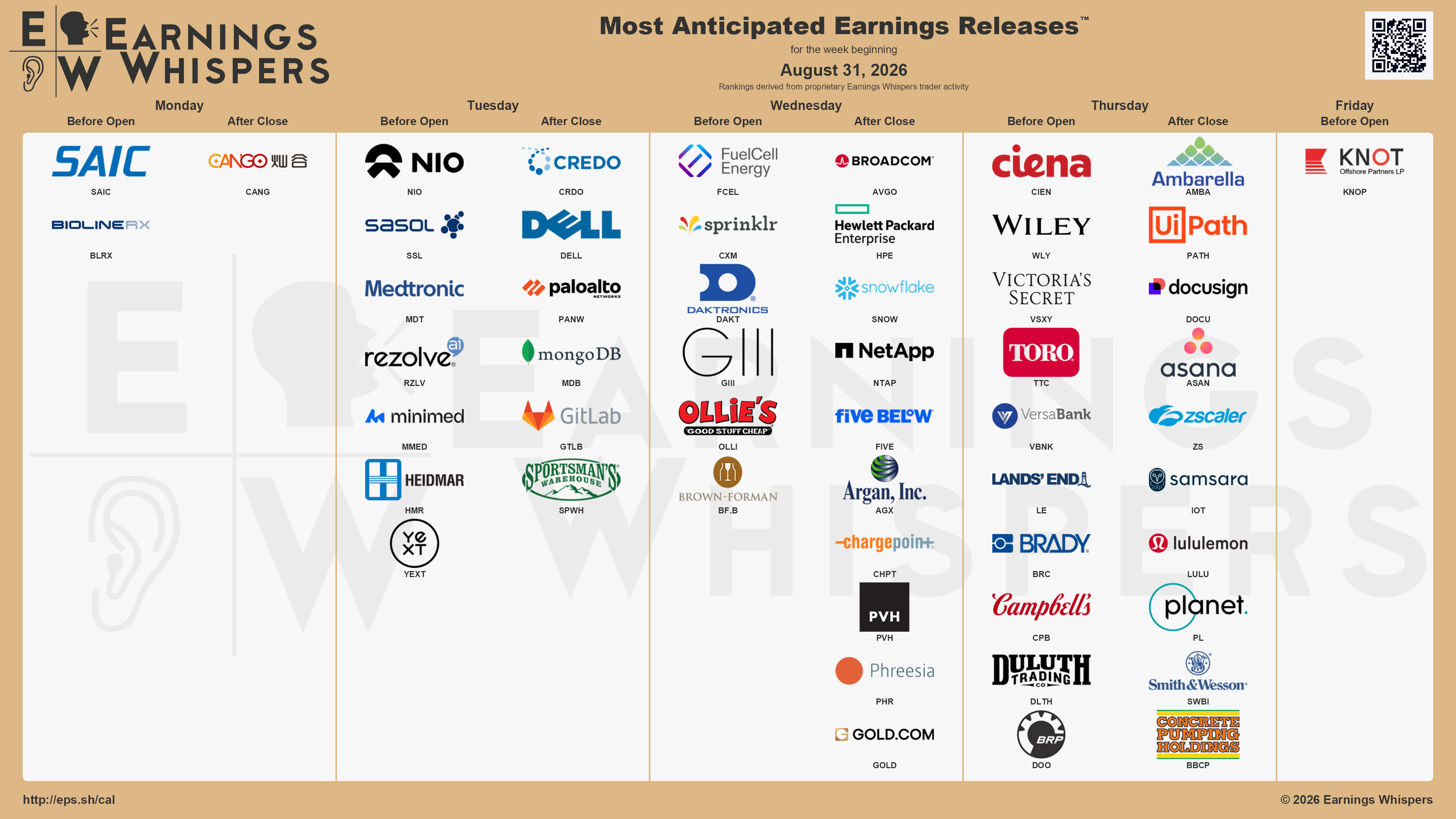
All eyes are on the technology heavyweights this week, and Broadcom is the marquee name investors cannot stop talking about. The chip and software giant heads into its report riding a wave of good vibes, and the whisper number on the street is actually running ahead of the official estimate, which usually means people expect a beat. It has plenty of company. Dell, Palo Alto Networks, and Hewlett Packard Enterprise all arrive with the wind at their backs after strong finishes last quarter, and HPE in particular has traders feeling unusually chipper. Snowflake and Zscaler round out a software slate that has been quietly building momentum, though these names tend to swing hard when the numbers hit, so buckle up. Not everyone is invited to the party, however. C3.ai and ChargePoint are limping in with sour sentiment and shaky recent trends, and China's NIO looks like the kind of report where investors are already bracing for disappointment.
Outside of tech, the consumer is the story worth watching, and it is a tale of two closets. Lululemon walks in under a genuine cloud, with the mood distinctly gloomy and last quarter's results still weighing on the stock, while fellow apparel name PVH faces its own chilly reception. Contrast that with Victoria's Secret, G-III Apparel, and discount darlings Five Below and Ollie's Bargain Outlet, all of which have the crowd leaning optimistic that bargain-hunting shoppers are still opening their wallets. Keep an eye on Medtronic in healthcare, where the setup looks reassuringly solid, and on the staples corner, where Campbell's and Brown-Forman are the wallflowers nobody seems excited to dance with. It is a week where the confident names could reward the faithful and the wobbly ones could get punished, so expect fireworks in both directions.
Broadcom's AI Rocket Faces a Skeptical Crowd
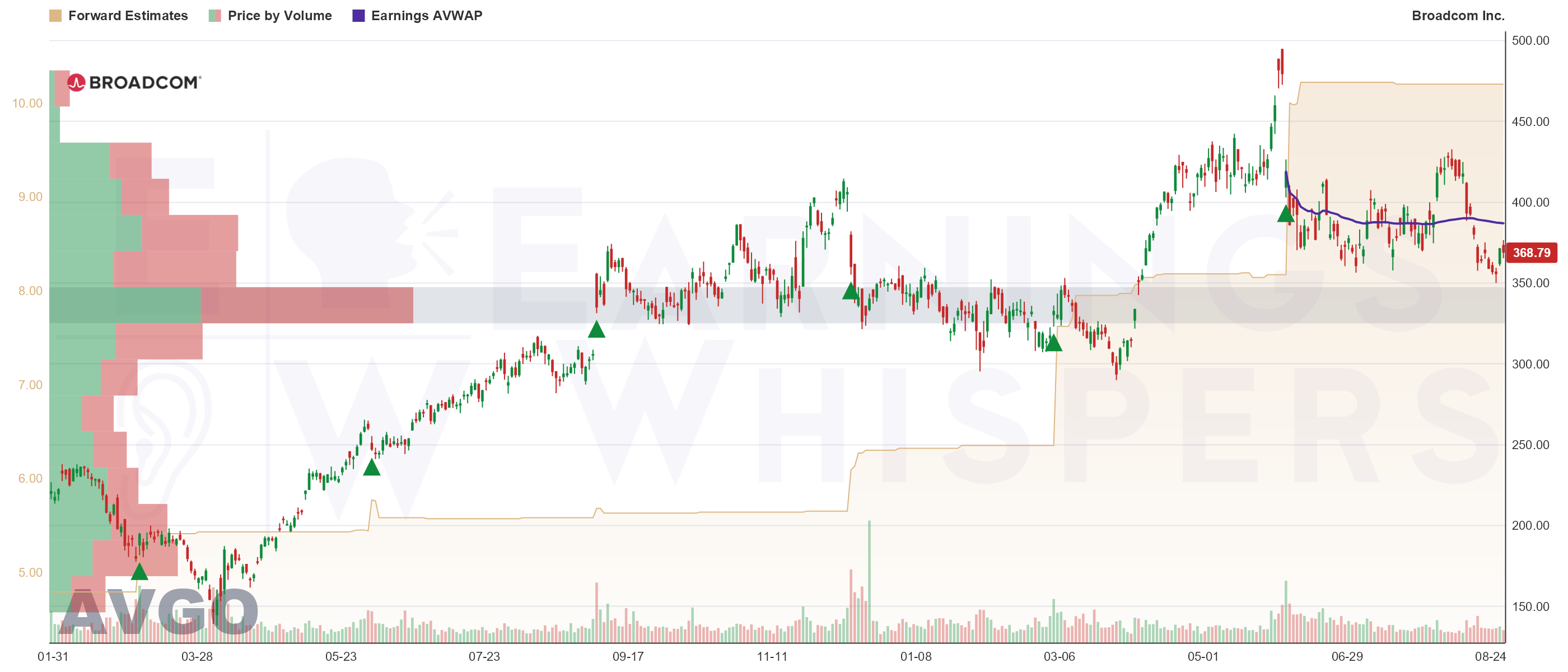
Broadcom (AVGO) steps up to the earnings plate on Wednesday, September 2, 2026 at about 4:15 PM ET. Wall Street is looking for $3.22 per share on $29.47 billion in revenue, which would be a jaw-dropping 84.7% jump from a year ago, though the smart money whisper is a touch higher at $3.35. Management itself guided to roughly $29.40 billion, so the bar is set. Here's the funny part: despite that monster growth, investors are actually bearish heading in, even while 84.4% of them expect the company to beat. Short sellers have piled on 5.6% more since last quarter, and the stock has drifted down 9.8% since its last earnings pop, leaving it hovering right around its 200 day average of $369.33. Option traders are bracing for an 8.3% swing, roughly in line with the 8.6% average move lately, and on Friday someone snapped up 14,319 of the $370 calls expiring September 4, betting on fireworks.
The backdrop here is nothing short of an AI gold rush. Last quarter Broadcom lifted its full-year AI chip revenue target to $56 billion, up about 180%, and stacked up more than $30 billion in fresh AI orders against just $10.8 billion actually shipped. They now count six big custom-chip customers, including named multi-gigawatt deals with Google, Anthropic, OpenAI and Meta, plus a giant new financing platform with Apollo and Blackstone aimed at building out more than 20 gigawatts of computing power. Software and even the sleepy non-AI chip business are waking up too. The one thing to watch is gross margin ticking down to about 74%, but that's simply because the booming AI mix carries thinner margins, not because anything is breaking. Oh, and there's a new CFO settling in. Bottom line: the story keeps getting bigger, and the bears are daring management to prove it again.
Credo Heads Into Earnings With Rockets Strapped On
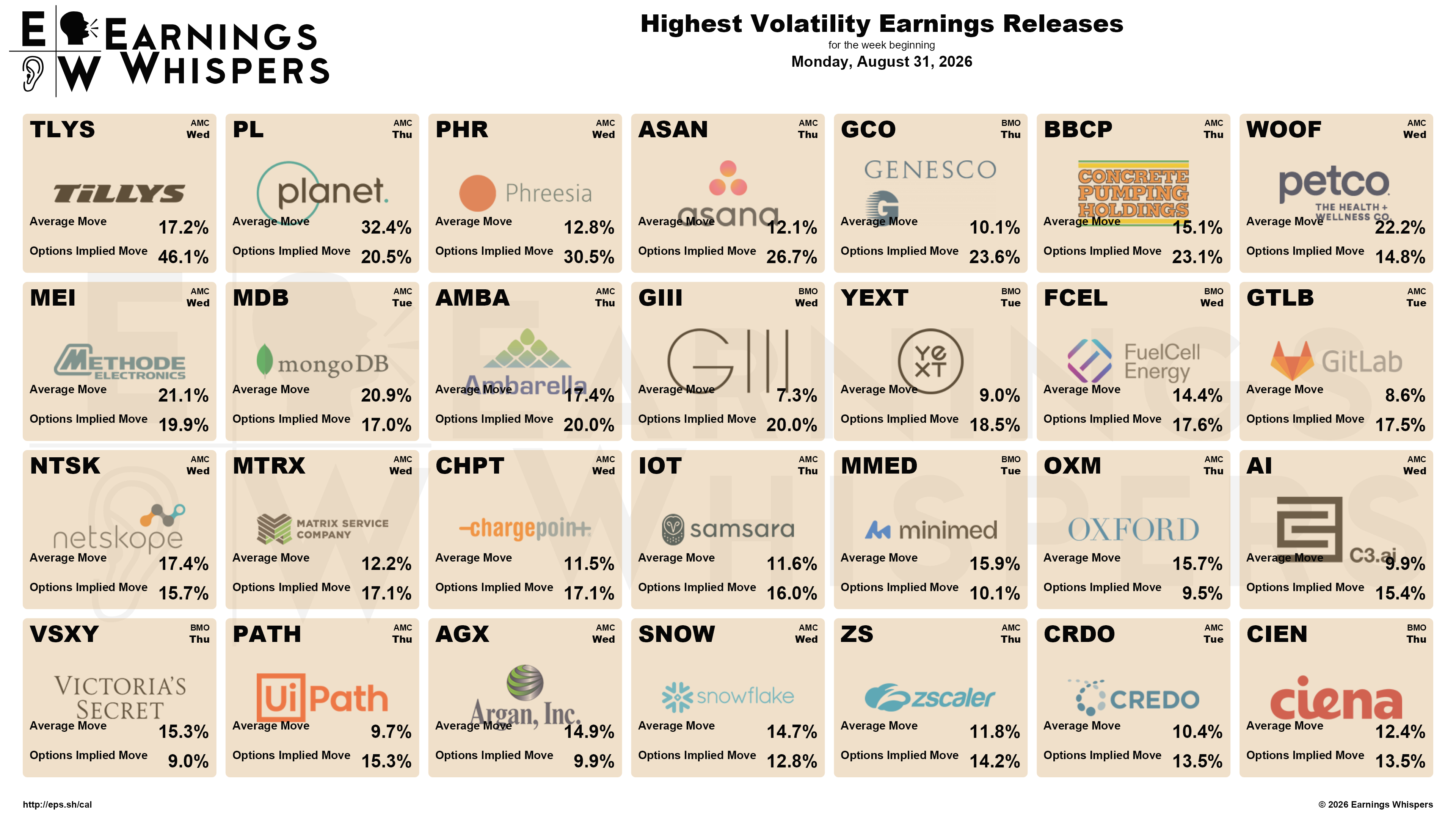
Credo Technology Group (CRDO) is set to report earnings on Tuesday, September 1, 2026, at roughly 4:05 PM ET. Wall Street is looking for $1.07 per share on revenue of $470.73 million, which would be a jaw-dropping 111.0% jump in sales from a year ago, though the whisper number is running hotter at $1.20 per share. Management already told us to expect revenue between $465.00 million and $475.00 million. Here's the funny part: investors are feeling bearish walking in, yet 79.5% of them still expect a beat. Short sellers have mostly run for the hills, cutting their bets by 45.3% since last quarter, while the stock has quietly climbed 6.3% since its last report and now sits 33.4% above its 200 day average of $174.42. Analysts have been nudging estimates higher, option traders are bracing for a 13.5% swing (the stock usually moves about 10.4%), and on August 24 someone scooped up 1,223 of the $230.00 calls expiring September 4, a clear bet that the pop is coming.
The real story is optical. Last quarter management raised the bar in a big way, lifting full-year FY27 growth guidance to over 80% and putting hard numbers on what they call an optical inflection worth more than $600 million, with three separate product lines each expected to top $100 million in the back half of the year. They closed the roughly $750 million Dust Photonics deal to beef up their silicon photonics lineup, posted record free cash flow of $177.5 million, and grew their list of big customers to four. The catch is timing. The first half of this year is only expected to grow modestly, so the fireworks are loaded into the second half. Watch for tight supply of advanced chips and lasers, plus heavy reliance on a top customer that made up 34% of sales. If they hit their marks and sound confident about that H2 ramp, this one keeps flying.
Dell's AI Rocket Ship Now Has One Problem: It Can't Build Fast Enough
Dell Technologies (DELL) is locked in to report earnings on Tuesday, September 1, 2026, right around 4:05 PM ET. Wall Street is looking for $4.98 per share on $45.34 billion in revenue, which would be a whopping 52.3% jump from last year, though the smart money whisper is a touch higher at $5.05. Dell itself guided for about $4.80 and $44 to $45 billion, so it left itself room to look like a hero. The crowd is feeling good, with 74.2% betting on a beat, and short sellers have run for the exits, cutting their bets by 34.5% since last quarter. The stock has drifted up 9.1% since the last report and now sits a jaw-dropping 86.8% above its 200 day average of $244.22. Options traders are bracing for an 11.4% swing, roughly in line with the 12.7% average lately, and on August 12 someone scooped up 5,242 of the $600 calls expiring September 18, a clear bet that this thing keeps climbing.
Here is the real story heading in. Last quarter was Dell's best and most confident call in a long stretch, with revenue up 88%, earnings up 214%, and management yanking its full-year revenue outlook up by about $27 billion and earnings by roughly $5. The AI backlog hit a record $51.3 billion, and the fun new twist is that AI is now dragging along regular servers too, since every AI request needs plain old computing power to run it. The one thing to watch is that Dell's biggest headache is no longer finding buyers, it is finding enough memory chips to fill the orders. So the question this quarter is simple: can Dell keep feeding a monster appetite when the pantry is running tight?
Ciena's AI Boom: From Prototype to Payday
Ciena (CIEN) reports before the bell on Thursday, September 3, 2026, around 7:00 AM ET. Wall Street is looking for $1.73 per share on $1.64 billion in revenue, a hefty 34.5% jump from a year ago, but the smart money whisper is even juicier at $1.85. Management had guided revenue to $1.58 billion to $1.68 billion, so they've set the bar and the crowd expects them to hop right over it, with 80.6% betting on a beat. Here's the head-scratcher: even as short sellers headed for the exits, cutting their bets by 35.5%, the stock has slid 31.5% from where it opened after last quarter's report and now sits just 1.6% above its 200 day average of $372.64. Estimates keep marching higher, and options traders are bracing for a wild 13.5% swing, right in line with the roughly 12.4% moves this stock has been serving up lately. One curious wrinkle: on August 18 someone scooped up 4,040 of the $265 puts expiring September 25, a notable bearish bet worth watching.
The story here is momentum, plain and simple. Last quarter Ciena raised its full-year outlook for the third straight time, lifting revenue guidance to $6.3 billion and bumping up both gross and operating margins, while earnings nearly quadrupled from a year earlier to $1.64. The real headline was landing the industry's first multi-rail HyperRail order from a big hyperscaler, turning what used to be a someday science project into real dollars starting in 2027. Their data center routing business is on fire, up 88% as a second cloud giant signed on and a third tests in the lab, and backlog swelled to $7.7 billion. The only real gripe is a good one to have: demand is running so hot that parts shortages are capping how much they can actually ship, and management hinted at a slight margin dip in the fourth quarter. Bottom line, this is a company that can't make product fast enough, so all eyes will be on whether the AI-fueled party keeps rolling.
Palo Alto Eyes Another Beat as AI Fears Fade and Firewalls Roar Back
Palo Alto Networks (PANW) is set to report earnings on Tuesday, September 1, 2026 at roughly 4:05 PM ET, and Wall Street is leaning bullish. The consensus calls for $0.98 per share on $3.35 billion in revenue, a chunky 32.1% jump from a year ago, while the whisper number is a touch higher at $1.02. Management guided to $0.96 to $0.98 per share on $3.35 to $3.36 billion. A full 72% of investors expect a beat, and it is easy to see why: short sellers have run for the exits, cutting their bets by 19.9% since last quarter, while the stock has climbed 30.4% and now sits a heady 61.9% above its 200 day average of $229.52. One flag for the cautious crowd is that overall earnings estimates have actually drifted lower since last quarter. Options traders are bracing for a 9.9% swing, roughly double the 5.1% move this stock usually delivers, and on August 12 someone scooped up 1,971 of the $320 November calls, a clear vote for more upside.
Here is the real story: last quarter was a home run across the board, with guidance raised on basically every metric that matters. The AI-powered security business grew like a weed, next-gen firewall bookings jumped about 40% for the best hardware quarter in a decade, and even the giant CyberArk deal beat internal targets in its first quarter, pulling synergies forward three to six months. Boss Nikesh Arora went as far as declaring the whole 'AI will kill cybersecurity' fear officially dead, and new demand drivers like the 'Mythos' frontier-AI threat sparked over 1,200 customer conversations. The one thing to watch is the messy margin optics, since piling in acquisitions dragged the company to a small reported loss and pumped up stock-based pay to 17% of revenue. That is a temporary integration hangover, not a crack in the business, so the key question Tuesday is whether that torrid momentum keeps rolling.
HPE Fires on All Cylinders, But Watch the Memory Chip Speed Bump
Hewlett Packard Enterprise (HPE) steps up to the earnings plate on Wednesday, September 2, 2026 at about 4:05 PM ET, and Wall Street is feeling good about it. Analysts expect $0.94 per share on revenue of $12.12 billion, a hefty 32.7% jump from a year ago, though the Earnings Whisper number nudges a touch higher at $0.96. That would clear the company's own guidance of $0.88 to $0.93 on sales of $11.5 to $12.1 billion, and a solid 73.7% of investors are betting on a beat. Estimates have been climbing since last quarter, short sellers have backed off by 12.1%, and even after drifting 17% lower since the last report, the stock still sits a commanding 61.1% above its 200 day average of $32.48. Options traders are bracing for an 11.9% swing, a bit hotter than the usual 6.5% move, and one trader recently scooped up 6,414 of the $37 puts expiring in January, a hedge worth keeping an eye on.
Last quarter was a genuine home run. Management yanked full-year earnings guidance up more than 40%, nearly doubled its cash flow outlook, and pulled its long-term targets a full two years ahead of schedule. Orders more than doubled, backlog hit a record, and old-school servers are flying off the shelves thanks to AI demand, with fresh trophy wins like Lowe's and the Dallas Cowboys. Selling off its H3C stake brought in $1.4 billion and speeds up debt paydown, which unlocks bigger returns to shareholders. The one real cloud over the sunshine is memory chips. Tight and pricey DRAM and NAND supply is the bottleneck holding back how fast HPE can turn all that demand into sales, and it is expected to linger through next year. Bottom line: demand is not the problem, getting enough parts is, so listen closely for any update on that squeeze.
Snowflake's AI Snowball Is Rolling Downhill Fast
Snowflake (SNOW) drops its earnings after the bell on Wednesday, September 2, 2026, right around 4:05 PM ET. Wall Street is looking for $0.45 per share on $1.47 billion in revenue, which would be a healthy 28.4% jump from last year, though the whisper number is a spicier $0.51. Management guided for revenue of about $1.42 billion, so the bar is set. The crowd is feeling good here, with 83.3% of investors betting on a beat. Short sellers have backed off 3.4% since last quarter, and the stock has been on a tear, drifting 38.4% higher since the last report and now sitting a lofty 50.8% above its 200 day moving average of $217.49. Analysts have been nudging their estimates up too. Options traders are bracing for a 12.8% swing, which is actually tame compared to the 14.7% average move lately, so buckle up. One eyebrow raiser: on Friday, August 14, someone scooped up 1,438 of the $200 puts expiring September 18, a small hedge against all this optimism.
Here's the real story going into the print. Last quarter was a clear turning point, with product revenue growth actually speeding up to 34% and management bumping their full year guide higher just three months after setting it, a rare move that screams confidence. The star of the show is Cortex Code, their new AI coding tool that launched in February and is already in more than 7,100 accounts, and it was the single biggest reason for the raised outlook. Add in a doubled $6 billion AWS deal, an expanded OpenAI partnership, and fatter margins, and the momentum is real. The things to keep half an eye on: AI products carry thinner margins than the core business, new customer signups slowed a touch, and co-founder Benoit Dageville is stepping back from daily operations. But none of that has dented the story so far, and if COCO keeps snowballing, this one could keep melting the bears.
NIO: The Turnaround Is Real, But Watch the Cost Squeeze
NIO reports before the bell on Tuesday, September 1, 2026 at around 6:00 AM ET, and Wall Street is bracing for a loss of $0.07 per share on $4.78 billion in revenue. That top line would be a whopping 80.1% jump from a year ago, though our Earnings Whisper number is a slightly gloomier loss of $0.09. Management guided revenue to a range of $4.75 billion to $4.99 billion. Here is the fun part: investors are walking in nervous, yet nearly two thirds of them still think NIO will beat. Short sellers have quietly backed off, cutting their bets by 7.7% since last quarter, even as the stock has slid 26.2% from its post-earnings pop and now sits 17.2% below its 200 day average of $5.28. Estimates, meanwhile, have crept higher. Options traders are betting on a 10.4% swing, more than double the 4.6% NIO has actually delivered lately, and on August 21 someone snapped up 20,259 of the $4.00 calls expiring September 18. Somebody is feeling brave.
The real story is a company that has quietly flipped from cash-burning growth machine to something that actually makes money. Deliveries nearly doubled last quarter, gross margin hit 19%, and NIO booked its second straight quarter of non-GAAP profit while cash piled up to RMB48.2 billion. New products are firing on all cylinders, with the flagship ES9 SUV and the roomy Onvo L80 pulling in orders rather than stealing them from each other. The one cloud is rising costs. Pricier memory chips, lithium, copper, and aluminum are adding over RMB10,000 to every vehicle starting this quarter, which nudged the full-year margin target down to roughly 17 to 18%. Bottom line: the momentum is genuine and hard to ignore, but keep an eye on whether those cost pressures take a bite out of the profit story that has everyone watching.
SAIC Eyes a Turnaround, But Wall Street Wants Proof
Science Applications International (SAIC) is set to report earnings on Monday, August 31, 2026 at roughly 7:05 AM ET. Wall Street is looking for $2.25 per share on $1.75 billion in revenue, which would be a slight 1.1% dip from last year, but the whisper number is running hotter at $2.56. Investors are feeling gloomy heading in, yet oddly enough 62.5% still expect a beat, so the mood is more nervous than negative. Short sellers have backed off by 6.0% since last quarter while the stock has quietly climbed 4.8% to sit a healthy 22.3% above its 200 day average of $102.97. Analysts have nudged estimates higher too. Options traders are bracing for a 7.1% swing, though this stock has thrown around 9.2% moves lately, so buckle up. And on Friday, August 28, someone snapped up 689 of the $130 calls expiring September 18, a bet that the good times keep rolling.
Here is the real story: last quarter was the first time in a while SAIC actually grew, with organic revenue ticking up 0.5% after several quarters of shrinking. Management bumped up both margin and profit guidance, notched a $200 million DHS win, and landed a big role on the new $10 billion Evolve contract vehicle. The catch is that they refused to raise the revenue outlook, blaming election-year budget jitters, and some tough recompete losses are stacked in the back half of the year. Add a shakeup in civilian leadership and you get a company that looks like it is turning the corner but is not ready to pop the champagne just yet. The market will be watching to see if this bounce is the real deal or just a nice quarter.
MongoDB Heads Into Earnings Hot, But the Bar Is Sky-High
MongoDB (MDB) steps up to the plate after the closing bell on Tuesday, September 1, 2026, at roughly 4:05 PM ET. Wall Street is looking for $1.61 per share on revenue of $733.61 million, which would be a healthy 24.0% jump from a year ago, though the whisper number is running a touch hotter at $1.67. Management guided for $1.58 to $1.61 per share on $729 to $734 million, so they have basically drawn the target and dared themselves to hit it. The crowd is feeling good, with 84.6% betting on a beat. Short sellers have backed off in a big way, cutting their bets by 27.1% since last quarter, while the stock has climbed 27.4% and now sits a lofty 30.8% above its 200 day average of $341.43. One yellow flag for the optimists: overall estimates have actually been nudged lower since last time out. Option traders are bracing for a 17.0% swing, and this stock has averaged an even wilder 20.9% move lately, so buckle up. Notably, on Friday someone scooped up 1,608 of the $490 calls expiring September 4, a clear bet that the party keeps going.
Here is the setup. Last quarter was arguably MongoDB's cleanest home run in a year, with growth reaccelerating to 25% and management raising its full-year outlook across the board, from total revenue to Atlas to margins. Atlas, the cloud engine, hit a $2 billion run rate and just posted a record quarter of net-new growth, while free cash flow nearly doubled. The AI story is finally getting real too, with MongoDB positioning itself as the 'memory' behind AI agents at names like Adobe and Zomato, plus a fresh crew of heavy-hitting sales and product bosses now in their seats. The one soft spot to watch is the enterprise licensing bucket, which management warned will be roughly flat in the back half against some brutal comparisons, and gross margins ticked down a hair on mix. Bottom line: the company is firing on most cylinders, but with expectations this rich, anything short of another blowout could leave the bulls exposed.
Tilly's: From Turnaround to Takeoff, But the Easy Wins Are Behind It
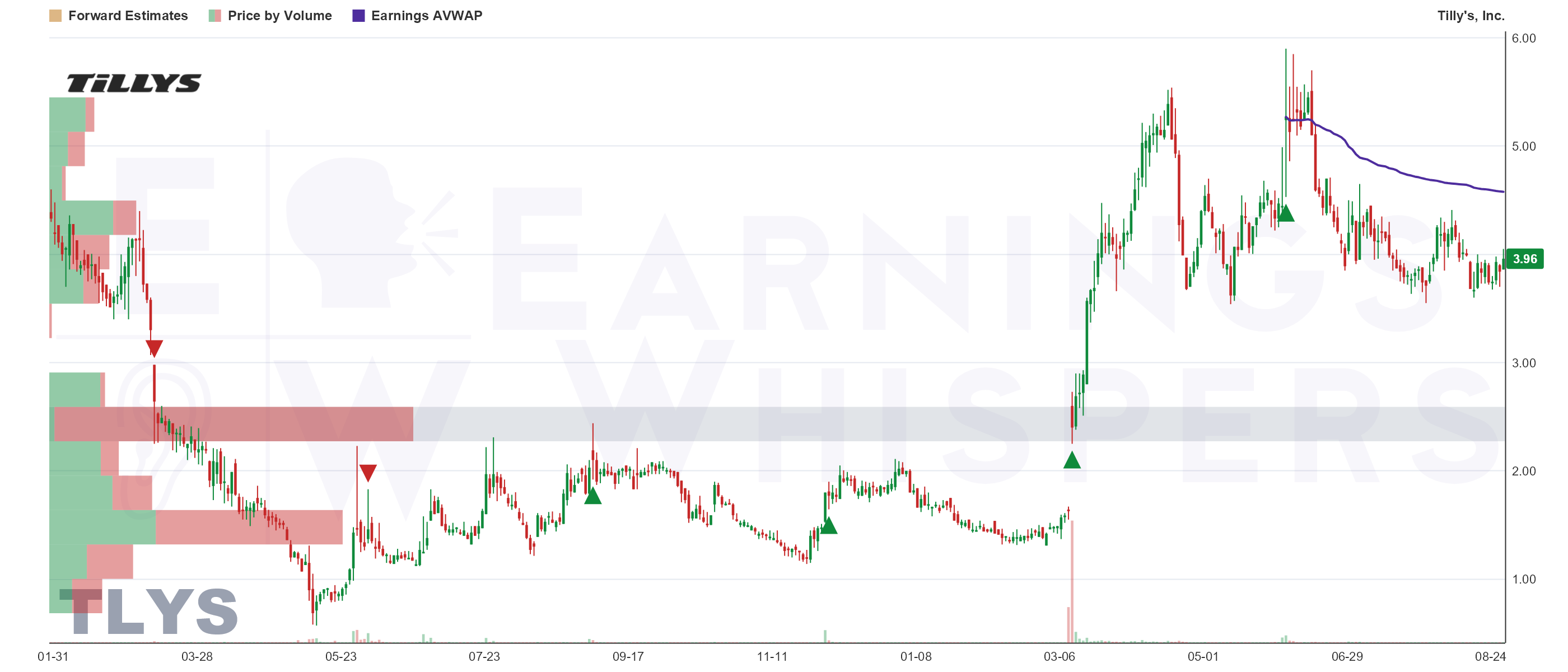
Tilly's (TLYS) steps up to the earnings plate on Wednesday, September 2, 2026 at about 4:05 PM ET. Wall Street is looking for $0.17 per share on $157.00 million in revenue, which would be 3.8% growth from a year ago, and it lands neatly inside management's own guide of $0.13 to $0.20 per share on $154.00 million to $160.00 million. Investors are feeling good walking in the door, though nobody is expecting fireworks beyond the plan. Short sellers have nudged their bets up 3.5% since last quarter, yet the stock has slid 24.4% from where it opened after the last report and still sits 26.5% above its 200 day average of $3.13. Analysts have quietly raised their numbers, and with the shares swinging an average of 17.2% after recent reports, buckle up. One trader clearly likes the odds, scooping up 860 of the $5.00 calls expiring October 16 on August 19.
The real story here is a turnaround that has gone from crawling to sprinting. Last quarter comps rocketed 22.9%, margins hit records, and the company guided to actual profit after a long run of losses, even building cash for the first time since 2021. Management is now talking about opening stores instead of shutting them. The catch for this report is that the easy comparisons are gone. Guidance calls for comps to cool to 6% to 10% as Tilly's laps last year's stronger numbers, margin gains are expected to flatten, and stock-outs on hot items plus a jittery shopper could bite. The trajectory is still up, just at a more grown-up pace, so watch the tone on holiday allocation and store expansion for the next leg.
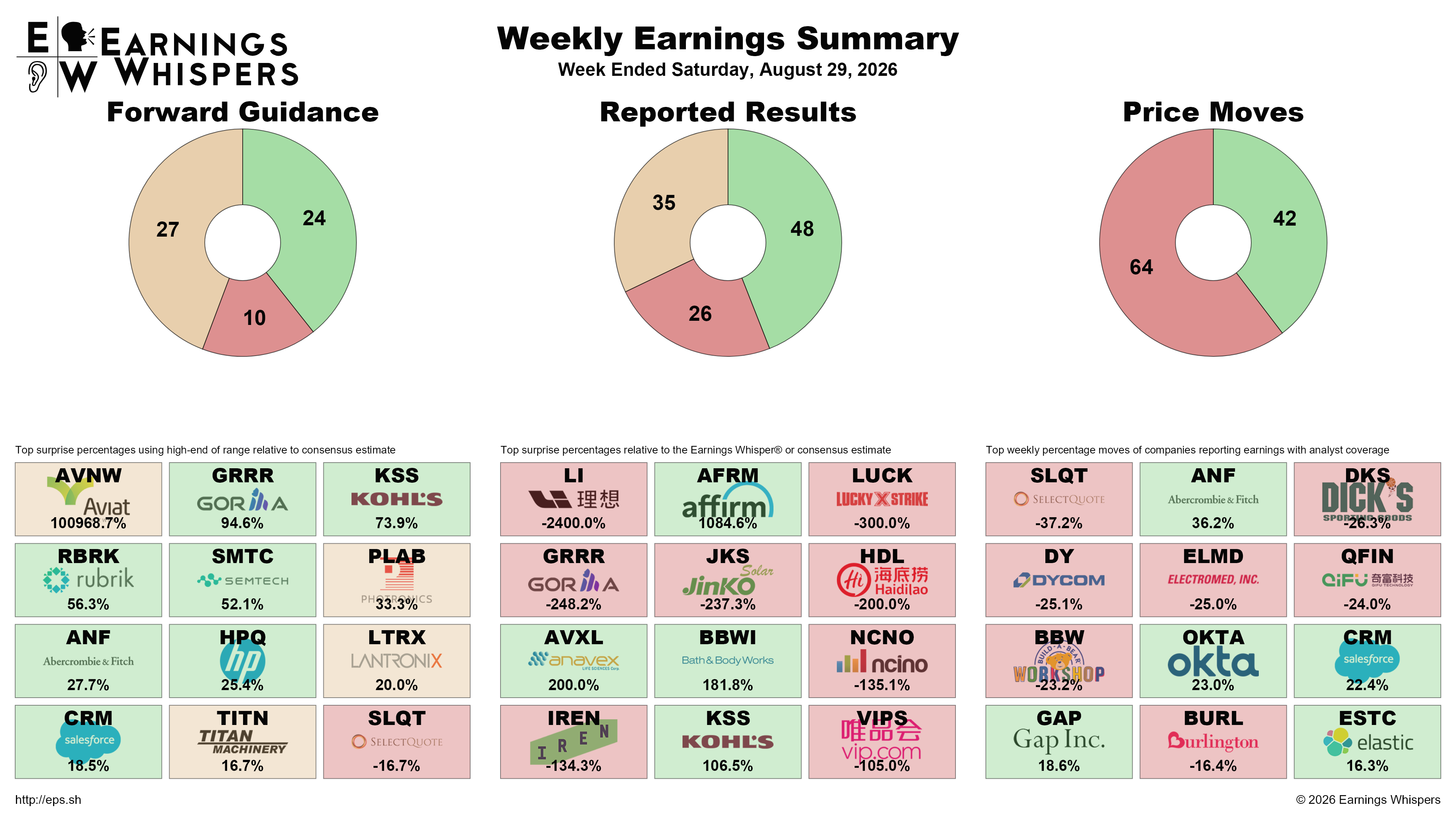
AI Boom Fuels the Giants While a New Cost Villain Emerges: Memory Chips
It was a week where the artificial intelligence gold rush kept minting money, but a sneaky new troublemaker crept into the story: the soaring cost of memory chips. Nvidia stole the show once again, posting a jaw-dropping $96 billion quarter and guiding to $108 billion next, as demand for its new Vera Rubin chips came in from every major cloud player on the planet. Yet even the king of AI couldn't dodge the memory-price spike, admitting for the first time in ages that its fat profit margins would shrink toward a low of 71 to 72 percent early next year. That same villain popped up at HP and Best Buy, where pricier memory pushed up the cost of laptops and PCs. HP still managed to raise its profit outlook for the second straight time on the back of booming AI-ready computers, while Best Buy delivered a genuine surprise, lifting every line of its full-year guidance after strong TV sales (helped by an exclusive new RGB launch) and a comeback in appliances. Salesforce rounded out the tech winners with its cleanest quarter in years, raising its revenue forecast as its AI "agents" business rocketed to $1.5 billion in recurring revenue.
Off the tech stage, Canada's big banks quietly stacked up records, all singing a similar tune of rising returns even as fresh U.S.-Canada trade tariffs cast a shadow. Royal Bank rang up a record $6 billion in earnings, TD hit its return-on-equity target ahead of schedule while planning 100 new U.S. stores, and BMO extended a seven-quarter comeback with its American lending business finally pivoting back to growth. Over in retail's discount aisles, the message was clear: shoppers are hunting for bargains. Dollar General and Dollar Tree both raised their profit forecasts as budget-strapped customers, and increasingly some wealthier ones, filled their carts, though both warned that fuel and freight costs would nibble at margins later in the year. The lone sour note came from Dick's Sporting Goods, which snapped its winning streak with a painful guidance cut. While its core stores kept gaining ground, a flood of discounted sneakers across the industry and a stumbling turnaround at newly acquired Foot Locker forced management to brace investors for what it bluntly called "some pain" ahead.
Nvidia's Demand Surge Rolls On, But Memory Costs Nibble at Margins
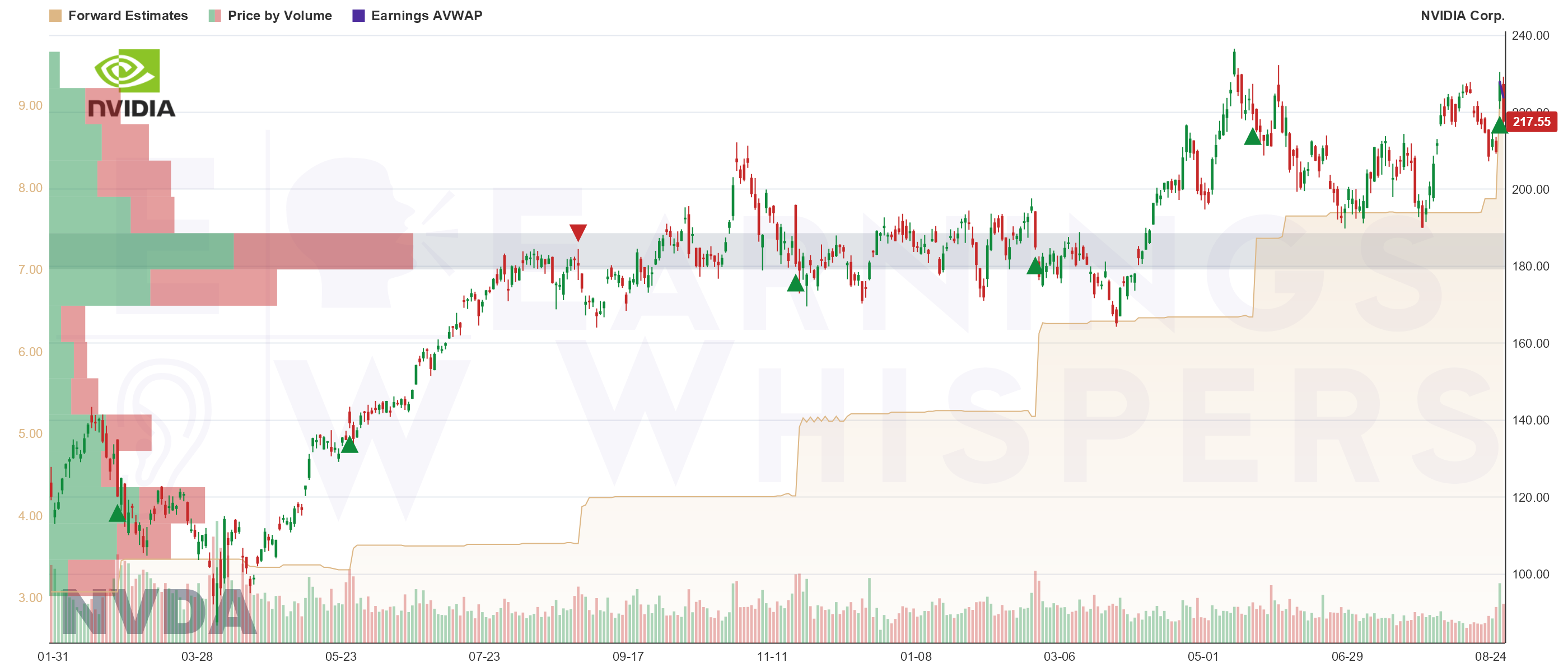
Nvidia (NVDA) crushed it again, posting earnings of $2.22 per share on revenue of $96.22 billion for the quarter ended July 2026, sailing past the $2.09 consensus and the $2.12 whisper number. That is a 4.72% beat on the bottom line, with revenue more than doubling from a year ago, up a jaw-dropping 105.85%. Even better, management guided the next quarter higher, calling for $2.32 to $2.47 per share on revenue between $105.84 billion and $110.16 billion, comfortably above the $2.37 and $103.88 billion Wall Street had penciled in. CEO Jensen Huang says AI has hit its inflection point and is now doing real, profitable work, and that his new Vera Rubin chips, now in full production, were built for exactly this moment. Translation: the party is not slowing down.
Here is the one catch worth watching. For the first time in a while, Nvidia is telling us profit margins are heading lower, from 75% today down to a trough of 71-72% by the fourth quarter, mostly because memory chips are getting pricey and the bill keeps climbing into next year. Everything else screams strength: data center revenue jumped to $89 billion, a fat new AWS deal adds two million more chips, and Nvidia now expects roughly 70% revenue growth next year, held back only because it literally cannot build fast enough. The one eyebrow-raiser is that Nvidia is pouring some $50 billion into the very AI labs buying its chips, which has folks whispering about circular money games. Bottom line, demand is booming, margins are taking a small step back, and Nvidia looks in charge for a while yet.
The Falcon Soars: CrowdStrike Just Had Its Best Quarter Ever
CrowdStrike (CRWD) posted fiscal Q2 2027 earnings of $0.31 per share on revenue of $1.47 billion, edging past Wall Street's $0.29 estimate and matching the Earnings Whisper number. Revenue climbed nearly 26% from a year ago, which now makes five straight quarters of speeding up rather than slowing down. Looking ahead, the company guided third quarter earnings to roughly $0.31 per share on $1.52 to $1.53 billion in revenue, and bumped its full-year outlook to $1.25 to $1.26 per share on $5.99 to $6.01 billion, both nudges above where they stood before. Founder and CEO George Kurtz didn't mince words, calling it "the best quarter in CrowdStrike's history" and pointing to record Falcon Flex results and record new business as proof the "Falcon is soaring." His pitch is simple: every company is racing to adopt AI, and someone has to keep it from getting hacked, and that someone is CrowdStrike.
The real headline is the money customers are committing for the first time, known as net new ARR, which hit an all-time record $333 million, up 51% from last year and blowing past the company's own forecast. That gave management the confidence to raise its full-year growth outlook for the second quarter in a row, this time by a hefty 6.3 percentage points on top of the 5.2 they added last quarter. Falcon Flex, the flexible buffet-style buying option customers love, more than doubled to $2.29 billion in ARR, with a record 935 new accounts signing on. Profit margins ticked up too. The only nitpicks are that these big raises set a high bar to keep clearing, and a chunk of the story rides on the AI security boom staying red hot. So far, though, there's not much to complain about.
Marvell's AI Engine Keeps Shifting Into Higher Gear
Marvell Technology (MRVL) posted earnings of $0.94 per share on record revenue of $2.74 billion for its fiscal second quarter ended July 2026. That topped the $2.71 billion revenue estimate and beat the $0.93 consensus profit forecast, though it came up a hair short of the $0.97 whisper number, a 3% miss that hardly dents the story. Revenue jumped a hefty 37% from a year ago. Looking ahead, the company guided third-quarter earnings to $1.05 to $1.15 per share on revenue of $2.99 billion to $3.31 billion, right around the $1.06 and $3.03 billion Wall Street was penciling in. CEO Matt Murphy credited a data center business firing on all cylinders, where sales grew a blistering 46%, and said AI bookings are so strong the company is raising its revenue outlook for both this year and next.
Here is the part clients will really want to circle: this is now two quarters in a row of Marvell hiking its targets, and growth is speeding up even off a bigger base. The headline catalyst is a landmark deal and warrant with a major hyperscaler, widely tied to Google's chip ecosystem, framed at a jaw-dropping $120 billion in potential revenue over roughly six and a half years. Its custom silicon business is set to more than double next year, and profit margins are climbing toward the 38 to 40% target range by year end. There are a couple of small potholes, namely a lumpy comms segment guided lower for the third quarter and a slight margin pinch from the custom ramp, but these are minor speed bumps next to a company that keeps outrunning its own guidance. Mark your calendar for the October 6 Investor Day, where management is likely to hand out even more good news.
Salesforce Stops Talking About AI Money and Starts Making It
Salesforce just posted one of its best quarters in a while, banking $5.90 per share on $11.35 billion in revenue. Wall Street was only bracing for $3.27, so this was a blowout of about 71 percent, with sales up nearly 11 percent from a year ago. Better yet, the company raised its outlook for the rest of the year, now guiding to $16.67 to $16.71 per share on $46.1 to $46.4 billion in revenue, well above the old forecast and what analysts expected. CEO Marc Benioff, never one for a quiet mic, called it one of their best quarters ever and bragged that their AI and data business is about to cross $4 billion in recurring revenue. For once, the hype has some receipts behind it.
Here is the real story: the AI bets are actually paying the bills now. AgentForce, their AI assistant product, nearly tripled its recurring revenue to $1.5 billion in three quarters, cash flow jumped 81 percent, and the key backlog measure (CRPO) accelerated to 14 percent growth, which is exactly the kind of pickup skeptics wanted to see. A shiny new CloudForce partnership with Anthropic and a massive US Army deal add to the buzz. That said, it is not all sunshine. Profit margins stayed flat, a fresh $100 million currency headwind is nipping at the outlook, and part of the guidance bump came from acquisitions rather than pure organic growth. Older pieces like Tableau and commerce are still soft. Bottom line: momentum is clearly building, just keep one eye on whether the margins ever join the party.
XPeng Sells More Cars, Builds Robots, Still Loses Money
XPeng just posted a loss of $0.21 per share on revenue of $2.91 billion for the quarter ending June 2026, coming up a touch short of the $2.95 billion Wall Street was hoping for. On the bright side, sales still grew a healthy 14% versus a year ago. The bigger head-scratcher is the road ahead: management is guiding next quarter's revenue to between $3.23 billion and $3.48 billion, which sounds fine until you realize analysts were penciling in a much chunkier $3.85 billion. In plain English, the company is telling you to expect less than the street was banking on, and that gap is the thing to watch.
Here is what is really going on. XPeng, the Chinese maker of tech-loaded electric cars for the country's growing middle class, is actually selling a lot more vehicles again, with deliveries jumping 65% from the prior quarter and overseas sales topping 20,000 units for the first time. So demand is not the problem. The problem is the company slipped back into the red with a roughly $185 million loss after finally turning its first profit late last year, and profit margins on each car got squeezed as it switches to newer models. Meanwhile, XPeng is swinging for the fences on the future, raising about $900 million for its humanoid robot business at a record valuation and pushing self-driving software and robotaxis. Exciting stuff, but for now it is burning cash to get there, so the story is momentum up, wallet still open.
Outside of tech, the consumer is the story worth watching, and it is a tale of two closets. Lululemon walks in under a genuine cloud, with the mood distinctly gloomy and last quarter's results still weighing on the stock, while fellow apparel name PVH faces its own chilly reception. Contrast that with Victoria's Secret, G-III Apparel, and discount darlings Five Below and Ollie's Bargain Outlet, all of which have the crowd leaning optimistic that bargain-hunting shoppers are still opening their wallets. Keep an eye on Medtronic in healthcare, where the setup looks reassuringly solid, and on the staples corner, where Campbell's and Brown-Forman are the wallflowers nobody seems excited to dance with. It is a week where the confident names could reward the faithful and the wobbly ones could get punished, so expect fireworks in both directions.
Broadcom's AI Rocket Faces a Skeptical Crowd
Broadcom (AVGO) steps up to the earnings plate on Wednesday, September 2, 2026 at about 4:15 PM ET. Wall Street is looking for $3.22 per share on $29.47 billion in revenue, which would be a jaw-dropping 84.7% jump from a year ago, though the smart money whisper is a touch higher at $3.35. Management itself guided to roughly $29.40 billion, so the bar is set. Here's the funny part: despite that monster growth, investors are actually bearish heading in, even while 84.4% of them expect the company to beat. Short sellers have piled on 5.6% more since last quarter, and the stock has drifted down 9.8% since its last earnings pop, leaving it hovering right around its 200 day average of $369.33. Option traders are bracing for an 8.3% swing, roughly in line with the 8.6% average move lately, and on Friday someone snapped up 14,319 of the $370 calls expiring September 4, betting on fireworks.
The backdrop here is nothing short of an AI gold rush. Last quarter Broadcom lifted its full-year AI chip revenue target to $56 billion, up about 180%, and stacked up more than $30 billion in fresh AI orders against just $10.8 billion actually shipped. They now count six big custom-chip customers, including named multi-gigawatt deals with Google, Anthropic, OpenAI and Meta, plus a giant new financing platform with Apollo and Blackstone aimed at building out more than 20 gigawatts of computing power. Software and even the sleepy non-AI chip business are waking up too. The one thing to watch is gross margin ticking down to about 74%, but that's simply because the booming AI mix carries thinner margins, not because anything is breaking. Oh, and there's a new CFO settling in. Bottom line: the story keeps getting bigger, and the bears are daring management to prove it again.
Credo Heads Into Earnings With Rockets Strapped On
Credo Technology Group (CRDO) is set to report earnings on Tuesday, September 1, 2026, at roughly 4:05 PM ET. Wall Street is looking for $1.07 per share on revenue of $470.73 million, which would be a jaw-dropping 111.0% jump in sales from a year ago, though the whisper number is running hotter at $1.20 per share. Management already told us to expect revenue between $465.00 million and $475.00 million. Here's the funny part: investors are feeling bearish walking in, yet 79.5% of them still expect a beat. Short sellers have mostly run for the hills, cutting their bets by 45.3% since last quarter, while the stock has quietly climbed 6.3% since its last report and now sits 33.4% above its 200 day average of $174.42. Analysts have been nudging estimates higher, option traders are bracing for a 13.5% swing (the stock usually moves about 10.4%), and on August 24 someone scooped up 1,223 of the $230.00 calls expiring September 4, a clear bet that the pop is coming.
The real story is optical. Last quarter management raised the bar in a big way, lifting full-year FY27 growth guidance to over 80% and putting hard numbers on what they call an optical inflection worth more than $600 million, with three separate product lines each expected to top $100 million in the back half of the year. They closed the roughly $750 million Dust Photonics deal to beef up their silicon photonics lineup, posted record free cash flow of $177.5 million, and grew their list of big customers to four. The catch is timing. The first half of this year is only expected to grow modestly, so the fireworks are loaded into the second half. Watch for tight supply of advanced chips and lasers, plus heavy reliance on a top customer that made up 34% of sales. If they hit their marks and sound confident about that H2 ramp, this one keeps flying.
Dell's AI Rocket Ship Now Has One Problem: It Can't Build Fast Enough
Dell Technologies (DELL) is locked in to report earnings on Tuesday, September 1, 2026, right around 4:05 PM ET. Wall Street is looking for $4.98 per share on $45.34 billion in revenue, which would be a whopping 52.3% jump from last year, though the smart money whisper is a touch higher at $5.05. Dell itself guided for about $4.80 and $44 to $45 billion, so it left itself room to look like a hero. The crowd is feeling good, with 74.2% betting on a beat, and short sellers have run for the exits, cutting their bets by 34.5% since last quarter. The stock has drifted up 9.1% since the last report and now sits a jaw-dropping 86.8% above its 200 day average of $244.22. Options traders are bracing for an 11.4% swing, roughly in line with the 12.7% average lately, and on August 12 someone scooped up 5,242 of the $600 calls expiring September 18, a clear bet that this thing keeps climbing.
Here is the real story heading in. Last quarter was Dell's best and most confident call in a long stretch, with revenue up 88%, earnings up 214%, and management yanking its full-year revenue outlook up by about $27 billion and earnings by roughly $5. The AI backlog hit a record $51.3 billion, and the fun new twist is that AI is now dragging along regular servers too, since every AI request needs plain old computing power to run it. The one thing to watch is that Dell's biggest headache is no longer finding buyers, it is finding enough memory chips to fill the orders. So the question this quarter is simple: can Dell keep feeding a monster appetite when the pantry is running tight?
Ciena's AI Boom: From Prototype to Payday
Ciena (CIEN) reports before the bell on Thursday, September 3, 2026, around 7:00 AM ET. Wall Street is looking for $1.73 per share on $1.64 billion in revenue, a hefty 34.5% jump from a year ago, but the smart money whisper is even juicier at $1.85. Management had guided revenue to $1.58 billion to $1.68 billion, so they've set the bar and the crowd expects them to hop right over it, with 80.6% betting on a beat. Here's the head-scratcher: even as short sellers headed for the exits, cutting their bets by 35.5%, the stock has slid 31.5% from where it opened after last quarter's report and now sits just 1.6% above its 200 day average of $372.64. Estimates keep marching higher, and options traders are bracing for a wild 13.5% swing, right in line with the roughly 12.4% moves this stock has been serving up lately. One curious wrinkle: on August 18 someone scooped up 4,040 of the $265 puts expiring September 25, a notable bearish bet worth watching.
The story here is momentum, plain and simple. Last quarter Ciena raised its full-year outlook for the third straight time, lifting revenue guidance to $6.3 billion and bumping up both gross and operating margins, while earnings nearly quadrupled from a year earlier to $1.64. The real headline was landing the industry's first multi-rail HyperRail order from a big hyperscaler, turning what used to be a someday science project into real dollars starting in 2027. Their data center routing business is on fire, up 88% as a second cloud giant signed on and a third tests in the lab, and backlog swelled to $7.7 billion. The only real gripe is a good one to have: demand is running so hot that parts shortages are capping how much they can actually ship, and management hinted at a slight margin dip in the fourth quarter. Bottom line, this is a company that can't make product fast enough, so all eyes will be on whether the AI-fueled party keeps rolling.
Palo Alto Eyes Another Beat as AI Fears Fade and Firewalls Roar Back
Palo Alto Networks (PANW) is set to report earnings on Tuesday, September 1, 2026 at roughly 4:05 PM ET, and Wall Street is leaning bullish. The consensus calls for $0.98 per share on $3.35 billion in revenue, a chunky 32.1% jump from a year ago, while the whisper number is a touch higher at $1.02. Management guided to $0.96 to $0.98 per share on $3.35 to $3.36 billion. A full 72% of investors expect a beat, and it is easy to see why: short sellers have run for the exits, cutting their bets by 19.9% since last quarter, while the stock has climbed 30.4% and now sits a heady 61.9% above its 200 day average of $229.52. One flag for the cautious crowd is that overall earnings estimates have actually drifted lower since last quarter. Options traders are bracing for a 9.9% swing, roughly double the 5.1% move this stock usually delivers, and on August 12 someone scooped up 1,971 of the $320 November calls, a clear vote for more upside.
Here is the real story: last quarter was a home run across the board, with guidance raised on basically every metric that matters. The AI-powered security business grew like a weed, next-gen firewall bookings jumped about 40% for the best hardware quarter in a decade, and even the giant CyberArk deal beat internal targets in its first quarter, pulling synergies forward three to six months. Boss Nikesh Arora went as far as declaring the whole 'AI will kill cybersecurity' fear officially dead, and new demand drivers like the 'Mythos' frontier-AI threat sparked over 1,200 customer conversations. The one thing to watch is the messy margin optics, since piling in acquisitions dragged the company to a small reported loss and pumped up stock-based pay to 17% of revenue. That is a temporary integration hangover, not a crack in the business, so the key question Tuesday is whether that torrid momentum keeps rolling.
HPE Fires on All Cylinders, But Watch the Memory Chip Speed Bump
Hewlett Packard Enterprise (HPE) steps up to the earnings plate on Wednesday, September 2, 2026 at about 4:05 PM ET, and Wall Street is feeling good about it. Analysts expect $0.94 per share on revenue of $12.12 billion, a hefty 32.7% jump from a year ago, though the Earnings Whisper number nudges a touch higher at $0.96. That would clear the company's own guidance of $0.88 to $0.93 on sales of $11.5 to $12.1 billion, and a solid 73.7% of investors are betting on a beat. Estimates have been climbing since last quarter, short sellers have backed off by 12.1%, and even after drifting 17% lower since the last report, the stock still sits a commanding 61.1% above its 200 day average of $32.48. Options traders are bracing for an 11.9% swing, a bit hotter than the usual 6.5% move, and one trader recently scooped up 6,414 of the $37 puts expiring in January, a hedge worth keeping an eye on.
Last quarter was a genuine home run. Management yanked full-year earnings guidance up more than 40%, nearly doubled its cash flow outlook, and pulled its long-term targets a full two years ahead of schedule. Orders more than doubled, backlog hit a record, and old-school servers are flying off the shelves thanks to AI demand, with fresh trophy wins like Lowe's and the Dallas Cowboys. Selling off its H3C stake brought in $1.4 billion and speeds up debt paydown, which unlocks bigger returns to shareholders. The one real cloud over the sunshine is memory chips. Tight and pricey DRAM and NAND supply is the bottleneck holding back how fast HPE can turn all that demand into sales, and it is expected to linger through next year. Bottom line: demand is not the problem, getting enough parts is, so listen closely for any update on that squeeze.
Snowflake's AI Snowball Is Rolling Downhill Fast
Snowflake (SNOW) drops its earnings after the bell on Wednesday, September 2, 2026, right around 4:05 PM ET. Wall Street is looking for $0.45 per share on $1.47 billion in revenue, which would be a healthy 28.4% jump from last year, though the whisper number is a spicier $0.51. Management guided for revenue of about $1.42 billion, so the bar is set. The crowd is feeling good here, with 83.3% of investors betting on a beat. Short sellers have backed off 3.4% since last quarter, and the stock has been on a tear, drifting 38.4% higher since the last report and now sitting a lofty 50.8% above its 200 day moving average of $217.49. Analysts have been nudging their estimates up too. Options traders are bracing for a 12.8% swing, which is actually tame compared to the 14.7% average move lately, so buckle up. One eyebrow raiser: on Friday, August 14, someone scooped up 1,438 of the $200 puts expiring September 18, a small hedge against all this optimism.
Here's the real story going into the print. Last quarter was a clear turning point, with product revenue growth actually speeding up to 34% and management bumping their full year guide higher just three months after setting it, a rare move that screams confidence. The star of the show is Cortex Code, their new AI coding tool that launched in February and is already in more than 7,100 accounts, and it was the single biggest reason for the raised outlook. Add in a doubled $6 billion AWS deal, an expanded OpenAI partnership, and fatter margins, and the momentum is real. The things to keep half an eye on: AI products carry thinner margins than the core business, new customer signups slowed a touch, and co-founder Benoit Dageville is stepping back from daily operations. But none of that has dented the story so far, and if COCO keeps snowballing, this one could keep melting the bears.
NIO: The Turnaround Is Real, But Watch the Cost Squeeze
NIO reports before the bell on Tuesday, September 1, 2026 at around 6:00 AM ET, and Wall Street is bracing for a loss of $0.07 per share on $4.78 billion in revenue. That top line would be a whopping 80.1% jump from a year ago, though our Earnings Whisper number is a slightly gloomier loss of $0.09. Management guided revenue to a range of $4.75 billion to $4.99 billion. Here is the fun part: investors are walking in nervous, yet nearly two thirds of them still think NIO will beat. Short sellers have quietly backed off, cutting their bets by 7.7% since last quarter, even as the stock has slid 26.2% from its post-earnings pop and now sits 17.2% below its 200 day average of $5.28. Estimates, meanwhile, have crept higher. Options traders are betting on a 10.4% swing, more than double the 4.6% NIO has actually delivered lately, and on August 21 someone snapped up 20,259 of the $4.00 calls expiring September 18. Somebody is feeling brave.
The real story is a company that has quietly flipped from cash-burning growth machine to something that actually makes money. Deliveries nearly doubled last quarter, gross margin hit 19%, and NIO booked its second straight quarter of non-GAAP profit while cash piled up to RMB48.2 billion. New products are firing on all cylinders, with the flagship ES9 SUV and the roomy Onvo L80 pulling in orders rather than stealing them from each other. The one cloud is rising costs. Pricier memory chips, lithium, copper, and aluminum are adding over RMB10,000 to every vehicle starting this quarter, which nudged the full-year margin target down to roughly 17 to 18%. Bottom line: the momentum is genuine and hard to ignore, but keep an eye on whether those cost pressures take a bite out of the profit story that has everyone watching.
SAIC Eyes a Turnaround, But Wall Street Wants Proof
Science Applications International (SAIC) is set to report earnings on Monday, August 31, 2026 at roughly 7:05 AM ET. Wall Street is looking for $2.25 per share on $1.75 billion in revenue, which would be a slight 1.1% dip from last year, but the whisper number is running hotter at $2.56. Investors are feeling gloomy heading in, yet oddly enough 62.5% still expect a beat, so the mood is more nervous than negative. Short sellers have backed off by 6.0% since last quarter while the stock has quietly climbed 4.8% to sit a healthy 22.3% above its 200 day average of $102.97. Analysts have nudged estimates higher too. Options traders are bracing for a 7.1% swing, though this stock has thrown around 9.2% moves lately, so buckle up. And on Friday, August 28, someone snapped up 689 of the $130 calls expiring September 18, a bet that the good times keep rolling.
Here is the real story: last quarter was the first time in a while SAIC actually grew, with organic revenue ticking up 0.5% after several quarters of shrinking. Management bumped up both margin and profit guidance, notched a $200 million DHS win, and landed a big role on the new $10 billion Evolve contract vehicle. The catch is that they refused to raise the revenue outlook, blaming election-year budget jitters, and some tough recompete losses are stacked in the back half of the year. Add a shakeup in civilian leadership and you get a company that looks like it is turning the corner but is not ready to pop the champagne just yet. The market will be watching to see if this bounce is the real deal or just a nice quarter.
MongoDB Heads Into Earnings Hot, But the Bar Is Sky-High
MongoDB (MDB) steps up to the plate after the closing bell on Tuesday, September 1, 2026, at roughly 4:05 PM ET. Wall Street is looking for $1.61 per share on revenue of $733.61 million, which would be a healthy 24.0% jump from a year ago, though the whisper number is running a touch hotter at $1.67. Management guided for $1.58 to $1.61 per share on $729 to $734 million, so they have basically drawn the target and dared themselves to hit it. The crowd is feeling good, with 84.6% betting on a beat. Short sellers have backed off in a big way, cutting their bets by 27.1% since last quarter, while the stock has climbed 27.4% and now sits a lofty 30.8% above its 200 day average of $341.43. One yellow flag for the optimists: overall estimates have actually been nudged lower since last time out. Option traders are bracing for a 17.0% swing, and this stock has averaged an even wilder 20.9% move lately, so buckle up. Notably, on Friday someone scooped up 1,608 of the $490 calls expiring September 4, a clear bet that the party keeps going.
Here is the setup. Last quarter was arguably MongoDB's cleanest home run in a year, with growth reaccelerating to 25% and management raising its full-year outlook across the board, from total revenue to Atlas to margins. Atlas, the cloud engine, hit a $2 billion run rate and just posted a record quarter of net-new growth, while free cash flow nearly doubled. The AI story is finally getting real too, with MongoDB positioning itself as the 'memory' behind AI agents at names like Adobe and Zomato, plus a fresh crew of heavy-hitting sales and product bosses now in their seats. The one soft spot to watch is the enterprise licensing bucket, which management warned will be roughly flat in the back half against some brutal comparisons, and gross margins ticked down a hair on mix. Bottom line: the company is firing on most cylinders, but with expectations this rich, anything short of another blowout could leave the bulls exposed.
Tilly's: From Turnaround to Takeoff, But the Easy Wins Are Behind It
Tilly's (TLYS) steps up to the earnings plate on Wednesday, September 2, 2026 at about 4:05 PM ET. Wall Street is looking for $0.17 per share on $157.00 million in revenue, which would be 3.8% growth from a year ago, and it lands neatly inside management's own guide of $0.13 to $0.20 per share on $154.00 million to $160.00 million. Investors are feeling good walking in the door, though nobody is expecting fireworks beyond the plan. Short sellers have nudged their bets up 3.5% since last quarter, yet the stock has slid 24.4% from where it opened after the last report and still sits 26.5% above its 200 day average of $3.13. Analysts have quietly raised their numbers, and with the shares swinging an average of 17.2% after recent reports, buckle up. One trader clearly likes the odds, scooping up 860 of the $5.00 calls expiring October 16 on August 19.
The real story here is a turnaround that has gone from crawling to sprinting. Last quarter comps rocketed 22.9%, margins hit records, and the company guided to actual profit after a long run of losses, even building cash for the first time since 2021. Management is now talking about opening stores instead of shutting them. The catch for this report is that the easy comparisons are gone. Guidance calls for comps to cool to 6% to 10% as Tilly's laps last year's stronger numbers, margin gains are expected to flatten, and stock-outs on hot items plus a jittery shopper could bite. The trajectory is still up, just at a more grown-up pace, so watch the tone on holiday allocation and store expansion for the next leg.
AI Boom Fuels the Giants While a New Cost Villain Emerges: Memory Chips
It was a week where the artificial intelligence gold rush kept minting money, but a sneaky new troublemaker crept into the story: the soaring cost of memory chips. Nvidia stole the show once again, posting a jaw-dropping $96 billion quarter and guiding to $108 billion next, as demand for its new Vera Rubin chips came in from every major cloud player on the planet. Yet even the king of AI couldn't dodge the memory-price spike, admitting for the first time in ages that its fat profit margins would shrink toward a low of 71 to 72 percent early next year. That same villain popped up at HP and Best Buy, where pricier memory pushed up the cost of laptops and PCs. HP still managed to raise its profit outlook for the second straight time on the back of booming AI-ready computers, while Best Buy delivered a genuine surprise, lifting every line of its full-year guidance after strong TV sales (helped by an exclusive new RGB launch) and a comeback in appliances. Salesforce rounded out the tech winners with its cleanest quarter in years, raising its revenue forecast as its AI "agents" business rocketed to $1.5 billion in recurring revenue.
Off the tech stage, Canada's big banks quietly stacked up records, all singing a similar tune of rising returns even as fresh U.S.-Canada trade tariffs cast a shadow. Royal Bank rang up a record $6 billion in earnings, TD hit its return-on-equity target ahead of schedule while planning 100 new U.S. stores, and BMO extended a seven-quarter comeback with its American lending business finally pivoting back to growth. Over in retail's discount aisles, the message was clear: shoppers are hunting for bargains. Dollar General and Dollar Tree both raised their profit forecasts as budget-strapped customers, and increasingly some wealthier ones, filled their carts, though both warned that fuel and freight costs would nibble at margins later in the year. The lone sour note came from Dick's Sporting Goods, which snapped its winning streak with a painful guidance cut. While its core stores kept gaining ground, a flood of discounted sneakers across the industry and a stumbling turnaround at newly acquired Foot Locker forced management to brace investors for what it bluntly called "some pain" ahead.
Nvidia's Demand Surge Rolls On, But Memory Costs Nibble at Margins
Nvidia (NVDA) crushed it again, posting earnings of $2.22 per share on revenue of $96.22 billion for the quarter ended July 2026, sailing past the $2.09 consensus and the $2.12 whisper number. That is a 4.72% beat on the bottom line, with revenue more than doubling from a year ago, up a jaw-dropping 105.85%. Even better, management guided the next quarter higher, calling for $2.32 to $2.47 per share on revenue between $105.84 billion and $110.16 billion, comfortably above the $2.37 and $103.88 billion Wall Street had penciled in. CEO Jensen Huang says AI has hit its inflection point and is now doing real, profitable work, and that his new Vera Rubin chips, now in full production, were built for exactly this moment. Translation: the party is not slowing down.
Here is the one catch worth watching. For the first time in a while, Nvidia is telling us profit margins are heading lower, from 75% today down to a trough of 71-72% by the fourth quarter, mostly because memory chips are getting pricey and the bill keeps climbing into next year. Everything else screams strength: data center revenue jumped to $89 billion, a fat new AWS deal adds two million more chips, and Nvidia now expects roughly 70% revenue growth next year, held back only because it literally cannot build fast enough. The one eyebrow-raiser is that Nvidia is pouring some $50 billion into the very AI labs buying its chips, which has folks whispering about circular money games. Bottom line, demand is booming, margins are taking a small step back, and Nvidia looks in charge for a while yet.
The Falcon Soars: CrowdStrike Just Had Its Best Quarter Ever
CrowdStrike (CRWD) posted fiscal Q2 2027 earnings of $0.31 per share on revenue of $1.47 billion, edging past Wall Street's $0.29 estimate and matching the Earnings Whisper number. Revenue climbed nearly 26% from a year ago, which now makes five straight quarters of speeding up rather than slowing down. Looking ahead, the company guided third quarter earnings to roughly $0.31 per share on $1.52 to $1.53 billion in revenue, and bumped its full-year outlook to $1.25 to $1.26 per share on $5.99 to $6.01 billion, both nudges above where they stood before. Founder and CEO George Kurtz didn't mince words, calling it "the best quarter in CrowdStrike's history" and pointing to record Falcon Flex results and record new business as proof the "Falcon is soaring." His pitch is simple: every company is racing to adopt AI, and someone has to keep it from getting hacked, and that someone is CrowdStrike.
The real headline is the money customers are committing for the first time, known as net new ARR, which hit an all-time record $333 million, up 51% from last year and blowing past the company's own forecast. That gave management the confidence to raise its full-year growth outlook for the second quarter in a row, this time by a hefty 6.3 percentage points on top of the 5.2 they added last quarter. Falcon Flex, the flexible buffet-style buying option customers love, more than doubled to $2.29 billion in ARR, with a record 935 new accounts signing on. Profit margins ticked up too. The only nitpicks are that these big raises set a high bar to keep clearing, and a chunk of the story rides on the AI security boom staying red hot. So far, though, there's not much to complain about.
Marvell's AI Engine Keeps Shifting Into Higher Gear
Marvell Technology (MRVL) posted earnings of $0.94 per share on record revenue of $2.74 billion for its fiscal second quarter ended July 2026. That topped the $2.71 billion revenue estimate and beat the $0.93 consensus profit forecast, though it came up a hair short of the $0.97 whisper number, a 3% miss that hardly dents the story. Revenue jumped a hefty 37% from a year ago. Looking ahead, the company guided third-quarter earnings to $1.05 to $1.15 per share on revenue of $2.99 billion to $3.31 billion, right around the $1.06 and $3.03 billion Wall Street was penciling in. CEO Matt Murphy credited a data center business firing on all cylinders, where sales grew a blistering 46%, and said AI bookings are so strong the company is raising its revenue outlook for both this year and next.
Here is the part clients will really want to circle: this is now two quarters in a row of Marvell hiking its targets, and growth is speeding up even off a bigger base. The headline catalyst is a landmark deal and warrant with a major hyperscaler, widely tied to Google's chip ecosystem, framed at a jaw-dropping $120 billion in potential revenue over roughly six and a half years. Its custom silicon business is set to more than double next year, and profit margins are climbing toward the 38 to 40% target range by year end. There are a couple of small potholes, namely a lumpy comms segment guided lower for the third quarter and a slight margin pinch from the custom ramp, but these are minor speed bumps next to a company that keeps outrunning its own guidance. Mark your calendar for the October 6 Investor Day, where management is likely to hand out even more good news.
Salesforce Stops Talking About AI Money and Starts Making It
Salesforce just posted one of its best quarters in a while, banking $5.90 per share on $11.35 billion in revenue. Wall Street was only bracing for $3.27, so this was a blowout of about 71 percent, with sales up nearly 11 percent from a year ago. Better yet, the company raised its outlook for the rest of the year, now guiding to $16.67 to $16.71 per share on $46.1 to $46.4 billion in revenue, well above the old forecast and what analysts expected. CEO Marc Benioff, never one for a quiet mic, called it one of their best quarters ever and bragged that their AI and data business is about to cross $4 billion in recurring revenue. For once, the hype has some receipts behind it.
Here is the real story: the AI bets are actually paying the bills now. AgentForce, their AI assistant product, nearly tripled its recurring revenue to $1.5 billion in three quarters, cash flow jumped 81 percent, and the key backlog measure (CRPO) accelerated to 14 percent growth, which is exactly the kind of pickup skeptics wanted to see. A shiny new CloudForce partnership with Anthropic and a massive US Army deal add to the buzz. That said, it is not all sunshine. Profit margins stayed flat, a fresh $100 million currency headwind is nipping at the outlook, and part of the guidance bump came from acquisitions rather than pure organic growth. Older pieces like Tableau and commerce are still soft. Bottom line: momentum is clearly building, just keep one eye on whether the margins ever join the party.
XPeng Sells More Cars, Builds Robots, Still Loses Money
XPeng just posted a loss of $0.21 per share on revenue of $2.91 billion for the quarter ending June 2026, coming up a touch short of the $2.95 billion Wall Street was hoping for. On the bright side, sales still grew a healthy 14% versus a year ago. The bigger head-scratcher is the road ahead: management is guiding next quarter's revenue to between $3.23 billion and $3.48 billion, which sounds fine until you realize analysts were penciling in a much chunkier $3.85 billion. In plain English, the company is telling you to expect less than the street was banking on, and that gap is the thing to watch.
Here is what is really going on. XPeng, the Chinese maker of tech-loaded electric cars for the country's growing middle class, is actually selling a lot more vehicles again, with deliveries jumping 65% from the prior quarter and overseas sales topping 20,000 units for the first time. So demand is not the problem. The problem is the company slipped back into the red with a roughly $185 million loss after finally turning its first profit late last year, and profit margins on each car got squeezed as it switches to newer models. Meanwhile, XPeng is swinging for the fences on the future, raising about $900 million for its humanoid robot business at a record valuation and pushing self-driving software and robotaxis. Exciting stuff, but for now it is burning cash to get there, so the story is momentum up, wallet still open.