Upcoming Earnings
Grocery Aisles and Cloud Servers: A Week Where the Everyday Economy Meets Big Tech
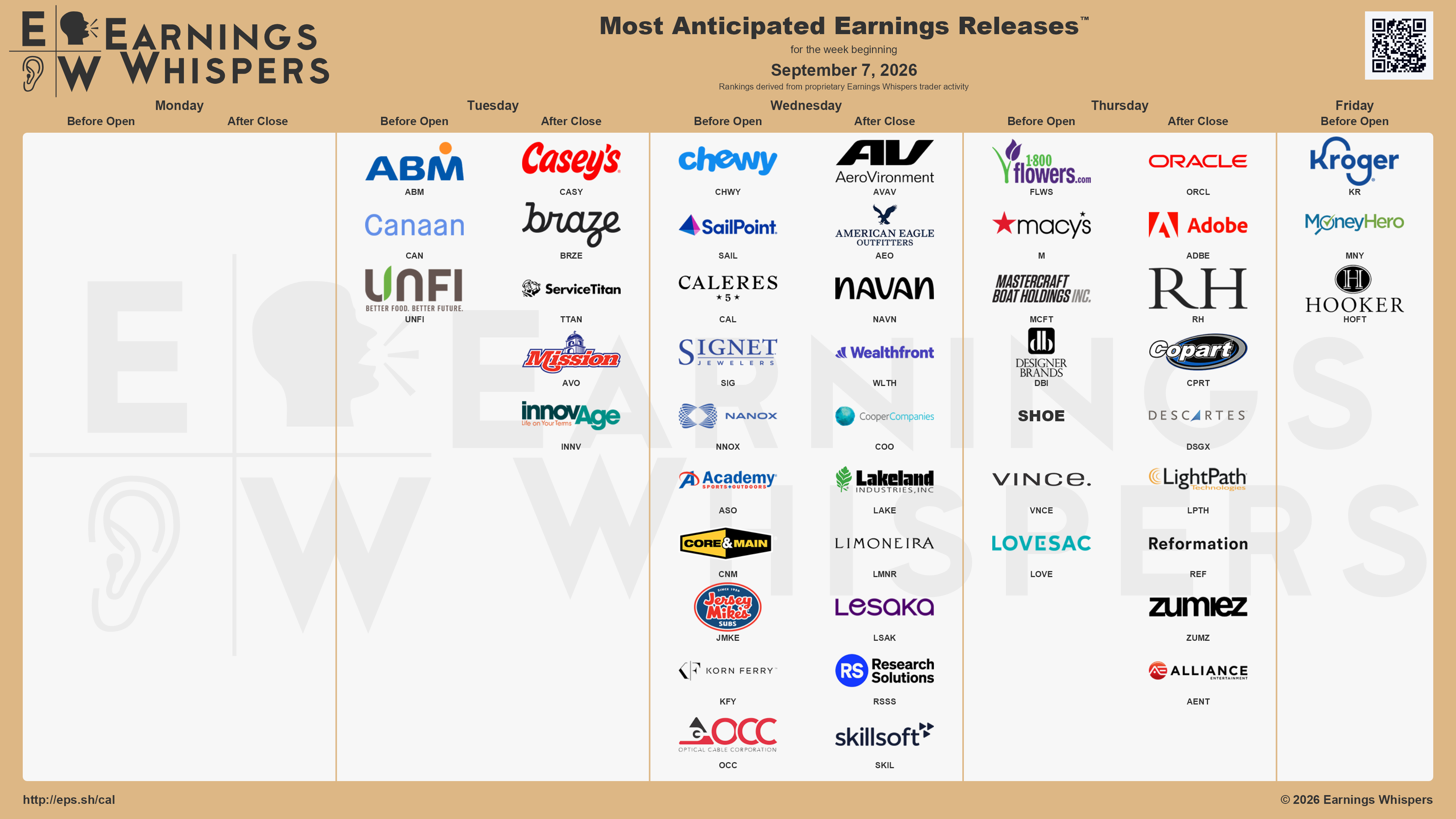
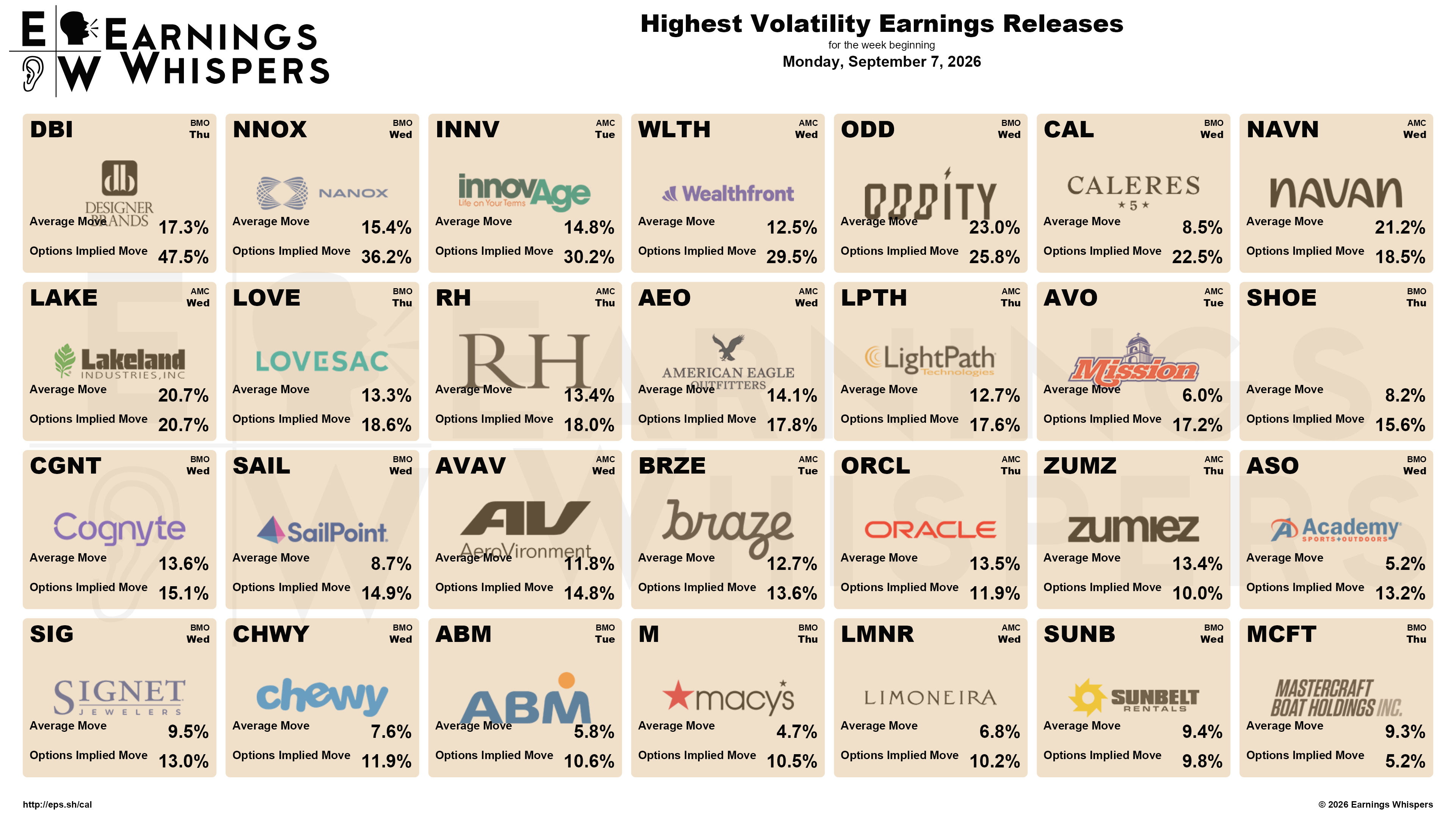
This week's earnings calendar is a fascinating split screen. On one side you have the tech heavyweights, led by Oracle and Adobe, two names investors are watching like hawks. Oracle in particular walks in with a spring in its step, riding the wave of enthusiasm around cloud and artificial intelligence, and the mood around it is about as sunny as it gets. Adobe carries plenty of good vibes too, though it has a habit of swinging hard when the numbers land, so buckle up if you own it. Keep an eye on some of the smaller software names as well, because a few of them, like Navan and Braze, are quietly building momentum that suggests they could surprise to the upside. Not everyone in tech is on solid footing, though. Crypto-linked Canaan and a handful of micro-cap names look shaky heading in, a reminder that the tech story this week is far from one size fits all.
The other half of the week belongs to the businesses that touch your daily life, and this is where things get interesting for the average shopper. Grocery and convenience players like Kroger and Casey's, along with retailers such as Macy's, Academy Sports, and Signet Jewelers, will give us a real pulse check on whether Americans are still opening their wallets. Casey's especially struts in looking strong, a sign that the corner-store snack run is alive and well. The pet crowd should watch Chewy, which faces a skeptical audience after its momentum cooled, while home-focused names like RH and Lovesac have a lot to prove after a rough patch. The wild cards to enjoy are the little guys with big expectations baked in, from J.Jill to InnovAge, where the setup hints they could deliver the kind of pop that makes for a fun trading day. All told, expect fireworks in a few corners and plenty of clues about where the consumer is really headed.
Oracle's AI Boom Meets Its Big Bill
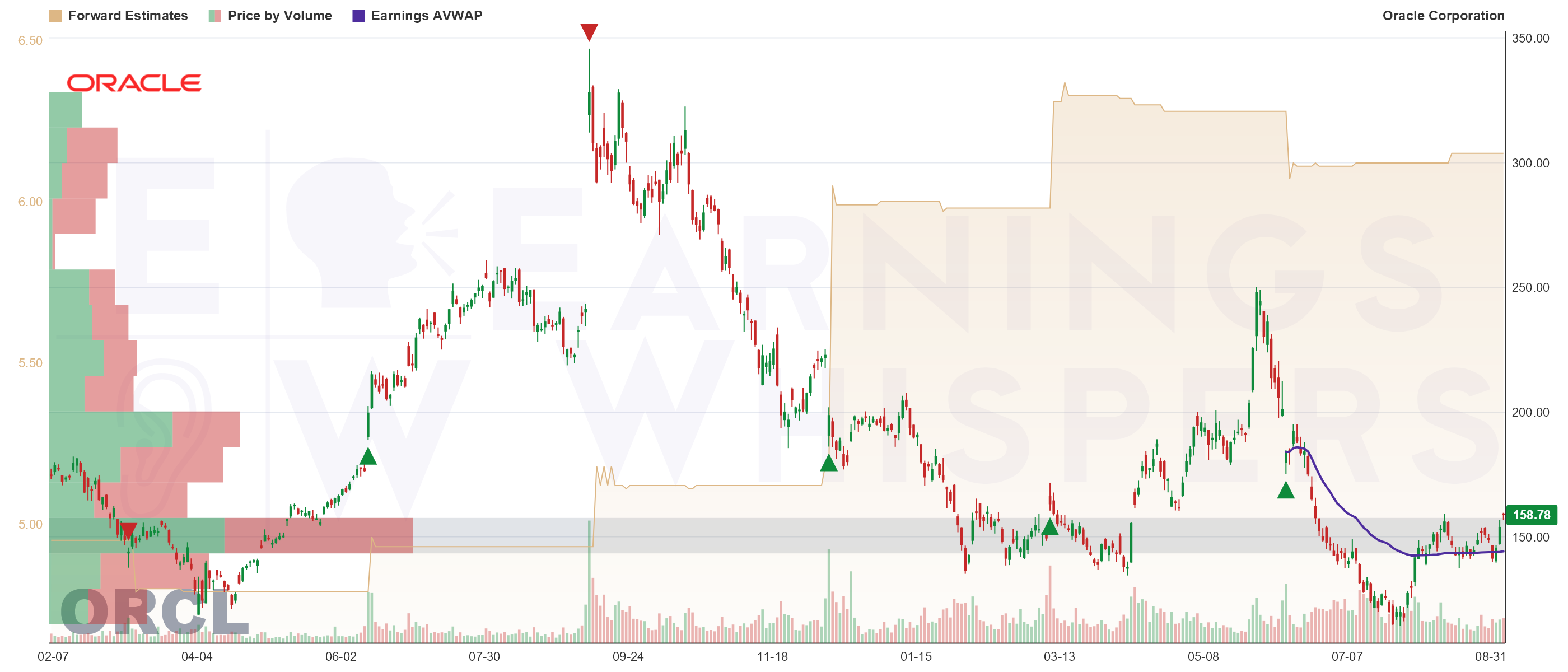
Oracle (ORCL) steps up to the plate after the bell on Thursday, September 10, 2026 at roughly 4:05 PM ET. Wall Street is looking for $1.75 per share on revenue of $19.14 billion, a hefty 28.2% jump from a year ago, while the Earnings Whisper number sits a touch higher at $1.80. Management's own guidance called for $1.72 to $1.76 per share on revenue between $18.96 billion and $19.26 billion. Here's where it gets spicy: short interest has jumped 37.0% since the last report, and the stock has slid 11.6% from where it opened after that release, leaving it 6.1% under its 200 day moving average of $169.04. Yet overall estimates have been nudged higher. Option traders are bracing for an 11.9% swing, roughly in line with the 13.5% average move of recent quarters, and on September 3rd someone scooped up 11,869 of the $175.00 calls expiring October 16th, a clear bet that the bulls aren't done yet.
The whole story here is Oracle's AI infrastructure engine, and it is roaring. Last quarter the backlog (money already booked but not yet earned) exploded to $638 billion, with a single quarter adding $67 billion in new AI deals and four customers each signing up for more than $8 billion. Cloud infrastructure growth accelerated all year long, hitting a jaw-dropping 93% by the fourth quarter, and management raised the full-year outlook while reaffirming its long-term targets. The catch, and it's a real one, is that all this growth costs money. Gross margins are getting squeezed as data centers ramp up, and capital spending is set to balloon from about $48 billion to roughly $70 billion, forcing Oracle to raise around $40 billion in new financing. So the question for Thursday is simple: does the market cheer the demand or worry about the tab? Watch the backlog and the margin commentary closely, because that is where this stock's next move gets decided.
Adobe's Big Freemium Bet: Growth Now, Payoff Later
Adobe (ADBE) steps up to the earnings plate on Thursday, September 10, 2026 at roughly 4:05 PM ET. Wall Street is looking for $6.08 per share on $6.69 billion in revenue, which would be a healthy 11.7% jump from a year ago, while the quieter Earnings Whisper number sits just a touch lower at $6.05. That happens to match the low end of Adobe's own guidance of $6.05 to $6.10 per share on revenue of $6.67 to $6.72 billion. The mood heading in leans positive: short sellers have backed off by 3.7%, the stock has climbed a strong 31.7% since last quarter's report to sit right at its 200 day average of $268.22, and analysts have been nudging their numbers up. Options traders are bracing for an 8.5% swing, a bit bigger than the 6.0% move Adobe usually delivers. One eye-catcher on September 2 was a chunky buy of 2,183 of the $250 puts expiring back in December 2028, a long-dated bet worth watching.
Here's the real story to keep in mind. Last quarter Adobe raised its full-year revenue and profit outlook, but a good chunk of that lift came from the SEMrush deal that closed in April and added $480 million in recurring revenue, not from the core engine humming faster. In fact, management is purposely tapping the brakes on organic growth to chase a giant freemium land grab, pushing free users into Firefly, Express, and Acrobat with the hope of cashing in during 2027 and beyond. The AI side is genuinely cooking, with AI-first recurring revenue topping $500 million and tripling year over year, and free creative users climbing to 90 million. The catch is thinner margins this year and a leadership shuffle that just got messier, with the CFO heading out the door while the company is still hunting for a new CEO. Great story, but investors will want proof the freemium gamble is worth the wait.
FLWS: The Turnaround Is Blooming, But Sales Still Wilting
1-800-FLOWERS.COM (FLWS) is confirmed to report earnings on Thursday, September 10, 2026 at approximately 6:45 AM ET. Wall Street is bracing for a loss of $0.72 per share on revenue of $293.68 million, a 12.8% drop from a year ago, while the whisper number is a touch gloomier at a loss of $0.75 per share. Here is the interesting part: short sellers have backed off, cutting their bets by 14.8% since last quarter, and the stock has quietly climbed 12.7% off its post-earnings open, though it still sits 3.3% below its 200 day moving average of $3.86. Estimates have been trimmed lower overall, but the options crowd is smelling something. On August 25 someone scooped up 3,606 of the $4.00 calls expiring September 18. With this stock averaging a 10.8% swing after recent reports, buckle up.
The real story is a company that has quietly gotten its act together on costs even while sales keep sliding. Management blew past its $50 million cost-savings goal in under a year and now sees $65 to $70 million total, gross margins finally ticked back up, and the tone from the top has shifted from apologizing to bragging about progress. The catch is revenue, which fell nearly 12% last quarter with the core floral and gift business down almost 19% as AI-powered search results steal web traffic and shoppers stay picky. Watch the marketing line closely here. The company is done cutting and is now spending again on TikTok, influencers and its Instacart tie-up, which is a smart bet on future growth but will bite near-term profits. In short, the plumbing is fixed, now they need customers to actually show up.
Casey's Heads Into Earnings Riding a Wings-and-Fuel Winning Streak
Casey's General Stores (CASY) is confirmed to report earnings on Tuesday, September 8, 2026 at approximately 4:30 PM ET. Wall Street is looking for $6.60 per share on revenue of $5.65 billion, which would be a hefty 23.7% jump in sales from a year ago, but the smart money whisper is even juicier at $6.80 per share. The doubters have been backing off, with short interest down 17.3% since the last report, even as the stock has drifted 5.6% lower from where it opened after last quarter's print to sit 4.1% above its 200 day moving average of $726.16. Analysts have been quietly nudging their estimates higher, which tells you the crowd expects good news. Option traders are betting on a 4.8% swing, but buckle up, because this stock has actually swung about 8.5% on recent earnings days.
Here is the real story heading in. Last quarter Casey's slammed the door on its three-year plan with a record finish, and every important number pointed up. Fuel profits jumped to 46.9 cents per gallon, prepared food margins hit a five-year best at 59.5%, and the new chicken wings business exploded from about 225 stores a year ago to 850, with management now saying it could one day be as big as their famous pizza. They raised the dividend, fattened the buyback to $1 billion, and guided next year's profits up another 8 to 10%. The catch to watch: that monster fuel margin is a tough act to repeat, gas gallons sold have been soft, and the SEFCO store kitchen conversions will pull about 130 stores offline for a few weeks each, which management says is roughly a wash this year with the payoff coming later. In short, momentum is real, and the only clouds are ones the team already told you about.
Chewy's Profits Purr While Sales Growth Loses Its Bite
Chewy (CHWY) is set to report earnings on Wednesday, September 9, 2026 at around 7:05 AM ET. Wall Street is looking for $0.36 per share on $3.32 billion in revenue, which would be 7.0% growth from a year ago, and the Earnings Whisper number is a touch higher at $0.37. That lines up neatly with management's own guidance of about $0.36 per share on $3.30 to $3.33 billion. Short sellers have backed off, cutting their bets by 26.3% since last quarter, while the stock has climbed 17.6% from where it opened after the last report, though it still sits 8.5% below its 200 day average of $25.87. Option traders are bracing for a big 11.9% swing, well above the 7.6% the stock typically moves. And on August 28, someone snapped up 5,353 of the $47.50 calls expiring in January 2027, a notably bullish long-term wager.
Here is the real story heading in: last quarter Chewy trimmed its full-year revenue outlook as shoppers tightened their leashes, cutting the sales guide to $13.40 to $13.55 billion from $13.6 to $13.75 billion just three months earlier. Customers are still coming, but new sign-ups are drifting toward the low end of the range, and pet parents are skipping the premium treats and extras. The silver lining is fat margins. Profitability hit a record 7.5% adjusted EBITDA margin, free cash flow jumped 45%, and management kept the full-year margin guide intact even while spending big on buybacks and swallowing the Modern Animal and SmartPak deals. The question this quarter is simple: is the consumer softness just a passing rain cloud, or is it starting to stick?
Macy's Finally Found Its Groove Ahead of Thursday's Print
Macy's (M) is set to report earnings before the bell on Thursday, September 10, 2026 at around 6:55 AM ET. Wall Street is looking for $0.37 per share on revenue of $4.82 billion, which would be a 3.6% dip from a year ago, but the Earnings Whisper number is a more upbeat $0.44 per share. Short sellers have backed off, cutting their bets by 9.3% since the last report, while the stock has quietly climbed 4.8% and now sits 7.0% above its 200 day moving average of $21.54. Analysts have been nudging their estimates higher, which tells you the mood is warming up. Options traders are bracing for a 10.5% swing, even though the stock has typically moved just 4.7% in recent quarters, so someone is expecting fireworks. Speaking of bets, back on July 30th a trader scooped up 4,761 of the $23.00 puts expiring September 18th, so not everyone is popping the champagne just yet.
Here is the real story: Macy's turnaround is actually working. Last quarter delivered the first real sales growth since the pandemic and the best comps in four years, with the whole company up 3.0% and Bloomingdale's putting up a jaw-dropping 10.2%, its best first quarter ever. Management raised guidance across the board and sounded genuinely confident for the first time in a while. The catch is that the good news is mostly baked into the first half, since they are only penciling in roughly flat comps for the back half of the year. Watch two things Thursday: whether that cautious second half guide gets an upgrade, and whether margins can finally start growing instead of just holding steady, especially with a fresh fuel and shipping cost headwind creeping in. If the momentum holds, this old-school retailer keeps proving the doubters wrong.
AeroVironment: Big Finish, Cautious Follow-Through
AeroVironment (AVAV) is confirmed to report earnings on Wednesday, September 9, 2026 at approximately 4:10 PM ET. The consensus earnings estimate is $0.22 per share on revenue of $474.57 million, representing 4.4% year-over-year revenue growth, and the Earnings Whisper number is $0.27 per share. The setup here is telling: short interest has dropped 23.6% since the last report, yet the stock has drifted 18.0% lower and now sits a painful 32.0% below its 200 day moving average of $212.82. Estimates have been trimmed since last quarter, so expectations are muted. Option traders are bracing for a 14.8% swing, roughly in line with the 11.8% average move of late, and someone made a bold long-term bet on August 28 by scooping up 1,009 of the $600 calls expiring in January 2028. Somebody clearly thinks this drone maker takes flight again.
Here is what actually matters going into the print. Last quarter was a blowout finish to FY26, with record revenue of $642 million, 31% organic growth, and margins snapping back to 22% after a rough middle of the year. So why the sour stock? Because management set a deliberately cautious FY27 bar: growth slows to about 10%, EPS looks flat to down as heavy depreciation and cloud costs bite, and free cash flow is expected to go negative on all the new factory spending. Toss in the SCAR program getting canceled, an $89 million goodwill writedown, a restatement, a flagged weakness in internal controls, and a fresh CFO, and you get a company with real demand tailwinds but a lot of housekeeping noise. Q1 is guided down year over year, so the near-term number may look weak on purpose. Watch the bookings and any color on the roughly half-billion-dollar EHEL laser decision, which could be the real catalyst.
Kroger's New Sheriff Talks Tough, But Sales Are Sagging
Kroger (KR) is set to ring up its earnings on Friday, September 11, 2026, at roughly 6:45 AM ET. Wall Street is looking for $1.05 per share on revenue of $34.72 billion, which would be 2.3% growth from a year ago, though the whisper number is a touch higher at $1.07. Here's the thing though: short interest has dropped 11.7% since last quarter, yet the stock has slipped 1.4% since its last report and now sits 8.5% below its 200 day moving average of $64.06. Analysts have actually been trimming their estimates lately. Options traders are bracing for a 6.3% swing, a bit above the 5.1% the stock has typically moved in recent quarters, and on September 4th someone scooped up a hefty 9,036 of the $60 calls expiring the same day as earnings, so at least a few folks are betting on some fireworks.
The big story here is new CEO Greg Foran, who has come in swinging with a fresh 'Five Fs' game plan and a bluntly honest take that about one in five stores just isn't pulling its weight. He has real wins to point to: the online grocery and advertising business turned a profit ahead of schedule, cost cutting is running 30% ahead of plan, and fresh deals with Google and TikTok are boosting the ad side nicely. The problem is the shopper. With high gas prices and thinner food stamp benefits, store sales growth slowed hard to just 1% last quarter, and margins actually dipped for the first time in a while thanks to pricey diesel. Management didn't raise its full year outlook, and Q2 profit is expected to be flat, so this year's growth is riding on a back-half comeback. The real reveal comes at the October 20 investor day, which means don't expect all your answers on Friday.
American Eagle's Aerie Soars While the Mothership Stalls
American Eagle Outfitters (AEO) is confirmed to report earnings on Wednesday, September 9, 2026 at approximately 4:05 PM ET. Wall Street is looking for $0.21 per share on revenue of $1.37 billion, a healthy 6.7% jump from last year, but the whisper number on the street is a touch juicier at $0.24. The short sellers have leaned in a bit, bumping up their bets by 3.8% since last quarter, yet the stock has quietly climbed 18.7% from where it opened after the last report, even though it still sits 11.9% under its 200 day average of $19.75. Traders are bracing for fireworks, pricing in a 17.8% swing on earnings while shares have historically bounced around 14.1% in recent quarters. And someone is feeling bold: on Wednesday, August 26, 2026, we spotted a big buy of 8,378 of the $17.50 calls expiring September 18, 2026.
Here is the real story going in: this is a tale of two brands running at very different speeds. Aerie is a runaway hit, posting a 25% comp last quarter and crossing $2 billion in trailing revenue, now the number two legging brand with its core shoppers. But the flagship American Eagle brand tripped, turning in its first negative comp in three quarters at -2%, dragged down by women's jeans that simply were not in the right fits and rises, plus a cold spring nobody wanted to shop in. The tone from management flipped from victory lap to fix-it mode, and tellingly, they held full-year operating income at $390 to $410 million rather than raising it despite Aerie's blowout, meaning AE weakness and tariffs are eating the upside. One wild card to watch: a $140 million tariff refund that is not baked into guidance and could be a nice surprise. Watch whether AE steadies itself, because right now Aerie is carrying the whole team.
ABM Heats Up: Chips, Airports, and a Cleaner Q4 Story
ABM Industries (ABM) steps into the earnings booth Tuesday, September 8, 2026 at about 7:00 AM ET, and the crowd is leaning optimistic. Wall Street wants $1.01 per share on $2.30 billion in revenue, which would be 3.4% growth from a year ago, but the Earnings Whisper number is a touch higher at $1.04. The doubters are backing off too, with short interest down 30.1% since last quarter while the stock has drifted 12.7% higher and now sits 8.2% above its 200 day average of $43.49. Just know the estimates have been trimmed lower since last time, so this is a beat-the-quiet-bar setup. Options traders are betting on a 10.6% swing, which is chunky next to the 5.8% average move ABM usually delivers, so buckle up.
Here is the real story going in. Last quarter ABM posted its best organic growth since 2022 at 6.1%, banked a record $1.2 billion in first-half bookings, and its new WGN Star semiconductor business is ramping fast and adding real fuel. Cash flow flipped from ugly to great, roughly a $180 million swing, and management sounded genuinely upbeat about the back half. The catch is that they only reaffirmed profit guidance instead of raising it, because interest expense crept up to about $110 million, margins are drifting to the low end, and their office-cleaning business is bleeding a few clients, including a big UK exit and soft West Coast buildings. The bright spot to watch: they already baked in the messy Q4 insurance charge that stung last year, so that surprise should not repeat. Net read, momentum is real, but the flat profit outlook keeps this from being a slam dunk.
DBI: Turnaround Has Legs, But Watch the Back Half
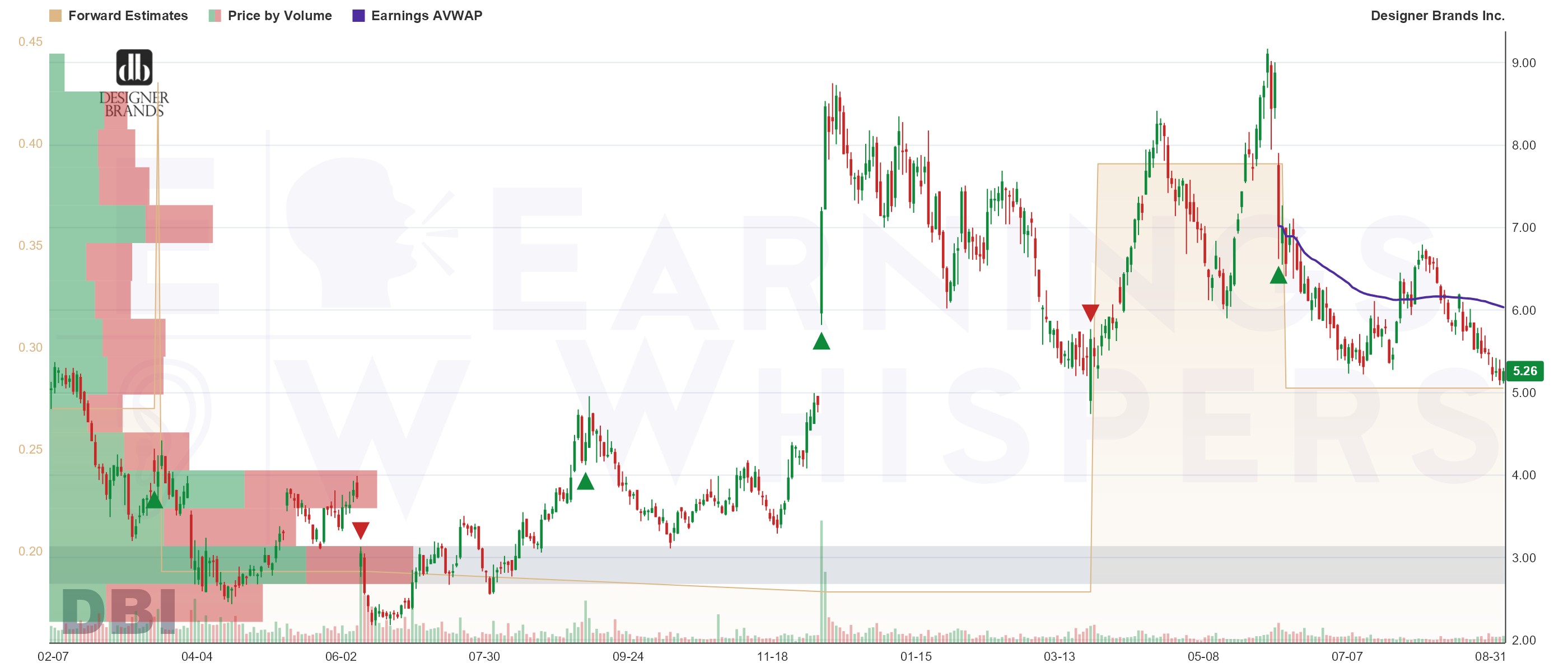
Designer Brands (DBI) is confirmed to report earnings on Thursday, September 10, 2026 at approximately 6:45 AM ET. The consensus earnings estimate is $0.25 per share on revenue of $743.00 million, which would be a modest 0.4% bump in sales from a year ago, and the Earnings Whisper number is $0.23 per share. Here is where it gets interesting: short sellers have been backing off, with short interest down 19.4% since the last report, yet the stock has still slid 32.2% from where it opened after last quarter and now sits 19.1% below its 200 day moving average of $6.50. Overall earnings estimates have not budged, but this is not a sleepy name. Shares have swung an average of 17.3% in recent quarters, so buckle up. On Friday, August 21, 2026 someone stepped in and scooped up 1,255 of the $5.00 calls expiring September 18, a bet that the party keeps going.
The story to watch is whether the turnaround still has legs. Last quarter DBI finally flipped from red to black, posting a $0.07 profit versus a $0.27 loss a year ago, with margins fatter and management raising its full-year outlook toward the high end for the first time in a while. The brand side is doing the heavy lifting, up over 19% with Topo and Jessica Simpson on fire, while the balance sheet keeps getting lighter. The catch: their actual stores are still limping along with negative comps, sandals got rained out, and shoppers are drifting from sneakers back to dressier looks. Management also warned this could be a tougher quarter as they lap strong numbers, bring back about $10 million in bonus pay, and stare down a possible new tariff hit that they conveniently left out of guidance. Bottom line, the profit engine looks real, but the back half is where the nerves are.
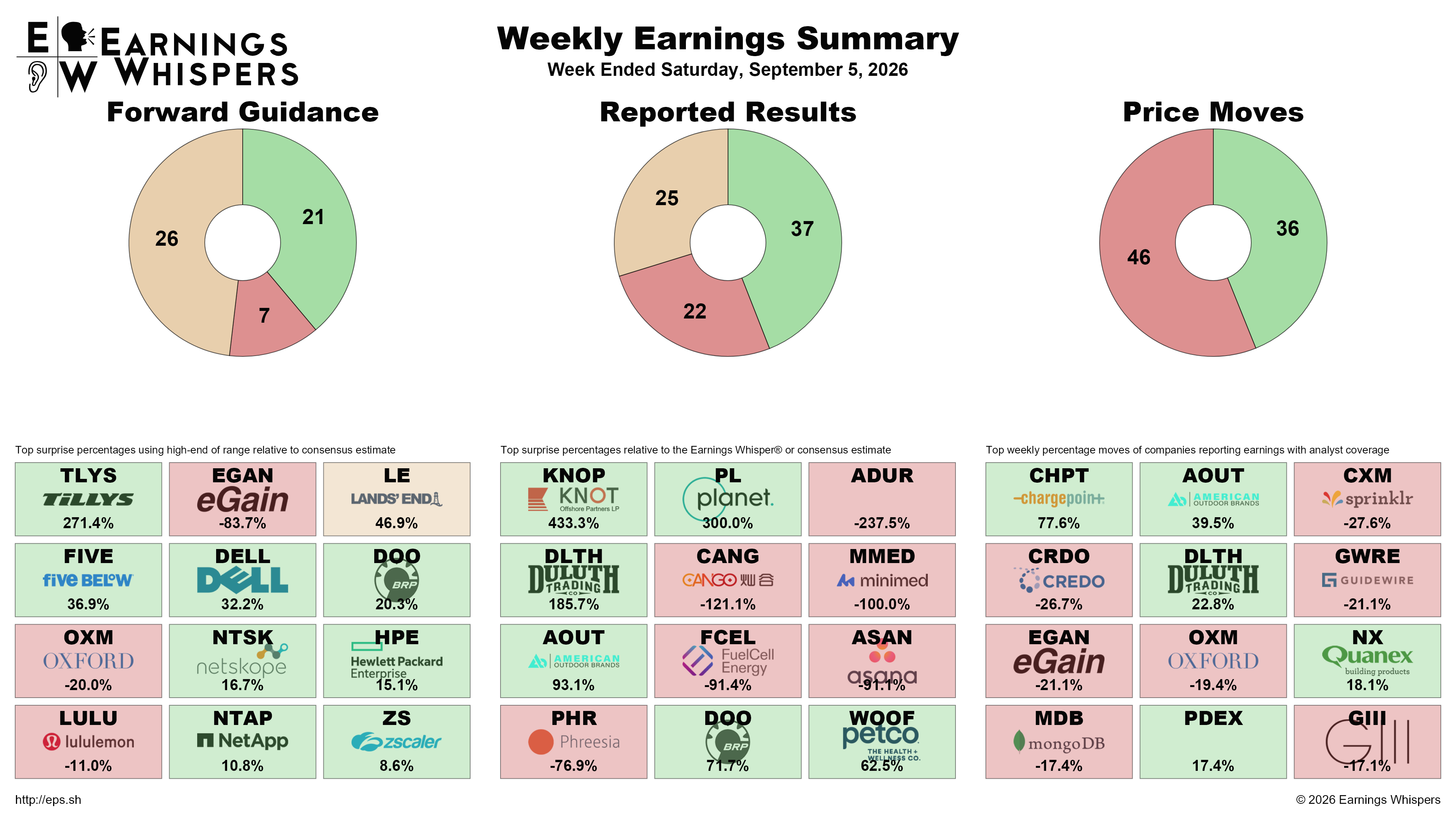
AI's Gold Rush Lifts the Hardware Crowd, While Consumer Names Get Left Behind
Last week's earnings told a story of two very different economies living under one roof. The companies selling the picks and shovels of the artificial intelligence boom put up numbers that were almost hard to believe. Dell posted record revenue near $47 billion and raised its full-year outlook for a third straight quarter, with AI server orders piling up faster than the company can fill them. Broadcom went a step further, locking in supply deals big enough to promise more than $100 billion of AI revenue next year and a headline-grabbing multi-billion-dollar chip partnership with Google. Hewlett Packard Enterprise, NetApp and Palo Alto Networks all sang from the same hymn sheet, each raising guidance and reporting record demand. The common refrain from these boardrooms was striking: the problem is no longer finding customers, it is finding enough memory chips and components to satisfy them. That supply crunch is the one cloud on an otherwise sunny horizon, and executives were candid that fat profit margins juiced by favorable pricing may not last forever.
Step away from the data center, though, and the mood turns gloomy. Lululemon was the week's biggest casualty, its stock tumbling roughly 17 percent after the yoga-pants maker slashed its forecast for the third time this year. Most alarming, the weakness has spread from a soft North America into China, once the company's reliable growth engine, and shoppers simply aren't warming to the newest gear. Campbell's served up its own dose of bad news, cutting its dividend and warning that its snacks turnaround, including the long-struggling chips business, will take longer than hoped while stubborn inflation squeezes its kitchens. Fashion group PVH landed somewhere in the middle, beating on profits and riding buzzy marketing campaigns, yet flashing warning signs as European wholesale orders soften into next year. There were bright spots outside of tech, notably medical-device giant Medtronic, which delivered its strongest quarter in years and nudged its outlook higher. But the overall message was unmistakable: if you are wired into the AI supply chain, business has rarely been better, and if you are selling to the everyday consumer, the ground feels increasingly shaky.
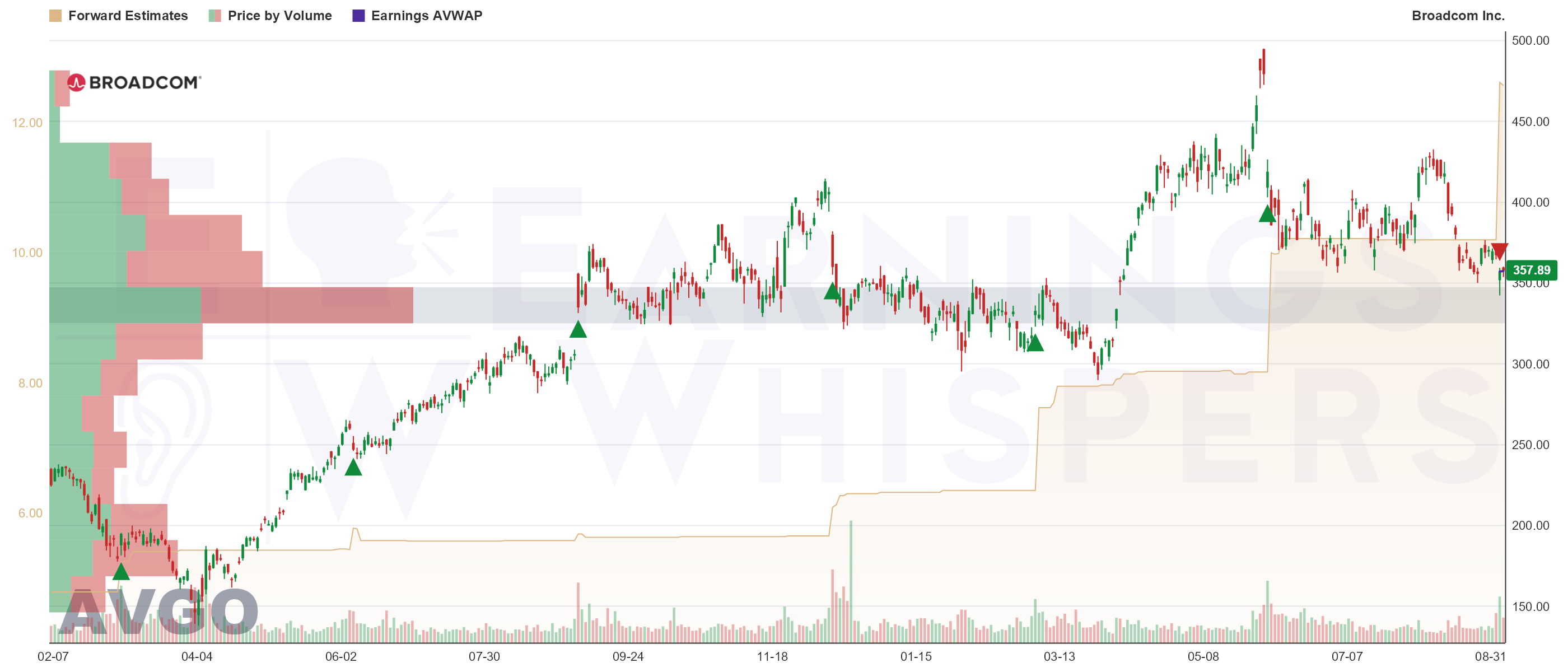
Broadcom's AI Engine Roars, Even as Margins Take a Breather
Broadcom just posted a monster quarter. Earnings came in at $3.32 per share on a record $29.59 billion in revenue, which technically nudged past Wall Street's $29.47 billion revenue estimate but landed a hair under the whisper number of $3.35. Don't let that tiny miss fool you, though. Revenue rocketed 85.5% from a year ago, and the real story is AI silicon: $16.7 billion in the quarter, up a jaw-dropping 221%. CEO Hock Tan says the party is just getting started, guiding fourth-quarter AI revenue to $21.7 billion and total revenue to about $34.8 billion, just shy of the $35.16 billion analysts wanted.
Here is what matters most. Broadcom stopped talking about the future in vague terms and started putting hard numbers on it, locking in $115 billion of AI revenue for fiscal 2027 and a whopping $230 billion for 2028, plus a new goal of over $30 in earnings per share by 2028. A fresh long-term deal to supply Google with tens of billions of dollars in custom chips each year, plus ramping business from OpenAI, Meta, and Anthropic, has demand outrunning what the company can even build. The catch? Broadcom now says its problem is making enough, not selling enough, as land, power, and chip supply become the real bottlenecks. Profit margins are also slipping from 78% toward 73% as pricier memory gets baked into these chips, so keep an eye on that mix. Bottom line: this is a company firing on all cylinders and hungry for more.
Dell Rides the AI Rocket to a Record Quarter
Dell Technologies (DELL) just blew the doors off its fiscal second quarter, posting earnings of $7.04 per share on revenue of $46.97 billion. Wall Street was looking for a far more modest $4.98 per share on $45.34 billion, so Dell didn't just beat the number, it lapped it by roughly 39%. Revenue jumped nearly 58% from a year ago. Even better, management cranked up its outlook in a big way, guiding to about $6.50 per share on $49 billion for the third quarter, and lifting the full-year forecast to roughly $25.50 per share on $192 billion. That is a monster jump from prior guidance of around $17.90 per share on $165 to $169 billion, and it towers over the $19.29 analysts had penciled in.
The engine here is AI, plain and simple. Dell booked a record $60.9 billion in AI server orders this quarter alone and is now sitting on a jaw-dropping $95 billion backlog, meaning the party is far from over. What makes this especially juicy is that the AI wave is now lifting the rest of the boat too. Old-school servers grew 122%, storage climbed 26%, and even the PC business grew 20%, its best pace in five years. The only real speed bump is that Dell literally can't get enough memory and parts to keep up with demand, which is about the best problem a company can have. Bottom line: this is a business firing on every cylinder, and the third straight guidance raise tells you management isn't just hoping, they're seeing it in the order book.
Credo Keeps Its Foot on the Gas as Optics Becomes Engine No. 2
Credo Technology (CRDO) posted fiscal first quarter earnings of $1.20 per share on revenue of $479.0 million, matching the Earnings Whisper on the bottom line and topping the $470.73 million revenue estimate. That is a jaw-dropping 115% jump from a year ago, the seventh straight quarter of triple-digit growth. Better yet, the company guided second quarter revenue to $525 to $535 million, blowing past the $502.69 million Wall Street was penciling in. CEO Bill Brennan summed it up nicely, saying Credo now connects everything from millimeters to kilometers with both copper and optics, and plans to keep feeding the hungry AI data center beast with reliable, energy-sipping gear. For the layman, Credo makes the plumbing that shuttles data around massive AI computers, and business is booming.
Here is what really matters. Credo raised its full-year growth guide again to over 85%, up from over 80% last quarter, and optics is quietly turning into a second growth engine on top of the copper cable business. First silicon photonics revenue landed after the Dust Photonics deal, and new wins in the 1.6T and near-package optics world are lining up for next year. The catch worth watching: the acquisition drained the piggy bank, with cash falling to $764 million from $1.4 billion, and two customers still make up 61% of sales. The big second-half payoff also leans on an optics ramp that has not been proven yet. Strong quarter, exciting story, just keep an eye on the concentration and the cash.
Palo Alto Networks Turns AI Fear Into a Billion-Dollar Quarter
Palo Alto Networks (PANW) closed out its fiscal year with a bang, posting fourth-quarter earnings of $1.02 per share on revenue of $3.41 billion for the period ended July 2026. That topped Wall Street's call for $0.98 per share and $3.35 billion, matched the Earnings Whisper number to the penny, and came alongside a hefty 34% jump in sales from a year ago. Looking ahead, the company guided first-quarter earnings to $0.96 to $0.98 per share on revenue of $3.30 to $3.31 billion, and full-year fiscal 2027 to $4.16 to $4.19 per share on $14.10 to $14.20 billion, both comfortably above what analysts were expecting. CEO Nikesh Arora said the quarter added nearly $1 billion of new subscription revenue in a single go, crediting AI for pushing cybersecurity to the very top of every tech chief's to-do list.
Here is what really matters. The stuff that keeps the lights on at PANW, its next-gen security business, crossed $9.1 billion in annual recurring revenue, up 63%, while its backlog of booked-but-not-yet-recognized business topped $20 billion for the first time ever. The CyberArk and Chronosphere deals are paying off faster than promised, and record numbers of customers are buying the whole platform rather than just a piece. The one thing to watch is that next year's growth rates will look slower on paper, but that is mostly math, not weakness. A giant AI customer that boosted this year's numbers rolls off, and past acquisitions stop flattering the comparisons. In plain English, the engine is running hot and demand is real. The only cloud is a bit of margin pressure from pricier memory chips. We stay bullish.
Snowflake's AI Engine Roars, Melting Doubts
Snowflake just crushed its fiscal second quarter, posting earnings of $0.62 per share on revenue of $1.55 billion. Wall Street was only looking for $0.45 per share on $1.47 billion, and even the sneaky Earnings Whisper number of $0.51 got left in the dust. That is a 21.57% earnings beat, with revenue jumping a hearty 35.09% from a year ago. Product revenue alone hit $1.49 billion, up 37%, and CEO Sridhar Ramaswamy is happy to tell anyone who will listen that AI is creating a flywheel that keeps spinning faster. Management also cranked up guidance, now expecting third quarter product revenue of roughly $1.59 billion and fiscal 2027 product revenue of about $6.07 billion, a nice bump from the earlier $5.84 billion call.
Here is what really matters: this is the third straight quarter of speeding-up growth, not a one-time sugar high. The company's AI tools, CoWork and CoCo, are spreading like wildfire, with CoCo now in more than 9,100 accounts, up from 4,400 just two quarters ago. Even better, profits are climbing too, with operating margin hitting 15% and the full-year target lifted again. The one small ding is that product gross margin slipped a point to 74%, because those hungry new AI workloads cost more to run. But that is a growing-pains problem, not a demand problem, and frankly a good one to have. Snowflake is firing on all cylinders and, in the CEO's words, they're just getting started.
The other half of the week belongs to the businesses that touch your daily life, and this is where things get interesting for the average shopper. Grocery and convenience players like Kroger and Casey's, along with retailers such as Macy's, Academy Sports, and Signet Jewelers, will give us a real pulse check on whether Americans are still opening their wallets. Casey's especially struts in looking strong, a sign that the corner-store snack run is alive and well. The pet crowd should watch Chewy, which faces a skeptical audience after its momentum cooled, while home-focused names like RH and Lovesac have a lot to prove after a rough patch. The wild cards to enjoy are the little guys with big expectations baked in, from J.Jill to InnovAge, where the setup hints they could deliver the kind of pop that makes for a fun trading day. All told, expect fireworks in a few corners and plenty of clues about where the consumer is really headed.
Oracle's AI Boom Meets Its Big Bill
Oracle (ORCL) steps up to the plate after the bell on Thursday, September 10, 2026 at roughly 4:05 PM ET. Wall Street is looking for $1.75 per share on revenue of $19.14 billion, a hefty 28.2% jump from a year ago, while the Earnings Whisper number sits a touch higher at $1.80. Management's own guidance called for $1.72 to $1.76 per share on revenue between $18.96 billion and $19.26 billion. Here's where it gets spicy: short interest has jumped 37.0% since the last report, and the stock has slid 11.6% from where it opened after that release, leaving it 6.1% under its 200 day moving average of $169.04. Yet overall estimates have been nudged higher. Option traders are bracing for an 11.9% swing, roughly in line with the 13.5% average move of recent quarters, and on September 3rd someone scooped up 11,869 of the $175.00 calls expiring October 16th, a clear bet that the bulls aren't done yet.
The whole story here is Oracle's AI infrastructure engine, and it is roaring. Last quarter the backlog (money already booked but not yet earned) exploded to $638 billion, with a single quarter adding $67 billion in new AI deals and four customers each signing up for more than $8 billion. Cloud infrastructure growth accelerated all year long, hitting a jaw-dropping 93% by the fourth quarter, and management raised the full-year outlook while reaffirming its long-term targets. The catch, and it's a real one, is that all this growth costs money. Gross margins are getting squeezed as data centers ramp up, and capital spending is set to balloon from about $48 billion to roughly $70 billion, forcing Oracle to raise around $40 billion in new financing. So the question for Thursday is simple: does the market cheer the demand or worry about the tab? Watch the backlog and the margin commentary closely, because that is where this stock's next move gets decided.
Adobe's Big Freemium Bet: Growth Now, Payoff Later
Adobe (ADBE) steps up to the earnings plate on Thursday, September 10, 2026 at roughly 4:05 PM ET. Wall Street is looking for $6.08 per share on $6.69 billion in revenue, which would be a healthy 11.7% jump from a year ago, while the quieter Earnings Whisper number sits just a touch lower at $6.05. That happens to match the low end of Adobe's own guidance of $6.05 to $6.10 per share on revenue of $6.67 to $6.72 billion. The mood heading in leans positive: short sellers have backed off by 3.7%, the stock has climbed a strong 31.7% since last quarter's report to sit right at its 200 day average of $268.22, and analysts have been nudging their numbers up. Options traders are bracing for an 8.5% swing, a bit bigger than the 6.0% move Adobe usually delivers. One eye-catcher on September 2 was a chunky buy of 2,183 of the $250 puts expiring back in December 2028, a long-dated bet worth watching.
Here's the real story to keep in mind. Last quarter Adobe raised its full-year revenue and profit outlook, but a good chunk of that lift came from the SEMrush deal that closed in April and added $480 million in recurring revenue, not from the core engine humming faster. In fact, management is purposely tapping the brakes on organic growth to chase a giant freemium land grab, pushing free users into Firefly, Express, and Acrobat with the hope of cashing in during 2027 and beyond. The AI side is genuinely cooking, with AI-first recurring revenue topping $500 million and tripling year over year, and free creative users climbing to 90 million. The catch is thinner margins this year and a leadership shuffle that just got messier, with the CFO heading out the door while the company is still hunting for a new CEO. Great story, but investors will want proof the freemium gamble is worth the wait.
FLWS: The Turnaround Is Blooming, But Sales Still Wilting
1-800-FLOWERS.COM (FLWS) is confirmed to report earnings on Thursday, September 10, 2026 at approximately 6:45 AM ET. Wall Street is bracing for a loss of $0.72 per share on revenue of $293.68 million, a 12.8% drop from a year ago, while the whisper number is a touch gloomier at a loss of $0.75 per share. Here is the interesting part: short sellers have backed off, cutting their bets by 14.8% since last quarter, and the stock has quietly climbed 12.7% off its post-earnings open, though it still sits 3.3% below its 200 day moving average of $3.86. Estimates have been trimmed lower overall, but the options crowd is smelling something. On August 25 someone scooped up 3,606 of the $4.00 calls expiring September 18. With this stock averaging a 10.8% swing after recent reports, buckle up.
The real story is a company that has quietly gotten its act together on costs even while sales keep sliding. Management blew past its $50 million cost-savings goal in under a year and now sees $65 to $70 million total, gross margins finally ticked back up, and the tone from the top has shifted from apologizing to bragging about progress. The catch is revenue, which fell nearly 12% last quarter with the core floral and gift business down almost 19% as AI-powered search results steal web traffic and shoppers stay picky. Watch the marketing line closely here. The company is done cutting and is now spending again on TikTok, influencers and its Instacart tie-up, which is a smart bet on future growth but will bite near-term profits. In short, the plumbing is fixed, now they need customers to actually show up.
Casey's Heads Into Earnings Riding a Wings-and-Fuel Winning Streak
Casey's General Stores (CASY) is confirmed to report earnings on Tuesday, September 8, 2026 at approximately 4:30 PM ET. Wall Street is looking for $6.60 per share on revenue of $5.65 billion, which would be a hefty 23.7% jump in sales from a year ago, but the smart money whisper is even juicier at $6.80 per share. The doubters have been backing off, with short interest down 17.3% since the last report, even as the stock has drifted 5.6% lower from where it opened after last quarter's print to sit 4.1% above its 200 day moving average of $726.16. Analysts have been quietly nudging their estimates higher, which tells you the crowd expects good news. Option traders are betting on a 4.8% swing, but buckle up, because this stock has actually swung about 8.5% on recent earnings days.
Here is the real story heading in. Last quarter Casey's slammed the door on its three-year plan with a record finish, and every important number pointed up. Fuel profits jumped to 46.9 cents per gallon, prepared food margins hit a five-year best at 59.5%, and the new chicken wings business exploded from about 225 stores a year ago to 850, with management now saying it could one day be as big as their famous pizza. They raised the dividend, fattened the buyback to $1 billion, and guided next year's profits up another 8 to 10%. The catch to watch: that monster fuel margin is a tough act to repeat, gas gallons sold have been soft, and the SEFCO store kitchen conversions will pull about 130 stores offline for a few weeks each, which management says is roughly a wash this year with the payoff coming later. In short, momentum is real, and the only clouds are ones the team already told you about.
Chewy's Profits Purr While Sales Growth Loses Its Bite
Chewy (CHWY) is set to report earnings on Wednesday, September 9, 2026 at around 7:05 AM ET. Wall Street is looking for $0.36 per share on $3.32 billion in revenue, which would be 7.0% growth from a year ago, and the Earnings Whisper number is a touch higher at $0.37. That lines up neatly with management's own guidance of about $0.36 per share on $3.30 to $3.33 billion. Short sellers have backed off, cutting their bets by 26.3% since last quarter, while the stock has climbed 17.6% from where it opened after the last report, though it still sits 8.5% below its 200 day average of $25.87. Option traders are bracing for a big 11.9% swing, well above the 7.6% the stock typically moves. And on August 28, someone snapped up 5,353 of the $47.50 calls expiring in January 2027, a notably bullish long-term wager.
Here is the real story heading in: last quarter Chewy trimmed its full-year revenue outlook as shoppers tightened their leashes, cutting the sales guide to $13.40 to $13.55 billion from $13.6 to $13.75 billion just three months earlier. Customers are still coming, but new sign-ups are drifting toward the low end of the range, and pet parents are skipping the premium treats and extras. The silver lining is fat margins. Profitability hit a record 7.5% adjusted EBITDA margin, free cash flow jumped 45%, and management kept the full-year margin guide intact even while spending big on buybacks and swallowing the Modern Animal and SmartPak deals. The question this quarter is simple: is the consumer softness just a passing rain cloud, or is it starting to stick?
Macy's Finally Found Its Groove Ahead of Thursday's Print
Macy's (M) is set to report earnings before the bell on Thursday, September 10, 2026 at around 6:55 AM ET. Wall Street is looking for $0.37 per share on revenue of $4.82 billion, which would be a 3.6% dip from a year ago, but the Earnings Whisper number is a more upbeat $0.44 per share. Short sellers have backed off, cutting their bets by 9.3% since the last report, while the stock has quietly climbed 4.8% and now sits 7.0% above its 200 day moving average of $21.54. Analysts have been nudging their estimates higher, which tells you the mood is warming up. Options traders are bracing for a 10.5% swing, even though the stock has typically moved just 4.7% in recent quarters, so someone is expecting fireworks. Speaking of bets, back on July 30th a trader scooped up 4,761 of the $23.00 puts expiring September 18th, so not everyone is popping the champagne just yet.
Here is the real story: Macy's turnaround is actually working. Last quarter delivered the first real sales growth since the pandemic and the best comps in four years, with the whole company up 3.0% and Bloomingdale's putting up a jaw-dropping 10.2%, its best first quarter ever. Management raised guidance across the board and sounded genuinely confident for the first time in a while. The catch is that the good news is mostly baked into the first half, since they are only penciling in roughly flat comps for the back half of the year. Watch two things Thursday: whether that cautious second half guide gets an upgrade, and whether margins can finally start growing instead of just holding steady, especially with a fresh fuel and shipping cost headwind creeping in. If the momentum holds, this old-school retailer keeps proving the doubters wrong.
AeroVironment: Big Finish, Cautious Follow-Through
AeroVironment (AVAV) is confirmed to report earnings on Wednesday, September 9, 2026 at approximately 4:10 PM ET. The consensus earnings estimate is $0.22 per share on revenue of $474.57 million, representing 4.4% year-over-year revenue growth, and the Earnings Whisper number is $0.27 per share. The setup here is telling: short interest has dropped 23.6% since the last report, yet the stock has drifted 18.0% lower and now sits a painful 32.0% below its 200 day moving average of $212.82. Estimates have been trimmed since last quarter, so expectations are muted. Option traders are bracing for a 14.8% swing, roughly in line with the 11.8% average move of late, and someone made a bold long-term bet on August 28 by scooping up 1,009 of the $600 calls expiring in January 2028. Somebody clearly thinks this drone maker takes flight again.
Here is what actually matters going into the print. Last quarter was a blowout finish to FY26, with record revenue of $642 million, 31% organic growth, and margins snapping back to 22% after a rough middle of the year. So why the sour stock? Because management set a deliberately cautious FY27 bar: growth slows to about 10%, EPS looks flat to down as heavy depreciation and cloud costs bite, and free cash flow is expected to go negative on all the new factory spending. Toss in the SCAR program getting canceled, an $89 million goodwill writedown, a restatement, a flagged weakness in internal controls, and a fresh CFO, and you get a company with real demand tailwinds but a lot of housekeeping noise. Q1 is guided down year over year, so the near-term number may look weak on purpose. Watch the bookings and any color on the roughly half-billion-dollar EHEL laser decision, which could be the real catalyst.
Kroger's New Sheriff Talks Tough, But Sales Are Sagging
Kroger (KR) is set to ring up its earnings on Friday, September 11, 2026, at roughly 6:45 AM ET. Wall Street is looking for $1.05 per share on revenue of $34.72 billion, which would be 2.3% growth from a year ago, though the whisper number is a touch higher at $1.07. Here's the thing though: short interest has dropped 11.7% since last quarter, yet the stock has slipped 1.4% since its last report and now sits 8.5% below its 200 day moving average of $64.06. Analysts have actually been trimming their estimates lately. Options traders are bracing for a 6.3% swing, a bit above the 5.1% the stock has typically moved in recent quarters, and on September 4th someone scooped up a hefty 9,036 of the $60 calls expiring the same day as earnings, so at least a few folks are betting on some fireworks.
The big story here is new CEO Greg Foran, who has come in swinging with a fresh 'Five Fs' game plan and a bluntly honest take that about one in five stores just isn't pulling its weight. He has real wins to point to: the online grocery and advertising business turned a profit ahead of schedule, cost cutting is running 30% ahead of plan, and fresh deals with Google and TikTok are boosting the ad side nicely. The problem is the shopper. With high gas prices and thinner food stamp benefits, store sales growth slowed hard to just 1% last quarter, and margins actually dipped for the first time in a while thanks to pricey diesel. Management didn't raise its full year outlook, and Q2 profit is expected to be flat, so this year's growth is riding on a back-half comeback. The real reveal comes at the October 20 investor day, which means don't expect all your answers on Friday.
American Eagle's Aerie Soars While the Mothership Stalls
American Eagle Outfitters (AEO) is confirmed to report earnings on Wednesday, September 9, 2026 at approximately 4:05 PM ET. Wall Street is looking for $0.21 per share on revenue of $1.37 billion, a healthy 6.7% jump from last year, but the whisper number on the street is a touch juicier at $0.24. The short sellers have leaned in a bit, bumping up their bets by 3.8% since last quarter, yet the stock has quietly climbed 18.7% from where it opened after the last report, even though it still sits 11.9% under its 200 day average of $19.75. Traders are bracing for fireworks, pricing in a 17.8% swing on earnings while shares have historically bounced around 14.1% in recent quarters. And someone is feeling bold: on Wednesday, August 26, 2026, we spotted a big buy of 8,378 of the $17.50 calls expiring September 18, 2026.
Here is the real story going in: this is a tale of two brands running at very different speeds. Aerie is a runaway hit, posting a 25% comp last quarter and crossing $2 billion in trailing revenue, now the number two legging brand with its core shoppers. But the flagship American Eagle brand tripped, turning in its first negative comp in three quarters at -2%, dragged down by women's jeans that simply were not in the right fits and rises, plus a cold spring nobody wanted to shop in. The tone from management flipped from victory lap to fix-it mode, and tellingly, they held full-year operating income at $390 to $410 million rather than raising it despite Aerie's blowout, meaning AE weakness and tariffs are eating the upside. One wild card to watch: a $140 million tariff refund that is not baked into guidance and could be a nice surprise. Watch whether AE steadies itself, because right now Aerie is carrying the whole team.
ABM Heats Up: Chips, Airports, and a Cleaner Q4 Story
ABM Industries (ABM) steps into the earnings booth Tuesday, September 8, 2026 at about 7:00 AM ET, and the crowd is leaning optimistic. Wall Street wants $1.01 per share on $2.30 billion in revenue, which would be 3.4% growth from a year ago, but the Earnings Whisper number is a touch higher at $1.04. The doubters are backing off too, with short interest down 30.1% since last quarter while the stock has drifted 12.7% higher and now sits 8.2% above its 200 day average of $43.49. Just know the estimates have been trimmed lower since last time, so this is a beat-the-quiet-bar setup. Options traders are betting on a 10.6% swing, which is chunky next to the 5.8% average move ABM usually delivers, so buckle up.
Here is the real story going in. Last quarter ABM posted its best organic growth since 2022 at 6.1%, banked a record $1.2 billion in first-half bookings, and its new WGN Star semiconductor business is ramping fast and adding real fuel. Cash flow flipped from ugly to great, roughly a $180 million swing, and management sounded genuinely upbeat about the back half. The catch is that they only reaffirmed profit guidance instead of raising it, because interest expense crept up to about $110 million, margins are drifting to the low end, and their office-cleaning business is bleeding a few clients, including a big UK exit and soft West Coast buildings. The bright spot to watch: they already baked in the messy Q4 insurance charge that stung last year, so that surprise should not repeat. Net read, momentum is real, but the flat profit outlook keeps this from being a slam dunk.
DBI: Turnaround Has Legs, But Watch the Back Half
Designer Brands (DBI) is confirmed to report earnings on Thursday, September 10, 2026 at approximately 6:45 AM ET. The consensus earnings estimate is $0.25 per share on revenue of $743.00 million, which would be a modest 0.4% bump in sales from a year ago, and the Earnings Whisper number is $0.23 per share. Here is where it gets interesting: short sellers have been backing off, with short interest down 19.4% since the last report, yet the stock has still slid 32.2% from where it opened after last quarter and now sits 19.1% below its 200 day moving average of $6.50. Overall earnings estimates have not budged, but this is not a sleepy name. Shares have swung an average of 17.3% in recent quarters, so buckle up. On Friday, August 21, 2026 someone stepped in and scooped up 1,255 of the $5.00 calls expiring September 18, a bet that the party keeps going.
The story to watch is whether the turnaround still has legs. Last quarter DBI finally flipped from red to black, posting a $0.07 profit versus a $0.27 loss a year ago, with margins fatter and management raising its full-year outlook toward the high end for the first time in a while. The brand side is doing the heavy lifting, up over 19% with Topo and Jessica Simpson on fire, while the balance sheet keeps getting lighter. The catch: their actual stores are still limping along with negative comps, sandals got rained out, and shoppers are drifting from sneakers back to dressier looks. Management also warned this could be a tougher quarter as they lap strong numbers, bring back about $10 million in bonus pay, and stare down a possible new tariff hit that they conveniently left out of guidance. Bottom line, the profit engine looks real, but the back half is where the nerves are.
AI's Gold Rush Lifts the Hardware Crowd, While Consumer Names Get Left Behind
Last week's earnings told a story of two very different economies living under one roof. The companies selling the picks and shovels of the artificial intelligence boom put up numbers that were almost hard to believe. Dell posted record revenue near $47 billion and raised its full-year outlook for a third straight quarter, with AI server orders piling up faster than the company can fill them. Broadcom went a step further, locking in supply deals big enough to promise more than $100 billion of AI revenue next year and a headline-grabbing multi-billion-dollar chip partnership with Google. Hewlett Packard Enterprise, NetApp and Palo Alto Networks all sang from the same hymn sheet, each raising guidance and reporting record demand. The common refrain from these boardrooms was striking: the problem is no longer finding customers, it is finding enough memory chips and components to satisfy them. That supply crunch is the one cloud on an otherwise sunny horizon, and executives were candid that fat profit margins juiced by favorable pricing may not last forever.
Step away from the data center, though, and the mood turns gloomy. Lululemon was the week's biggest casualty, its stock tumbling roughly 17 percent after the yoga-pants maker slashed its forecast for the third time this year. Most alarming, the weakness has spread from a soft North America into China, once the company's reliable growth engine, and shoppers simply aren't warming to the newest gear. Campbell's served up its own dose of bad news, cutting its dividend and warning that its snacks turnaround, including the long-struggling chips business, will take longer than hoped while stubborn inflation squeezes its kitchens. Fashion group PVH landed somewhere in the middle, beating on profits and riding buzzy marketing campaigns, yet flashing warning signs as European wholesale orders soften into next year. There were bright spots outside of tech, notably medical-device giant Medtronic, which delivered its strongest quarter in years and nudged its outlook higher. But the overall message was unmistakable: if you are wired into the AI supply chain, business has rarely been better, and if you are selling to the everyday consumer, the ground feels increasingly shaky.
Broadcom's AI Engine Roars, Even as Margins Take a Breather
Broadcom just posted a monster quarter. Earnings came in at $3.32 per share on a record $29.59 billion in revenue, which technically nudged past Wall Street's $29.47 billion revenue estimate but landed a hair under the whisper number of $3.35. Don't let that tiny miss fool you, though. Revenue rocketed 85.5% from a year ago, and the real story is AI silicon: $16.7 billion in the quarter, up a jaw-dropping 221%. CEO Hock Tan says the party is just getting started, guiding fourth-quarter AI revenue to $21.7 billion and total revenue to about $34.8 billion, just shy of the $35.16 billion analysts wanted.
Here is what matters most. Broadcom stopped talking about the future in vague terms and started putting hard numbers on it, locking in $115 billion of AI revenue for fiscal 2027 and a whopping $230 billion for 2028, plus a new goal of over $30 in earnings per share by 2028. A fresh long-term deal to supply Google with tens of billions of dollars in custom chips each year, plus ramping business from OpenAI, Meta, and Anthropic, has demand outrunning what the company can even build. The catch? Broadcom now says its problem is making enough, not selling enough, as land, power, and chip supply become the real bottlenecks. Profit margins are also slipping from 78% toward 73% as pricier memory gets baked into these chips, so keep an eye on that mix. Bottom line: this is a company firing on all cylinders and hungry for more.
Dell Rides the AI Rocket to a Record Quarter
Dell Technologies (DELL) just blew the doors off its fiscal second quarter, posting earnings of $7.04 per share on revenue of $46.97 billion. Wall Street was looking for a far more modest $4.98 per share on $45.34 billion, so Dell didn't just beat the number, it lapped it by roughly 39%. Revenue jumped nearly 58% from a year ago. Even better, management cranked up its outlook in a big way, guiding to about $6.50 per share on $49 billion for the third quarter, and lifting the full-year forecast to roughly $25.50 per share on $192 billion. That is a monster jump from prior guidance of around $17.90 per share on $165 to $169 billion, and it towers over the $19.29 analysts had penciled in.
The engine here is AI, plain and simple. Dell booked a record $60.9 billion in AI server orders this quarter alone and is now sitting on a jaw-dropping $95 billion backlog, meaning the party is far from over. What makes this especially juicy is that the AI wave is now lifting the rest of the boat too. Old-school servers grew 122%, storage climbed 26%, and even the PC business grew 20%, its best pace in five years. The only real speed bump is that Dell literally can't get enough memory and parts to keep up with demand, which is about the best problem a company can have. Bottom line: this is a business firing on every cylinder, and the third straight guidance raise tells you management isn't just hoping, they're seeing it in the order book.
Credo Keeps Its Foot on the Gas as Optics Becomes Engine No. 2
Credo Technology (CRDO) posted fiscal first quarter earnings of $1.20 per share on revenue of $479.0 million, matching the Earnings Whisper on the bottom line and topping the $470.73 million revenue estimate. That is a jaw-dropping 115% jump from a year ago, the seventh straight quarter of triple-digit growth. Better yet, the company guided second quarter revenue to $525 to $535 million, blowing past the $502.69 million Wall Street was penciling in. CEO Bill Brennan summed it up nicely, saying Credo now connects everything from millimeters to kilometers with both copper and optics, and plans to keep feeding the hungry AI data center beast with reliable, energy-sipping gear. For the layman, Credo makes the plumbing that shuttles data around massive AI computers, and business is booming.
Here is what really matters. Credo raised its full-year growth guide again to over 85%, up from over 80% last quarter, and optics is quietly turning into a second growth engine on top of the copper cable business. First silicon photonics revenue landed after the Dust Photonics deal, and new wins in the 1.6T and near-package optics world are lining up for next year. The catch worth watching: the acquisition drained the piggy bank, with cash falling to $764 million from $1.4 billion, and two customers still make up 61% of sales. The big second-half payoff also leans on an optics ramp that has not been proven yet. Strong quarter, exciting story, just keep an eye on the concentration and the cash.
Palo Alto Networks Turns AI Fear Into a Billion-Dollar Quarter
Palo Alto Networks (PANW) closed out its fiscal year with a bang, posting fourth-quarter earnings of $1.02 per share on revenue of $3.41 billion for the period ended July 2026. That topped Wall Street's call for $0.98 per share and $3.35 billion, matched the Earnings Whisper number to the penny, and came alongside a hefty 34% jump in sales from a year ago. Looking ahead, the company guided first-quarter earnings to $0.96 to $0.98 per share on revenue of $3.30 to $3.31 billion, and full-year fiscal 2027 to $4.16 to $4.19 per share on $14.10 to $14.20 billion, both comfortably above what analysts were expecting. CEO Nikesh Arora said the quarter added nearly $1 billion of new subscription revenue in a single go, crediting AI for pushing cybersecurity to the very top of every tech chief's to-do list.
Here is what really matters. The stuff that keeps the lights on at PANW, its next-gen security business, crossed $9.1 billion in annual recurring revenue, up 63%, while its backlog of booked-but-not-yet-recognized business topped $20 billion for the first time ever. The CyberArk and Chronosphere deals are paying off faster than promised, and record numbers of customers are buying the whole platform rather than just a piece. The one thing to watch is that next year's growth rates will look slower on paper, but that is mostly math, not weakness. A giant AI customer that boosted this year's numbers rolls off, and past acquisitions stop flattering the comparisons. In plain English, the engine is running hot and demand is real. The only cloud is a bit of margin pressure from pricier memory chips. We stay bullish.
Snowflake's AI Engine Roars, Melting Doubts
Snowflake just crushed its fiscal second quarter, posting earnings of $0.62 per share on revenue of $1.55 billion. Wall Street was only looking for $0.45 per share on $1.47 billion, and even the sneaky Earnings Whisper number of $0.51 got left in the dust. That is a 21.57% earnings beat, with revenue jumping a hearty 35.09% from a year ago. Product revenue alone hit $1.49 billion, up 37%, and CEO Sridhar Ramaswamy is happy to tell anyone who will listen that AI is creating a flywheel that keeps spinning faster. Management also cranked up guidance, now expecting third quarter product revenue of roughly $1.59 billion and fiscal 2027 product revenue of about $6.07 billion, a nice bump from the earlier $5.84 billion call.
Here is what really matters: this is the third straight quarter of speeding-up growth, not a one-time sugar high. The company's AI tools, CoWork and CoCo, are spreading like wildfire, with CoCo now in more than 9,100 accounts, up from 4,400 just two quarters ago. Even better, profits are climbing too, with operating margin hitting 15% and the full-year target lifted again. The one small ding is that product gross margin slipped a point to 74%, because those hungry new AI workloads cost more to run. But that is a growing-pains problem, not a demand problem, and frankly a good one to have. Snowflake is firing on all cylinders and, in the CEO's words, they're just getting started.